...

By James Bickerton
News Reporter
0
Share
Newsweek is a Trust Project member
See more of our trusted coverage when you search.Prefer Newsweek on Googleto see more of our trusted coverage when you search.
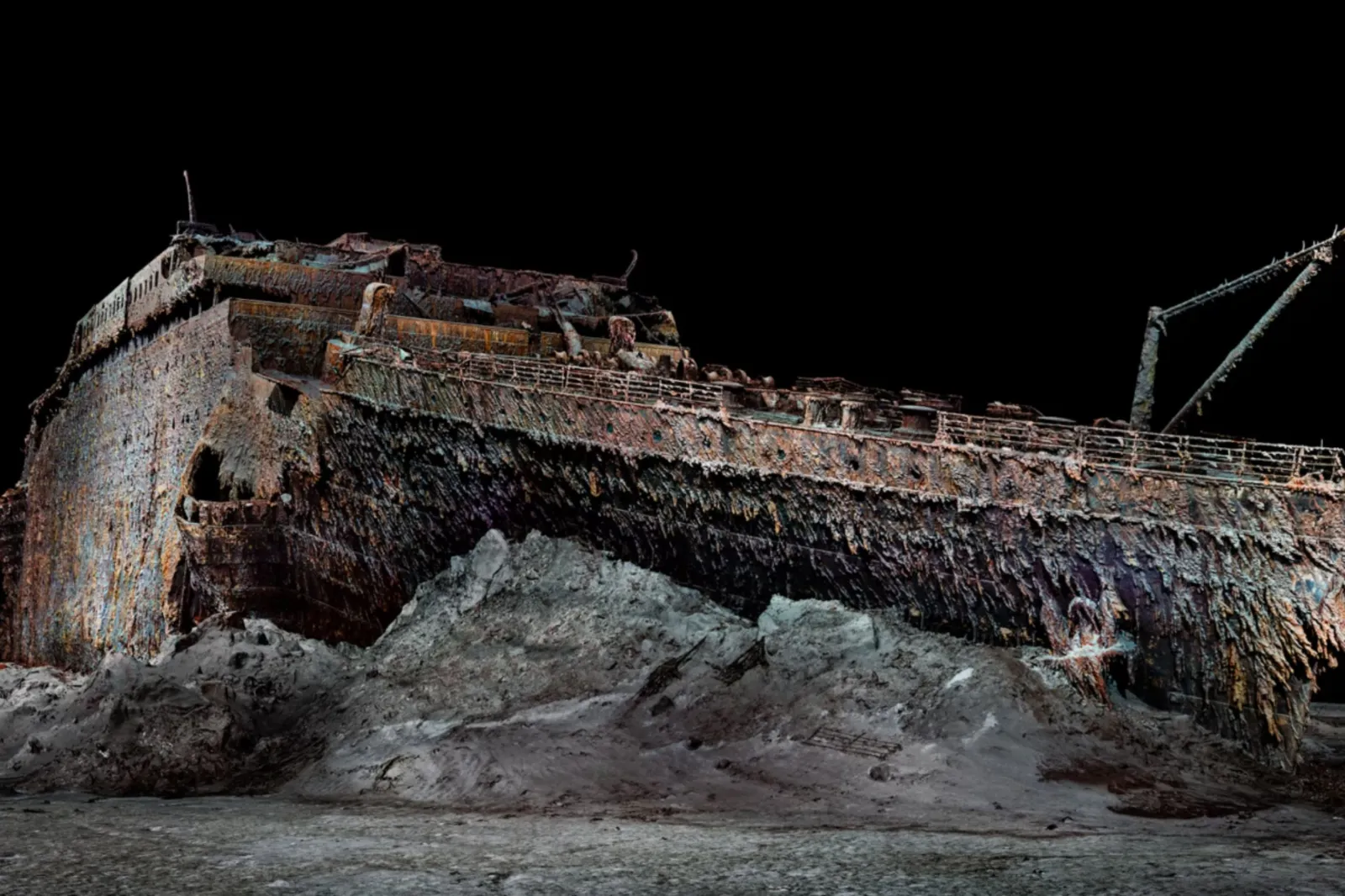
New details about the sinking of the famed ocean liner, RMS Titanic, in 1912 have been revealed by a 3D virtual replica created by British deep-sea mapping company, Magellan Limited.
The model features in a newly released National Geographic documentary, Titanic: The Digital Resurrection, which is available on Disney+.
Newsweek contacted Magellan Limited for comment on Tuesday via email.
Read More on World
Why It Matters
The Titanic disaster, which claimed around 1,500 lives, has received enormous attention from maritime experts and the general public alike. On June 18, 2023, five people were killed when a Titan submersible operated by OceanGate Expeditions imploded during a visit to the Titanic wreck.
Experts hope the new 3D model will be a safer way to explore and learn more about what remains of the Titanic without contaminating the crash site.
...
What To Know
The Magellan Limited scan of the Titanic, which National Geographic says is the largest underwater scan ever carried out, was conducted by two remote-operated robots named Romeo and Juliet which operated at the 12,500 foot below sea level wreck site.
Between them, the two robots took 715,000 photographs along with millions of laser measurements, which were pieced together to create a virtual reconstruction of the doomed ship containing astonishing detail. In total around 16 terabytes of data were used, roughly equivalent to that required to hold six million e-books.

...
According to the BBC, the 3D replica shows how the ship was "ripped in two" after crashing into an iceberg, which resulted in the bow standing upright on the seafloor whilst the stern largely disintegrated. The broadcaster also said the model shows indicates the boilers were still operating as they were submerged, backing eyewitness accounts that Titanic boilermen continued shoveling coal to provide power for lighting even as the ship was sinking, dooming themselves but likely saving many others.
The model also suggests the ship made a glancing blow against the iceberg, leaving a succession of holes along its side, meaning six of Titanic's watertight compartments were flooded, whereas the ship was designed to survive with four flooded.

...
Possessions from some of those who were on the Titanic, some likely abandoned in a hurry, can also be seen on the 3D model.
What People Are Saying
Speaking to the BBC Titanic expert Parks Stephenson said: "Titanic is the last surviving eyewitness to the disaster, and she still has stories to tell.
"It's like a crime scene: you need to see what the evidence is, in the context of where it is. And having a comprehensive view of the entirety of the wreck site is key to understanding what happened here."

...
Simon Benson, who lectured in naval architecture at the UK's University of Newcastle, said: "The difference between Titanic sinking and not sinking are down to the fine margins of holes about the size of a piece of paper.
"But the problem is that those small holes are across a long length of the ship, so the flood water comes in slowly but surely into all of those holes, and then eventually the compartments are flooded over the top and the Titanic sinks."

...
What Happens Next
The hope is that experts studying the 3D model can learn more about why the Titanic sank and how its passengers and crew reacted. However, some people are still likely to want to visit the crash site in person via submersibles, regardless of the risk.
View 0 Comments
Submit Correction
View Editorial & AI Guidelines