10
Loading video...

By Alyce Collins
Senior Reporter
0
Share
Newsweek is a Trust Project member
See more of our trusted coverage when you search.Prefer Newsweek on Googleto see more of our trusted coverage when you search.
A mom has revealed how a simple camera flash could detect a rare childhood cancer that her twins were diagnosed with at just 3 weeks old.
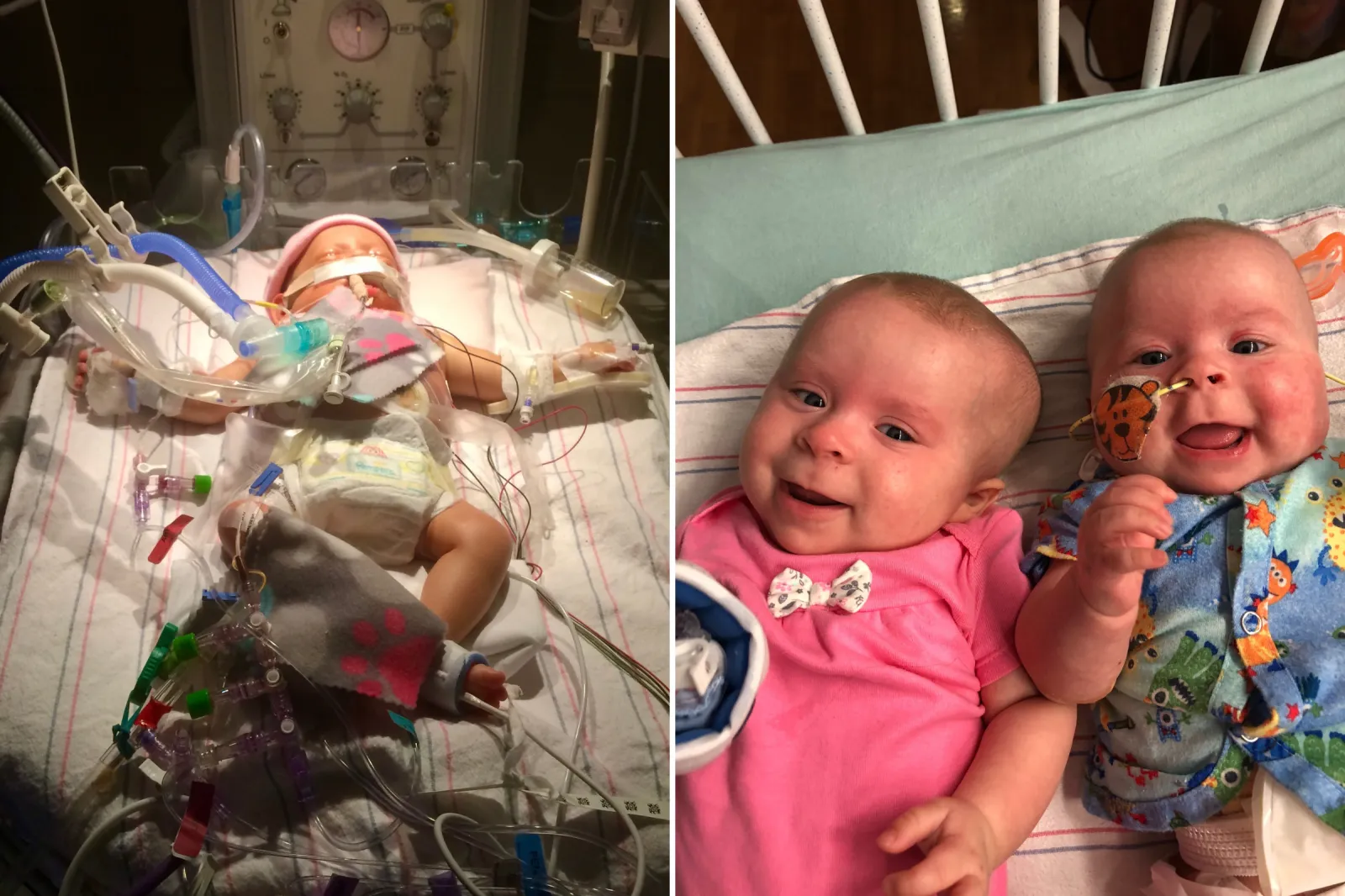
Within days of welcoming her twin daughters, Maryann Oakley’s world was turned upside down. Ella and Eve Oakley were just 11 days old when Eve suffered a twisted bowel and went into septic shock and cardiac arrest. The newborn went into organ failure and had to be placed on life support, as well as having part of her bowl removed.
Maryann, of Harrisburg, Pennsylvania, told Newsweek that it was just "complication after complication." While Eve was on life support, doctors found tumors behind her eyes which were believed to be cancerous.
Read More on Health
As a result, they also checked Ella and discovered that she too had the same cancer. At just 3 weeks old, Ella and Eve were diagnosed with bilateral retinoblastoma, a childhood cancer that causes tumors behind the eye.
...
"Both twins went through six months of grueling chemotherapy," Maryann said. "Eve received hers as an inpatient two hours away from home, while Ella received hers as an outpatient. My husband and I would take turns as to who was with Eve, and who was with Ella, so neither of us were able to work during this time.
"Eve relapsed twice with cancer (most recently about 18 months ago), and Ella relapsed once right after chemotherapy ended. Both were treated with laser radiation, and Eve also received cryotherapy for multiple relapses. Both of which are very painful."
Maryann has documented her family’s journey on social media (@oakleytwinsjourney on TikTok and Instagram) as she hopes to raise awareness for this cancer. In one video from October, Maryann explained how a simple camera flash could detect retinoblastoma.
When the flash is used, a healthy person’s eye should show a red reflection in the pupil (a red eye), but a white reflection could signal a tumor. This is known as leukocoria, and The Cleveland Clinic suggests that it’s the earliest and most common symptom of retinoblastoma.
"A white reflection doesn't always mean cancer and there are other medical possibilities. But it just turned out to be cancer for our girls," Maryann said.
"The white reflection can also appear in dead tumors as well. In that social media video, you can see in one of the frames, Eve has that white reflection. That white reflection will remain for her life because she still has the tumor, but it’s considered inactive."
Even to this day, seeing the white pupil in Eve’s photo scares Maryann "every time" she sees it.
Retinoblastoma is the most common childhood eye cancer, and it’s thought that 60 percent of cases are one-sided, while 40 percent of them are bilateral (like the Oakley twins).
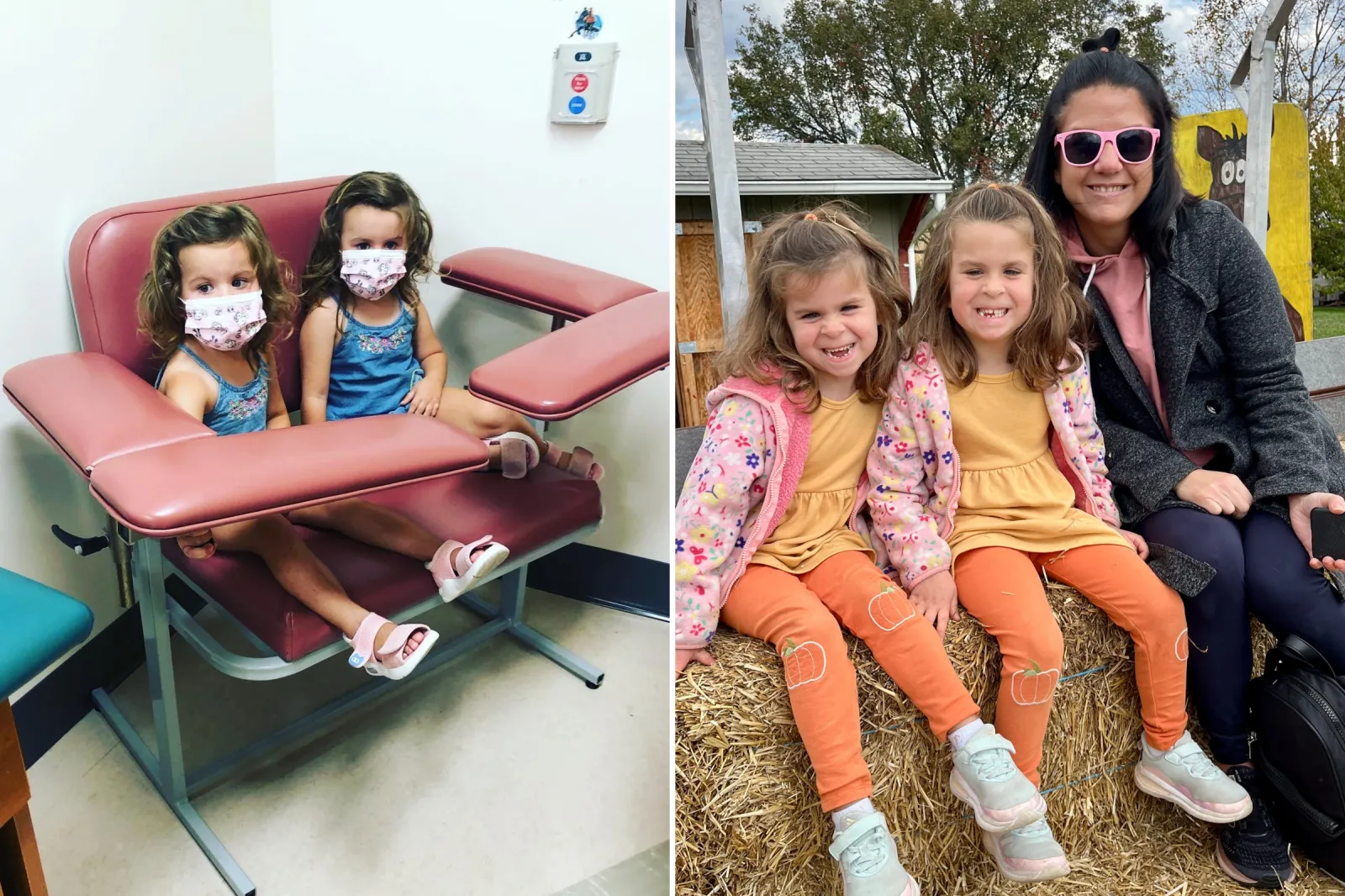
While the girls are now doing well, they still have regular appointments and have a team of doctors spread over three different hospitals. Both girls are high-risk for relapse, leaving their mom with "a lot of worry and anxiety" about every single appointment.
"They worry a lot about one another, and it’s hard for Eve because she goes to the doctor so often. At least they have one another and they go through everything as a team. I often call them 'The Inseparables'," Maryann told Newsweek.
...
Eve has moderate to severe hearing loss in both ears, as well as auditory neuropathy. The conditions were discovered during chemotherapy, leading doctors to believe they were caused by medications used to save her life when she went into cardiac arrest and septic shock.
As a result, Eve has very little speech and has just been fitted with her first cochlear implant. The family is also learning sign language to help her communicate.
Twice a week, Eve receives speech services and deaf and hard of hearing services at school. Helpful as that may be, Maryann wishes she could get full-time help and be around other children just like her, rather than being in a mainstream school.
Unfortunately, relocating isn’t an option and with both parents unable to work full-time (due to their children’s medical needs), funds are limited. Nonetheless, Maryann is determined to get Eve into a specialist school one day.
"My children come first and I will find a way to get her to a deaf and hard of hearing school. They have fought so hard, for so long, and I will not give up," she said.
"My message to parents is that if you notice something, do something. Your first step would be to see an ophthalmologist to advise if there is any reason for concern. A lot of times, it will not be cancer as there are other medical concerns that cause lazy eyes or a white reflection."
By using social media to raise awareness for retinoblastoma, Maryann has been able to support plenty of other families. She steers clear of offering medical advice of course, but she tries to point people in the right direction and offers them a listening ear.
Maryann knows how terrifying cancer can be for families, but she hopes to educate people on the warning signs to look out for so they can catch it early.
"The side effects are grueling and heartbreaking," Maryann said. "Any parent hates seeing their child suffer, but our girls were very sick. In fact, for a while, we didn't know if Eve would survive, but hope is what helped us get through."
Is there a health issue that's worrying you? Let us know via health@newsweek.com. We can ask experts for advice, and your story could be featured on Newsweek.
View 0 Comments
Submit Correction
View Editorial & AI Guidelines