...

By Khaleda Rahman
National Correspondent
0
Share
Newsweek is a Trust Project member
See more of our trusted coverage when you search.Prefer Newsweek on Googleto see more of our trusted coverage when you search.
Nigeria is one of the most dangerous countries in the world to be a Christian, according to a new report from the nonpartisan Christian advocacy organization Open Doors.
The country is number seven on the Open Doors World Watch List 2026, an annual ranking of the 50 countries where Christians face the most persecution.
The organization gives each country an overall score based on how much persecution and violence Christians face. Nigeria’s score was 89 out of a possible 100 this year, up from 88 in 2025. The country ranked 12th on the 2020 list, with a score of 80, but has since climbed higher. It also ranked in seventh place in 2024 and 2025.
Read More on World
North Korea topped the list, followed by Somalia, Yemen, Sudan and Eritrea.
Newsweek reached out to the U.S. State Department and the Nigerian government via email for comment.
...
Why It Matters
The report’s findings come after the United States launched strikes against Islamic State militants in the northwestern state of Sokoto in Nigeria on Christmas Day, after weeks of President Donald Trump and others criticizing the country’s government for failing to rein in the targeting of Christians.
The region has seen growing violence in recent months, with analysts saying it affects both Christians, who are predominant in the south, and Muslims, who are the majority in the north. Nigeria’s government has previously said that people of many faiths, not just Christians, have suffered attacks at the hands of extremist groups in the country.
What To Know
According to the report, Nigeria is “beset by a severe combination of ethno-religious hostility, Islamist militancy, weak governance and organised crime.”
It said that of the 4,849 Christians killed for faith-related reasons between October 1, 2024, and September 20, 2025, the period Open Doors analyzed, 3,490 of them were in Nigeria—an increase from 3,100 in the previous year.
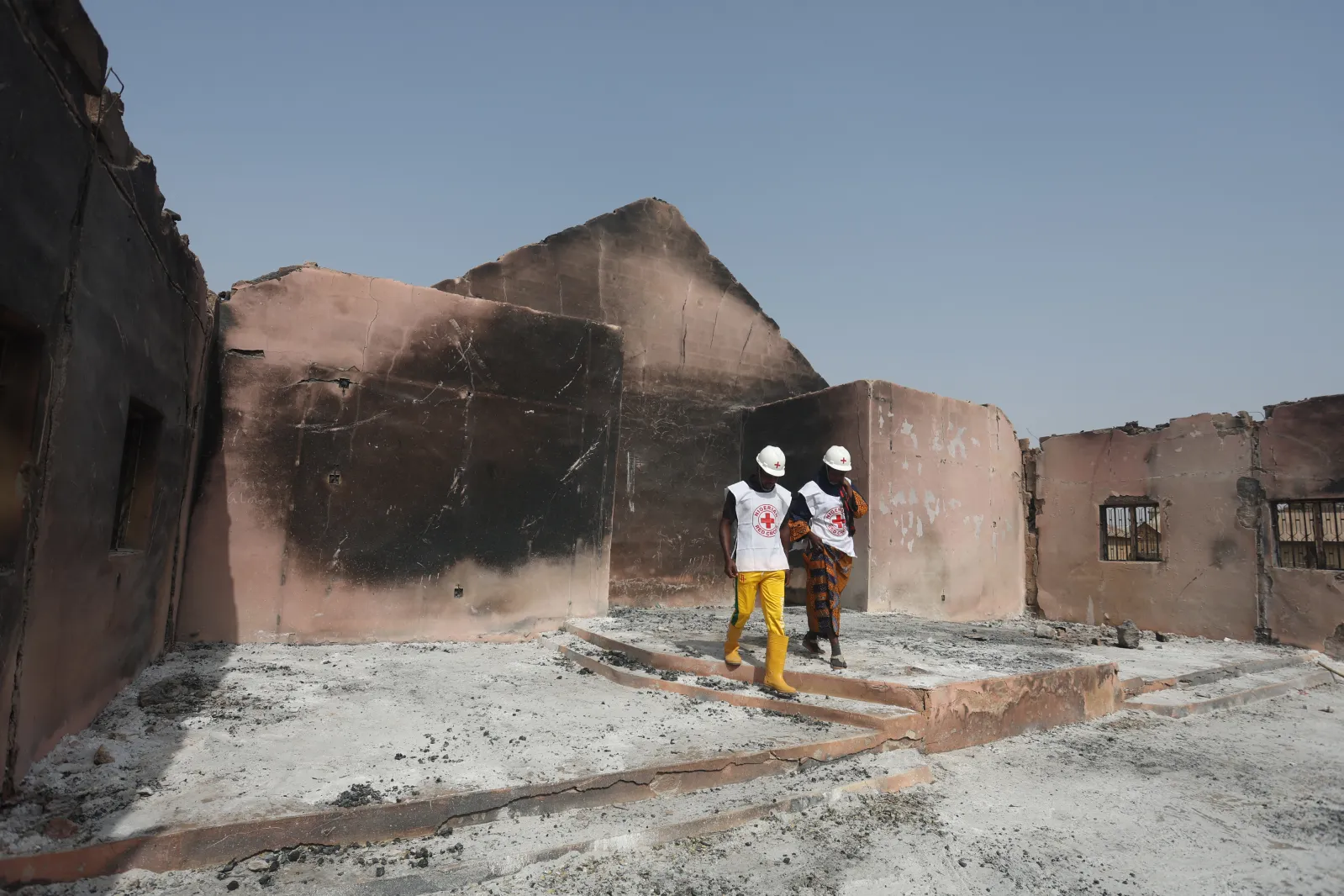
The report cited the June massacre of more than 200 people by militants in a Christian farming community.
“In a single incident in June 2025, the Christian farming community of Yelwata in Benue State came under a four-hour attack by ethnic Fulani militants,” the report said.
“They shot or burned to death more than 200 people, mostly women and children. There was little military response.”
According to Open Doors, persecution of Christians is most severe in the northern part of Nigeria, where it says “Islamic militants operate with impunity.” Christians, particularly converts from Islam, who live in states governed by Islamic law, are at great risk, it said.
However, experts and residents have told the Associated Press that while some attacks in that part of the country have targeted Christians, everyone is a potential victim regardless of their beliefs or background.
Meanwhile, data from two nonpartisan sources, the U.S.-based Armed Conflict Location & Event Data Project and Council on Foreign Relations, show that Christians are often targets in a small percentage of overall attacks that appear to be motivated by religion, in some northern states, the AP reported. But the numbers and analysts also indicate that most victims of overall violence are Muslims across the north.
While the Nigerian government has not denied that Christians have been killed, it has pushed back on allegations that extremists are systemically targeting Christians, calling it a “gross misrepresentation of reality.”
The government said that "terrorists attack all who reject their murderous ideology.”
What People Are Saying
Henrietta Blyth, CEO of Open Doors UK and Ireland, told Newsweek that the latest scores cover the 12 months ending on September 30, 2025, so "the most recent developments in Nigeria aren’t recorded."
Blyth said: "Nigeria’s score for violence was already as high as it could be, with 3,490 Christians killed for reasons connected to their faith, with 390 more than last year, and 72 percent of the total number recorded worldwide.
"The nature of the persecution varies from region to region, with the north-west rife with what is referred to as 'banditry.' There is a whole abduction industry in the region. The concern now is that these groups have been influenced by radical jihadist ideologies, giving the violence a religious justification. In some north-eastern states it is militant Islamist groups such as Boko Haram and others, actively attacking Christians and many Muslims too. And then in the North Central Belt, which includes states like Benue and Plateau state you find radicalized militant herdsman from the Fulani attacking largely Christian farmers in order to destroy churches and villages."
President Donald Trump said in an interview with The New York Times about the possibility of further strikes on Nigeria: "I'd love to make it a one-time strike. But if they continue to kill Christians it will be a many-times strike.”
He added, “I think that Muslims are being killed also in Nigeria, but it’s mostly Christians. But there are others being killed, which I’m very unhappy about also. I don’t want people killed.”
Representative John James, a Michigan Republican, wrote on X in response to the Open Doors report: "I’ve been raising the alarm on the persecution of Christians in Nigeria for years. The facts are undeniable: 72% of Christians killed globally were murdered in Nigeria. This is targeted, systematic persecution. The United States and the world must not look away."
The Nigerian government said in a statement in September: “Portraying Nigeria’s security challenges as a targeted campaign against a single religious group is a gross misrepresentation of reality.”
It added: “the violent activities of terrorist groups are not confined to any particular religious or ethnic community. These criminals target all who reject their murderous ideology, regardless of faith. Muslims, Christians, and even those who do not identify with any religion have suffered at their hands.”
Bulama Bukarti, a Nigerian human rights advocate specializing in security and development, told CNN in December: "These (extremist) groups have sadly killed many Christians. However, they have also massacred tens of thousands of Muslims.”
What Happens Next
Trump designated Nigeria a “country of particular concern" for religious freedom violations last year.
In recent days, he has said the U.S. could launch further strikes on Nigeria if militants “continue to kill Christians.”
Update 1/16/26, 5 a.m. ET: This article has been updated to add comment from Henrietta Blyth.
View 0 Comments
Submit Correction
View Editorial & AI Guidelines