10
Loading video...

By Jordan King
Reporter
0
Share
Newsweek is a Trust Project member
See more of our trusted coverage when you search.Prefer Newsweek on Googleto see more of our trusted coverage when you search.
A group searching for the remains of Noah’s Ark has said new lab results show that some pieces of wood found in a boat-shaped rock formation in Turkey match Biblical dates.
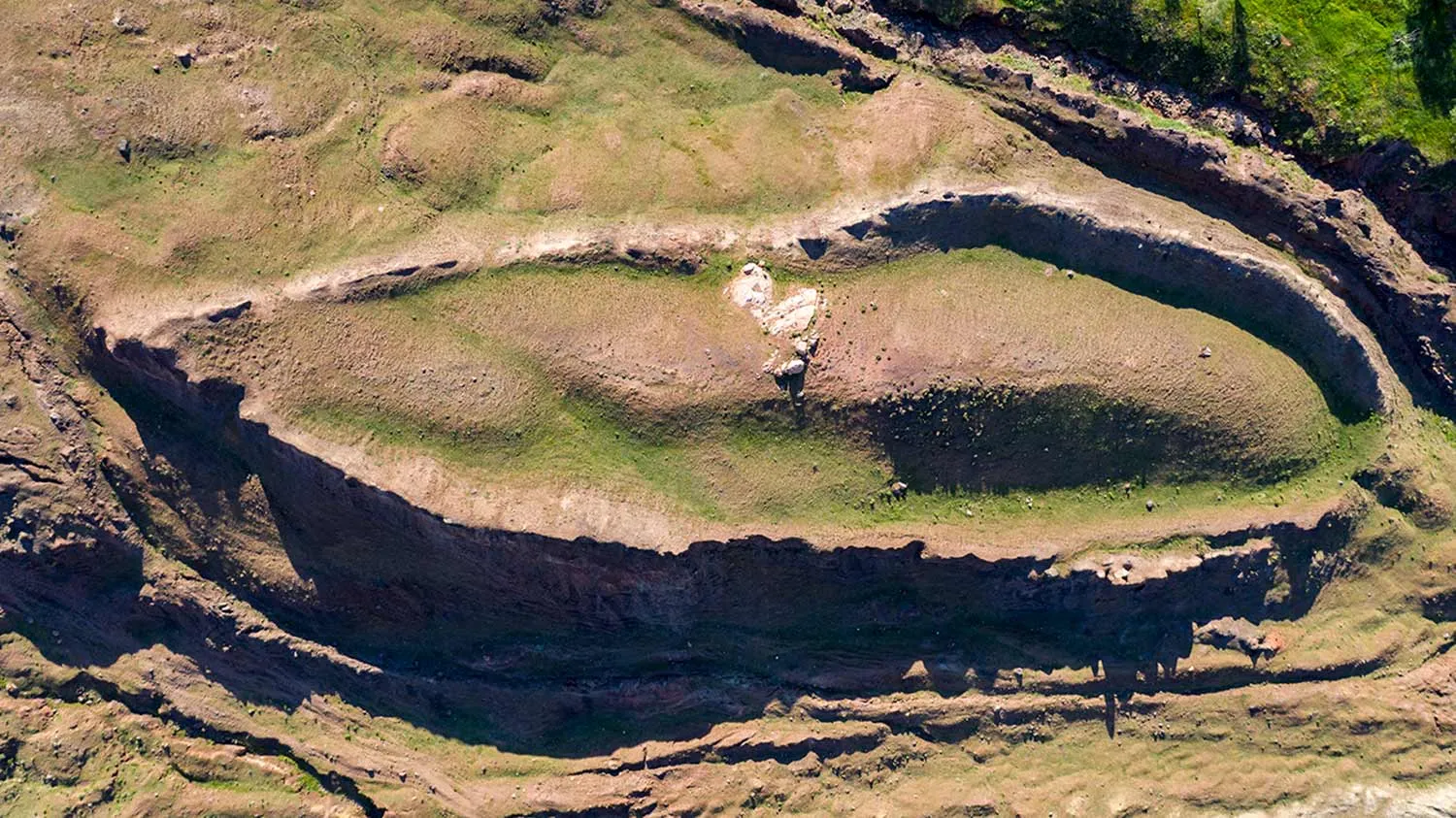
Members of the U.S.-based group Noah’s Ark Scans have repeatedly said they believe they will find evidence that the biblical ship is buried at the famous Durupınar Formation.
Earlier this month, they shared images with Newsweek showing wood fragments the researchers argued show signs that human tools were used on them, with one Archaeology professor saying he believes the wood is “very ancient,” calling them “one of the most significant discoveries,” with one of them “clearly [showing] signs of human workmanship.”
Read More on News
On Saturday, Noah’s Ark Scans founder Andrew Jones said the samples date back to about 4,300 years ago.
“So this lines up with some of the traditional dates for the flood of Noah,” Jones told Fox News, “so we're in the right time period.” Newsweek has not independently verified any of Noah’s Ark Scans’ findings—a final report on its expedition is expected in late April or May next year.
Archaeology Professor Cenker Atila, at Turkey’s Sivas Cumhuriyet University, who leads the Noah’s Ark research project, told Newsweek: "I was truly excited the moment I first pulled [the wood] out of the ground and held it in my hands. Since we found it at a considerable depth, I immediately realized that it was unlikely to be something from modern times."
The Durupınar Formation has attracted many who hope to find Noah’s Ark. It lies south of Mount Ararat in eastern Turkey, a region referenced in the biblical account of the Ark. Genesis (8:4) says that, as floodwaters receded, "the ark came to rest on the mountains of Ararat."
Multiple studies have concluded the ship is not buried there, with one calling it a “completely natural rock formation,” but Noah’s Ark Scans is hoping it will be able to challenge these findings by proving there is wood in the formation, which the group argues will indicate a human-made structure.

...
Wood Pieces: In Detail
Noah’s Ark Scans said it filled up several bags of "burnt-looking wood." The pieces are “darkened, cracked, and heavily charred, with visible grain patterns and growth rings,” the group said.
At the time, the team said the “laboratory results will determine the next steps and that no final conclusions have been drawn.”
Now, Jones has said lab results show the wood matches up with the right time frame, adding that the group is “following the scientific evidence."
"What we don't know is how the wood got there,” Jones said on the weekend. And so we're doing it one step at a time, but we're happy to see this initial results from one of the labs."
"We're checking out every piece of evidence that we gather... and reporting the results wherever the data goes,” he added.

...
Atila told Newsweek: "I believe this piece of wood was worked by human hands. The shaping marks, surface details, and certain unnatural features suggest that it may have been deliberately shaped by someone for a specific purpose."
"We believe that the Durupınar Formation could be the site of Noah's Ark," Atila said. "The possibility that these wooden pieces might belong to the Ark, and the fact that I was actually touching them, was an indescribable feeling for me. As I held the wood in my hands, I began imagining the past. I asked myself, 'Have I really found Noah's Ark?"
What Else Has Noah’s Ark Scans Found?
Before the charred wood discovery, the group revealed footage from what it said could be the "hull" of the ark.
Noah’s Ark Scans said there was "a distinct band following the boat’s outline" that "appeared different from the ground on either side of it." The team had interpreted this as "a possible outer shell, with mud inside and outside—the kind of pattern they said could fit a wooden boat buried in mud."
The researchers plan to test soil in the area "at various depths to analyze its composition," Jones previously told Newsweek.
Water can collect underground naturally—the U.S. Geological Survey says that groundwater separated from a larger body of water "typically is isolated from the regional water table by low-permeability beds" (layers of rock that water cannot easily pass through).
Noah’s Ark Scans has also published a preliminary report based on its scans, but this has not yet been peer-reviewed.
In the preliminary report, Khosrow Bakhtar, of Bakhtar Research and Engineering, interprets radar data as indicating a human-made structure beneath the Durupınar Formation’s surface.
Bakhtar described the imagery as showing "organized patterns, corridors, chambers, and hallways lying inside the 515-foot boat-shaped Formation in the Mountains of Ararat."
...
What Other Studies Have Said
One of the best-known studies about the formation was carried out in 1996 by geologist Lorence Gene Collins and former Ark believer David Franklin Fasold, who once said that the length and average overall width of the site was "exactly the same as prescribed in the Bible."
But he and Collins later wrote a paper called "Bogus Noah's Ark from Turkey Exposed as a Common Geologic Structure," published in the Journal of Geoscience Education. It described Fasold’s previous evidence as "circumstantial."
"Evidence from microscopic studies and photo analyses demonstrates that the supposed Ark near Dogubayazit is a completely natural rock formation," Collins and Fasold said in their 1996 study. "It cannot have been Noah's Ark nor even a man-made model."
Noah’s Ark Scans says it is using techniques that were not available to researchers in 1996.
Newsweek’s reporters and editors used Martyn, our AI assistant, to produce this story. Learn more about Martyn here. Contact Newsweek editors on this story: Tobias Meyjes, Gray R. Thomas
View 0 Comments
Submit Correction
View Editorial & AI Guidelines