10
Loading video...

By Anna Skinner
Associate News Editor
0
Share
Newsweek is a Trust Project member
See more of our trusted coverage when you search.Prefer Newsweek on Googleto see more of our trusted coverage when you search.
Firefighters are having a challenging time trying to contain the ongoing wildfires in North and South Carolina amid excessive fuel availability from Hurricane Helene debris.
Even as the flames spread, the fires are much smaller than the worst wildfires in both states' histories.
Newsweek reached out to the North Carolina State Climate Office (NCSCO) by email for comment.
Read More on News
Why It Matters
Earlier this month, wildfires erupted across the Carolinas amid an abundance of dry fuel. Strong winds and dry conditions aided the spread, and, as of Tuesday, agencies in both states were continuing to battle the blazes, which cover more than 6,000 acres combined.
...
What To Know
Wildfire season in North Carolina and South Carolina runs from late winter to early spring. Weather conditions like gusty winds and environmental conditions like the presence of dry fuel can exacerbate fires.
However, this year there's more debris available for wildfire fuel in both states because of Hurricane Helene's path through the U.S. last September. The excessive debris has contributed to wildfire spread and firefighters' ability to combat the flames.
North Carolina's Worst Wildfires In History
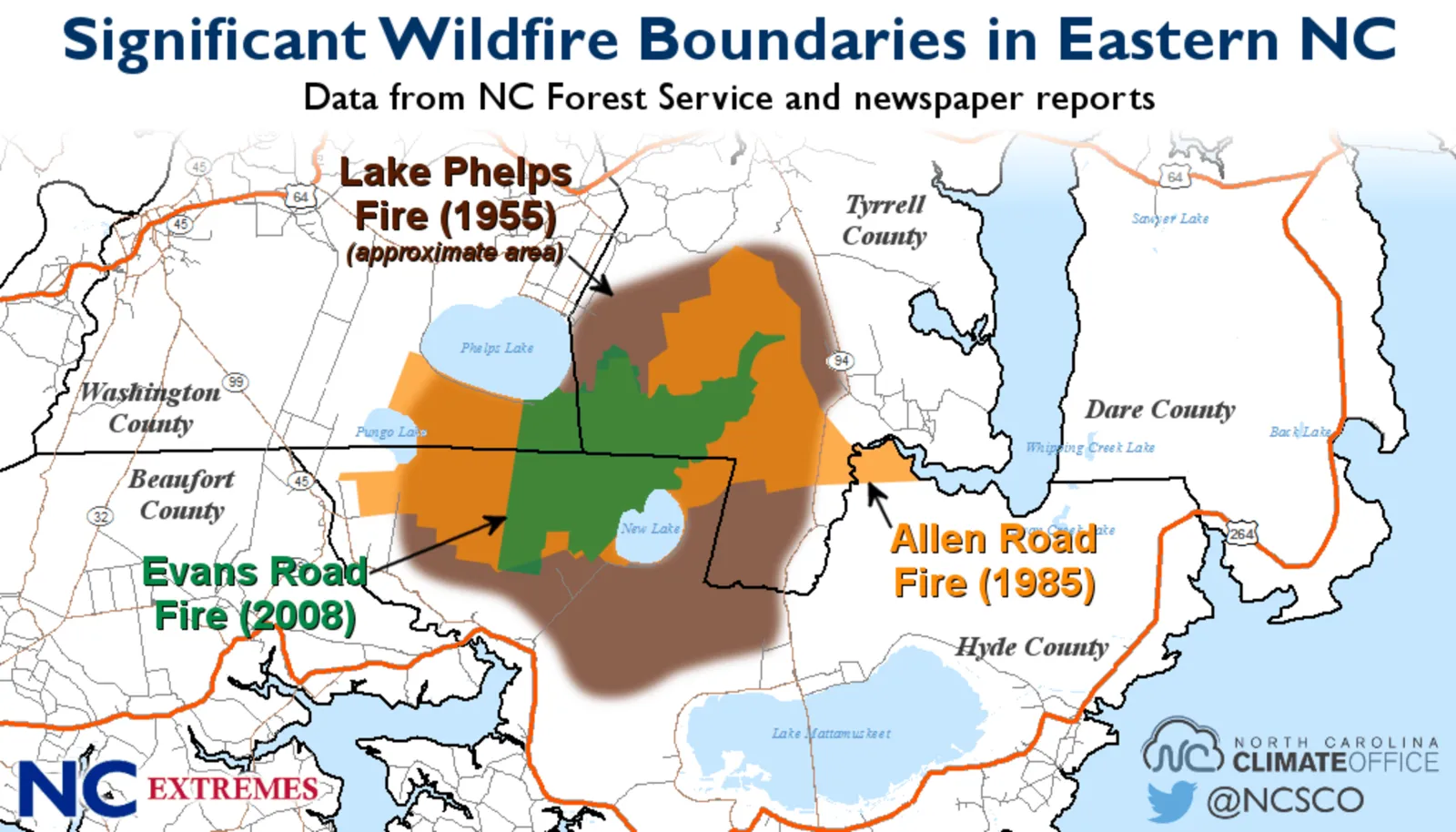
According to a report from the NCSCO, the state's largest fire occurred in 1955 when the Lake Phelps fire spread to 203,000 acres. The fire burned in Tyrrell, Hyde and Washington counties in the eastern part of the state.
Other large fires include the Allen Road Fire in 1985 at 95,000 acres, which hit the same area, and the Evans Road Fire in 2008, which burned more than 41,000 acres.
There are five wildfires burning in North Carolina as of Tuesday morning. The largest are clustered in Polk County in the western part of the state, where some of the worst debris from Hurricane Helene remains.
The Black Cove fire has exceeded 2,800 acres. According to a report by Fox Weather, the fire ignited from a downed power line. The Deep Woods Fire is nearing 2,750 acres.
According to the North Carolina Forest Service (NCFS), both fires are 0 percent contained.

...
South Carolina's Worst Wildfires In History
In February 1898, up to 3 million acres burned during a series of about a dozen wildfires that ignited across the state, a South Carolina Forestry Commission (SCFC) webpage reported.
The largest fire in South Carolina's recent history hit Horry County in 1976, according to SCFC. An unattended campfire quickly expanded to a 30,000-acre blaze.
In 2009, another large wildfire hit Horry County, where it burned more than 19,000 acres. Seven years later, the largest mountain wildfire in South Carolina's history ignited and burned more than 10,600 acres in Table Rock State Park after a campfire grew out of control.
There are three active wildfires in South Carolina as of Tuesday. One is marked as 2,059 acres and 80 percent contained in Horry County. The other two are burning in the northwestern part of the state, near the North Carolina state line.
One about 300 acres in size is burning in Greenville County and is 0 percent contained. Another is more than 1,150 acres in size and is 0 percent contained in Pickens County.
SCFC Director of Communications Doug Wood told Newsweek that firefighters are having a challenging time establishing boundaries around the fires in the northwestern part of the state because of downed timber in the mountains from Hurricane Helene.
It's unclear how the current fires in South Carolina started.

...
What People Are Saying
SCFC Director of Communications Doug Wood told Newsweek: "Some arrests have been made related to a fire in this area, but I cannot confirm whether it's related to this fire or either of the two fires we're fighting right now."
North Carolina Agriculture Commissioner Steve Troxler, in a press release about a burn ban: "It is spring wildfire season in North Carolina, and we are seeing wildfire activity increase due to dry conditions.
"With these ongoing conditions, a statewide burn ban is necessary to reduce the risk of wildfires starting and spreading quickly. Our top priority is always to protect lives, property and forestland across the state. It is imperative that folks adhere to this burn ban until further notice."
What Happens Next
Firefighters will continue fighting the blazes. The National Weather Service Climate Prediction Center anticipates above-average precipitation in both states over the next six to 10 days, which could decrease the presence of dry fuels and aid in firefighting efforts.
View 0 Comments
Submit Correction
View Editorial & AI Guidelines