
...

By Gabe Whisnant
News Editor
0
Share
Newsweek is a Trust Project member
See more of our trusted coverage when you search.Prefer Newsweek on Googleto see more of our trusted coverage when you search.
Oil giants Exxon Mobil, ConocoPhillips and Chevron were not consulted about Venezuela before or after the capture of President Nicolás Maduro, industry executives told Reuters.
Their accounts contradict President Donald Trump’s statement on Sunday that he spoke with all three companies “before and after” the operation about investing in the country.
Four sources told Reuters the firms had no prior knowledge of the U.S. plan and have held no talks with the administration since Maduro’s removal. However, a White House official told Newsweek Monday afternoon that the Trump administration has had conversations with multiple oil companies.
Read More on News
Why It Matters
While the capture of Maduro—who pleaded not guilty to federal drug trafficking charges in a New York City courtroom on Monday—has been mainly presented as an attempt to thwart his involvement in narcoterrorism, the administration has not shied away from the energy-related motivations for placing the country under U.S. control until a "safe, proper and judicious transition" can take place.
...
However, the raid has drawn criticism on international legal grounds, while leaving other countries in Latin America as well as Greenland on heightened alert. At the same time, Trump's remarks about consultation with oil firms—rather than Congress—has now attracted scrutiny from U.S. lawmakers, who believe the administration bypassed the domestic prerequisites for what some consider an act of war.
What To Know
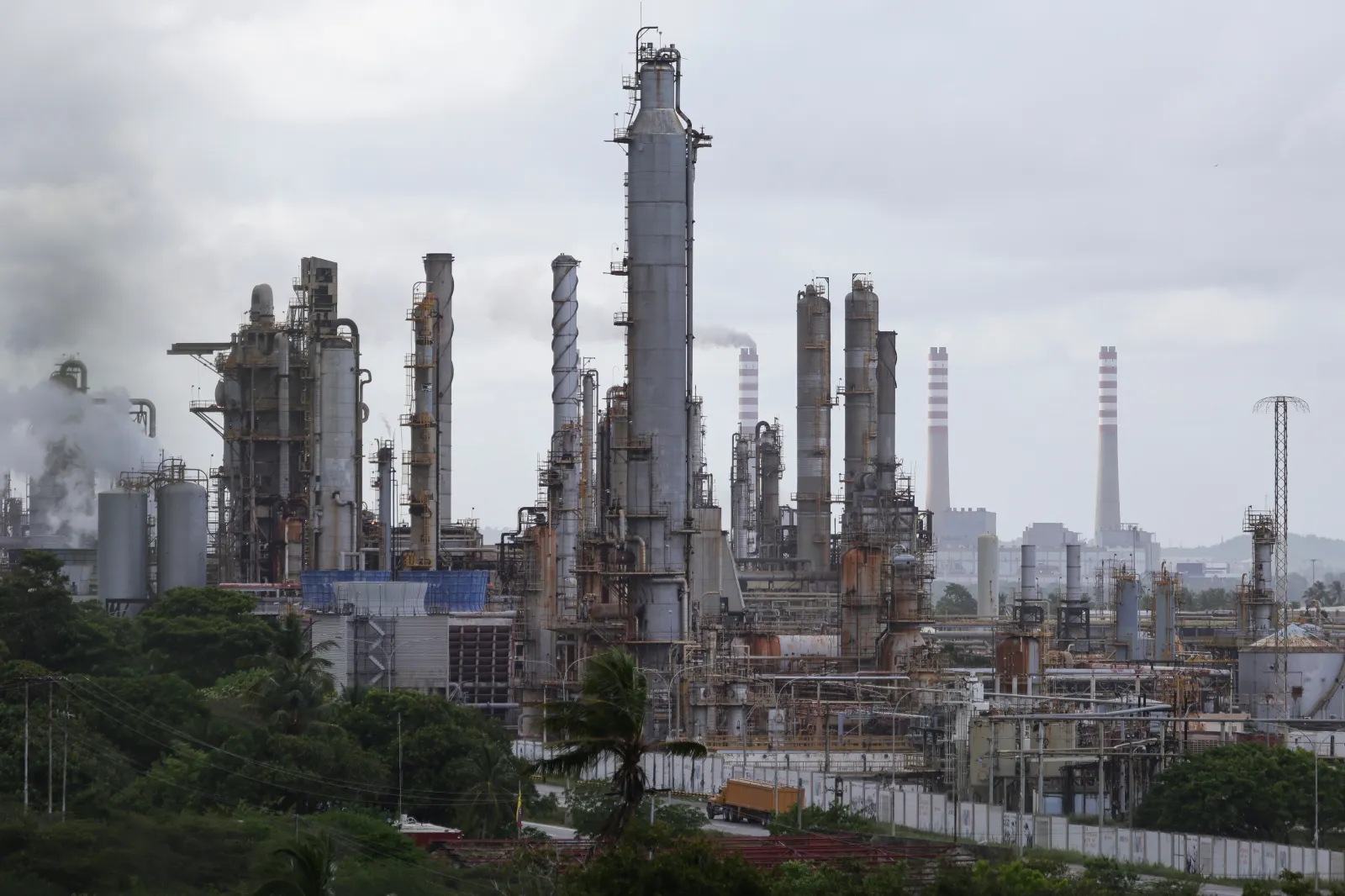
Venezuela has the largest proven oil reserves on the planet but till now has been unable to fully capitalize on its natural resource endowment, due to mismanagement and underinvestment, as well as the longstanding sanctions and financial isolation of the country by the U.S. and its allies.
Speaking to reporters aboard Air Force One on Sunday, Trump said he had spoken to "all" of the oil firms before the raid took place, without specifying what these conversations involved. He told reporters that U.S. oil firms "want to go in so badly," and said Venezuela would soon see "big investments" to revive its ailing energy infrastructure.
"They want to go in. And they’re going to do a great job for the people of Venezuela. And they’re going to represent us well," he added.
Later Monday, Reuters reported that the Trump administration is planning to meet with executives from U.S. oil companies later this week.
Bloomberg reported that U.S. Energy Secretary Chris Wright plans to meet with oil-industry executives this week to discuss reviving Venezuela’s energy sector after the capture of Maduro, citing a person familiar with the matter. Wright is scheduled to attend the Goldman Sachs Energy, Clean Tech & Utilities Conference in Miami, where executives from Chevron Corp., ConocoPhillips and other firms will be present. Chevron is currently the only oil supermajor still operating in the South American nation.
Chevron, told Newsweek in a statement this weekend that it remains "focused on the safety and well-being of our employees, as well as the integrity of our assets." ConocoPhillips has said that it was "monitoring developments in Venezuela and their potential implications for global energy supply and stability," but added that speculating on future business opportunities in the country would be "premature."
An oil industry executive told Reuters that companies are hesitant to discuss potential operations in Venezuela during group meetings with the White House, citing antitrust rules that restrict competitors from collectively sharing investment plans, timelines or production targets.
Newsweek has reached out to the Energy Department via email on Monday afternoon for comment.
What People Are Saying
White House spokesperson Tyler Rogers told Newsweek via email Monday afternoon, "All of our oil companies are ready and willing to make big investments in Venezuela that will rebuild their oil infrastructure, which was destroyed by the illegitimate Maduro regime. American oil companies will do an incredible job for the people of Venezuela and will represent the United States well.”
Trump said during a press conference following the operation on Saturday, "We’re going to have our very large United States oil companies, the biggest anywhere in the world, go in, spend billions of dollars, fix the badly broken infrastructure—the oil infrastructure—and start making money for the country."
Political analyst and Democratic Congressional candidate Fred Wellman posted to X, "I can’t begin to tell you how insane this is. He did not inform Congress but he’s saying he informed the oil companies."
...
What Happens Next
Some American business leaders are already planning to scout out the potential investment prospects in Venezuela following Maduro’s removal. In an interview with Business Insider, Charles Myers, chairman of Signum Global Advisors, said a group of 20 U.S. investors plan to travel to the country in March to explore these opportunities.
Venezuela Oil Production By Year
Venezuela’s oil production has fluctuated dramatically over the past several decades. Output peaked in the late 1990s at more than 3.4 million barrels per day, but years of underinvestment, sanctions, and infrastructure decay caused a collapse to just 392,000 barrels per day in mid-2020, the lowest on record. Recent recovery efforts have lifted production to around 860,000 barrels per day in 2024, marking four consecutive years of growth, though still far below historical highs. Despite holding the world’s largest proven reserves—over 303 billion barrels—Venezuela’s ability to convert those reserves into sustained production remains hampered by political instability and technical challenges.
Trump has said he expects major U.S. oil companies to invest billions to boost Venezuela’s crude output. However, industry analysts say those ambitions face steep hurdles, including crumbling infrastructure and deep uncertainty over Venezuela’s political future, legal framework and long-term U.S. policy.
While Chevron is currently the only American oil major operating in Venezuela, Exxon Mobil and ConocoPhillips once had significant projects there before former President Hugo Chávez nationalized their assets nearly 20 years ago.
Venezuela Oil Exports By Country
Oil remains the backbone of Venezuela’s economy, accounting for roughly 25% of GDP and the overwhelming majority of export revenue. In 2023, the United States was the largest buyer, importing about $3.8 billion worth of Venezuelan goods, primarily crude oil. China ranked second with $739 million, followed by Spain at $670 million, most of which was also crude. Despite sanctions and logistical hurdles, Venezuela exported an average of 550,000 barrels per day in 2024, with Asia—including China and India—absorbing a growing share as U.S. restrictions tightened. This concentration underscores Venezuela’s dependence on a few key markets and its vulnerability to geopolitical shifts.
One obstacle to attracting U.S. oil investment in Venezuela: China has first claim on much of the country’s output.
Beijing has lent Venezuela tens of billions of dollars under agreements requiring proceeds from oil sales to go toward repaying those loans.
The exact amount owed is unclear because Venezuela stopped reporting figures years ago, but the debt could be as high as $10 billion, according to Brad Parks, who heads AidData at William & Mary.
Chinese financing could also complicate Trump’s broader push to influence Latin America under a revived Monroe Doctrine. Parks said that for every dollar Washington provided to the region in the decade through 2023, China contributed three.
Is Venezuela Oil Lower Quality?
Yes. Most of Venezuela’s reserves, especially in the Orinoco Belt, consist of heavy and extra-heavy crude with low API gravity and high sulfur content. This makes the oil dense, viscous, and costly to refine compared to lighter grades from regions like the U.S. Gulf or Middle East. Heavy crude yields fewer high-value products such as gasoline and jet fuel and requires complex upgrading, diluent blending, and additional hydrogen treatment to meet modern standards. These factors mean Venezuelan oil typically sells at a discount on global markets and demands specialized refinery configurations, adding to its economic and logistical challenges.
Updates: 1/5/26, 1:41 p.m. ET: This article was updated with new information and remarks.
Updates: 1/5/26, 4:23 p.m. ET: This article was updated with new information and remarks.
Updates: 1/5/26, 5:11 p.m. ET: This article was updated with new information and remarks.
Updates: 1/5/26, 7:30 p.m. ET: This article was updated with new information and remarks.
The news cycle is loud. Algorithms push us to extremes. In the middle—where facts, ideas and progress live—there's a void. At Newsweek, we fill it with fearless, fair and fiercely independent journalism.
Common ground isn't just possible—it's essential. Our readers reflect America's diversity, united by a desire for thoughtful, unbiased news. Independent ratings confirm our approach: NewsGuard gives us 100/100 for reliability, and AllSides places us firmly in the political center.
In a polarized era, the center is dismissed as bland. Ours is different: The Courageous Center—it's not "both sides," it's sharp, challenging and alive with ideas. We follow facts, not factions. If that sounds like the kind of journalism you want to see thrive, we need you.
When you become a Newsweek Member, you support a mission to keep the center strong and vibrant. Members enjoy:
Help keep the center courageous. Join today.


View 0 Comments
Submit Correction
View Editorial & AI Guidelines