
...


By Joe Edwards and Anna Skinner
0
Share
Newsweek is a Trust Project member
See more of our trusted coverage when you search.Prefer Newsweek on Googleto see more of our trusted coverage when you search.
The Old Farmer’s Almanac has released its long‑range outlook for June, suggesting that the month will see recurring thunderstorm periods across several regions, along with hot conditions for many in the United States.
As a long-range outlook, it describes broad patterns rather than predicting specific day‑to‑day conditions and divides the U.S. into zones, outlining whether temperatures and precipitation are expected to trend above or below historical averages. Although not exact, the long-range predictions are widely followed as a general guide for planning around agriculture, travel and energy demand at the start of summer.
How Accurate Is the Old Farmer's Almanac?
The Old Farmer’s Almanac says its long‑range weather forecasts are about 80 percent accurate, based on its own internal analysis. However, independent evaluations tell a different story. A study by the University of Illinois conducted over five years and published in 2010 found that its forecasts were closer to about 52 percent accurate, suggesting performance not much better than chance.
Read More on Weather
Old Farmer's Almanac: Methodology for Predictions
The Old Farmer’s Almanac says its long-range forecasts are based on a proprietary formula developed in the late 18th century and refined over time with modern science. At its core, the method compares solar activity—especially sunspots—with historical weather patterns, looking for recurring relationships between the sun’s cycles and conditions on Earth. The Almanac then uses this comparison to project broad temperature and precipitation trends months in advance, rather than predicting exact day-to-day weather.
The forecasting system also draws on three main scientific disciplines: solar science, climatology and meteorology. Solar science focuses on changes in the sun’s activity, climatology looks at long-term weather patterns and past analogs, and meteorology examines atmospheric conditions. These elements are combined with 30-year averages of “normal” weather to estimate whether upcoming conditions will be warmer, colder, wetter or drier than average.
Here’s a regional overview of what conditions are likely for the month ahead, according to the publication:
Northeast
June starts with cooler, stormy stretches with scattered thunderstorms, followed by a hotter window and then warm sunshine before late‑month rain returns. The month ends with a temperature of 68 degrees—two above average.
Atlantic Corridor
The pattern points to early- and mid‑month thunderstorms, a trend toward hotter conditions, then a late‑June stormy spell with a tropical storm threat in the southern part of the region, followed by a warm finish.
The almanac said exact timing and impacts of potential tropical storms can vary. The outlook falls during the Atlantic hurricane season, in which tropical storm and hurricane activity increases for the Atlantic basin. As of Friday, the National Hurricane Center (NHC) is not tracking any disturbances in the Atlantic basin, although AccuWeather reported that a low chance of tropical impact exists across Gulf states and the southern half of the East Coast through June 12.
...
Appalachians
Early June looks hot with storms more common in the north but sunnier weather in the south, before a late‑month rainy period that includes a tropical depression threat (north) and cooler conditions, ending warmer and sunnier.
Southeast
The outlook calls for hot conditions with spotty thunderstorm chances, then a milder, sunnier stretch, before late‑June scattered storms and a tropical storm threat toward the east with cooler conditions.
Florida
June begins with thunderstorms (some heavy in the north), shifts into a hot, sunnier period, then returns to scattered storms with a brief tropical storm threat late in the month before ending hotter and sunnier.
Lower Great Lakes
The forecast keeps thunderstorms in the mix early, then turns hotter, then alternates sun and storms through mid‑June, before warm conditions dominate and the month ends sunny and hot.
Ohio Valley
The month opens with storms, then hotter sunshine, followed by a stormier mid‑June, including a brief heavy‑rain split (east) while the west trends sunnier, then late in the month turns sunny to stormy again with a cooler-to-warmer swing.
Deep South
Early June includes thunderstorms in the east and a tropical storm threat to the west, then turns hotter with sun and storms, with storm chances continuing through the end of the month.

...
Upper Midwest
June starts with storms and heavy downpours, then shifts to cooler, rainy periods mid‑month, warms again with thunderstorms and ends with sunshine and building heat.
Heartland
The Almanac’s June outlook features hot, stormy early periods, then a stretch of sun followed by thunderstorms, with additional storm chances later in the month while staying generally warm.
Texas-Oklahoma
June begins sunny and hot, flips to heavy thunderstorms and a cool-down, rebounds to hot sunshine, then keeps scattered storms around late month while staying warm.
High Plains
The pattern calls for periodic storms early, then a hotter/sunnier push in the south, with additional storm chances mid‑month and a hot, sunny finish.
Intermountain Region
Early to mid‑June features showers in the north, while the south runs warmer and sunnier. Late month brings more sun in the north and isolated storms in the south, with heat strongest in the south.
Desert Southwest
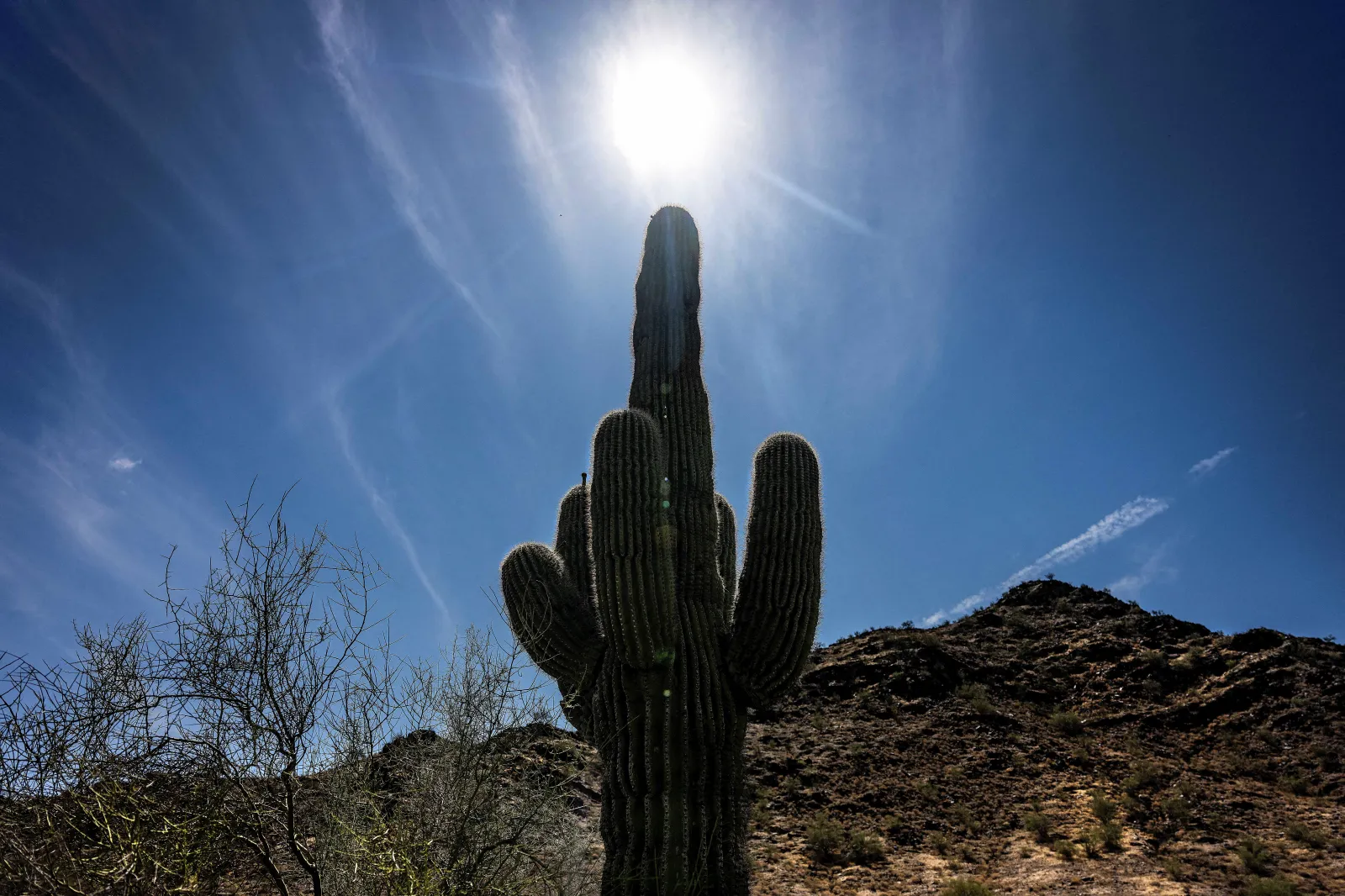
June is dominated by sun and heat, including a very hot mid‑June stretch, with thunderstorm chances increasing later in the month.
Pacific Northwest
June opens cool and wet, keeps scattered showers through mid‑month, then turns sunnier and warmer, before ending with isolated showers and cooling.
Pacific Southwest
The Almanac’s June outlook is consistently warm-to-hot, with hotter conditions building into mid‑month and continuing late, with the monthly precipitation forecast essentially near zero.
...
Alaska
June begins with showers, then a very warm spell, turns cooler with mixed showers, then shifts to rainy periods in the middle to late in the month before ending cool with showers.
Hawaii
The June outlook keeps showers recurring, with periods of scattered showers and warmer conditions in the east/central areas compared with milder conditions in the west, ending the month with more showers.
View 0 Comments
Submit Correction
View Editorial & AI Guidelines