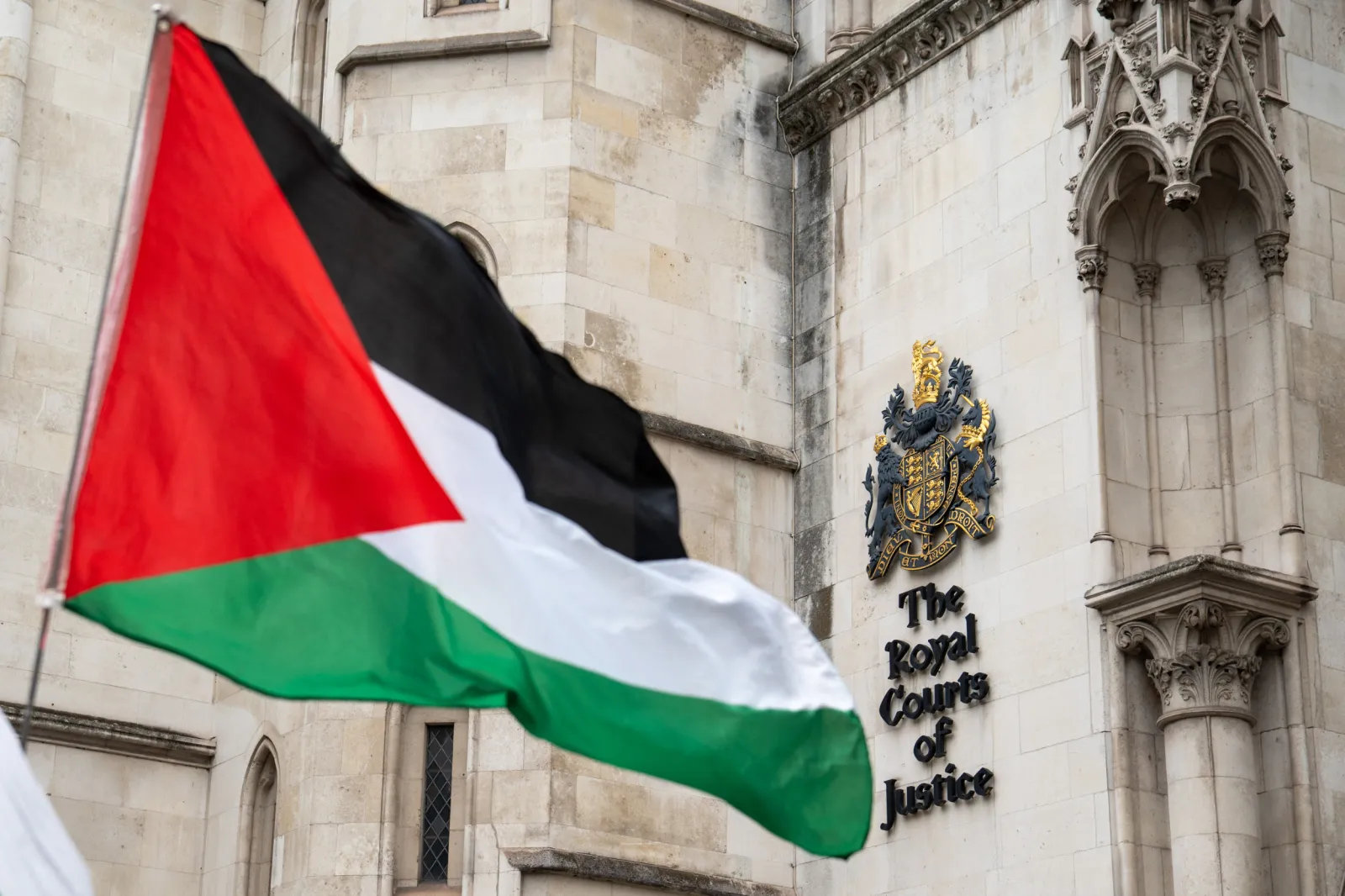
...


By Brendan Cole and John Feng
0
Share
Newsweek is a Trust Project member
See more of our trusted coverage when you search.Prefer Newsweek on Googleto see more of our trusted coverage when you search.
A map by Newsweek shows how over three-quarters of United Nations members recognize Palestine as a state, following announcements by the United Kingdom, Portugal, Australia, and Canada.
Other U.N. members to follow suit include Luxembourg, San Marino, Belgium, Andorra, France, and Malta, adding to a growing list of countries that have formally recognized, or announced plans to recognize, Palestinian statehood since 1988.
Newsweek reached out to the Palestinian Mission to the U.K. for comment.
Read More on News
Why It Matters
The leaders of major Western countries recognizing a Palestinian state follows condemnation of Israel's escalation of its offensive in Gaza amid a growing humanitarian catastrophe in the territory.
This wave of countries delivers a blow to the government of Israel, which has responded by saying recognition of Palestinian statehood without specifications to clamp down on Hamas rewards the group, whose terrorists carried out the brutal October 7, 2023, attacks in southern Israel.
What To Know
Palestine is recognized as a state by more than three-quarters of the United Nations' 193 member states.
It has observer status rather than U.N. membership, a status which has been vetoed by the United States, one of the five permanent members of the Security Council.
Most countries that recognized Palestine did so in 1988, following the Palestine National Council's (PNC) declaration of the state, although many have joined since then.
But Israel's bombardment of Gaza has focused the international community on finding a workable solution to the war that has raged following Hamas attacks on Israel almost two years ago.
In spring 2024, a group of European and Caribbean nations recognized a Palestinian state, including Barbados, Ireland, Jamaica, Norway and Spain.
Ahead of an international conference on a peaceful resolution to the Palestinian question and the implementation of the two-state solution, co-led by Saudi Arabia and France, ten additional countries announced their intention to formally recognize the State of Palestine.
This wave could bring the number of countries recognizing a Palestinian state to 150 out of 193 United Nations member states.
Palestinian Foreign Minister Varsen Aghabekian said on Sunday that the U.K., Portugal, Australia, and Canada would announce their recognition. Other countries—Luxembourg, San Marino, Belgium, Andorra, France, and Malta—would soon follow, she said.
...
U.K. Prime Minister Keir Starmer had said in July that London would recognize Palestine unless Israel took substantial steps to end the humanitarian crisis in Gaza. Deputy Prime Minister David Lammy announced Sunday that the recognition of Palestine must be part of a broader peace process.
The U.K. Foreign Office said London would recognize Palestinian statehood over provisional borders, based on 1967 lines, with equal land swaps, to be finalized as part of future negotiations.
Alexander Orakhelashvili from the School of Law at the University of Birmingham in England, told Newsweek that the U.K. was entitled to make the decision under international law and the U.K. Constitution.
Orakhelashvili said that, under international law, Palestine is a state, regardless of whether it has been recognized by any other state, and that its claim to statehood originates from its right to self-determination, rather than from the will of any external party.
"Particularly flawed is the argument, voiced at times, that Palestine could not be recognized because it does not effectively control or administer some of its legal territory," he added.
French President Emmanuel Macron said on Friday he had informed Palestinian President Mahmoud Abbas of France's intention to do the same.
Canada's recognition was confirmed in a phone call between Prime Minister Mark Carney and Abbas on July 31, while Australia also declared its position on August 11.
Also on the weekend, Portugal's Foreign Ministry announced it would recognize Palestinian statehood, with San Marino, Malta and Luxembourg also joining the list.
The wave of recent U.N. members to make the same declaration will isolate the U.S., which has recognized the Palestinian Authority, which governs parts of the West Bank under Israeli occupation, but has stopped short of recognizing an actual state.
The Israeli government and families of hostages held in Gaza have condemned the U.K.'s decision, and Israeli Prime Minister Benjamin Netanyahu said that a Palestinian state "will not happen."
What People Are Saying
Husam Zomlot, head of Palestinian Mission to the UK, told Channel 4 News that the U.K.'s move was: "a significant step in the right direction, it is long overdue."
Palestinian President Mahmoud Abbas said the recognition would allow the "State of Palestine to live side by side with the State of Israel in security, peace, and good neighborliness."
Alexander Orakhelashvili from the School of Law at the University of Birmingham in England, told Newsweek: "Under international law, Palestine is a State with or without any State's recognition. Its claim to statehood originates from its right to self-determination, and not from any external party's will."
Israel's Prime Minister Benjamin Netanyahu: "I have a clear message to those leaders who recognize a Palestinian state after the horrific massacre of October 7: You are giving a huge reward to terrorism...I have another message for you: It will not happen. A Palestinian state will not be established west of the Jordan River."
Israel's U.N. ambassador: "Empty declarations that ignore the reality and the sinister forces of our region do not advance anything."
What Happens Next
This week's 80th United Nations General Assembly will put the question of Western support for Palestinian statehood firmly in the spotlight, potentially leaving the U.S. isolated and adding to pressure on Israel over its war in Gaza.
Update 09/22/25, 10:23 a.m. ET: This article was updated with comment from Alexander Orakhelashvili.
View 0 Comments
Submit Correction
View Editorial & AI Guidelines