
...

By Jesus Mesa
Reporter
0
Share
Newsweek is a Trust Project member
See more of our trusted coverage when you search.Prefer Newsweek on Googleto see more of our trusted coverage when you search.
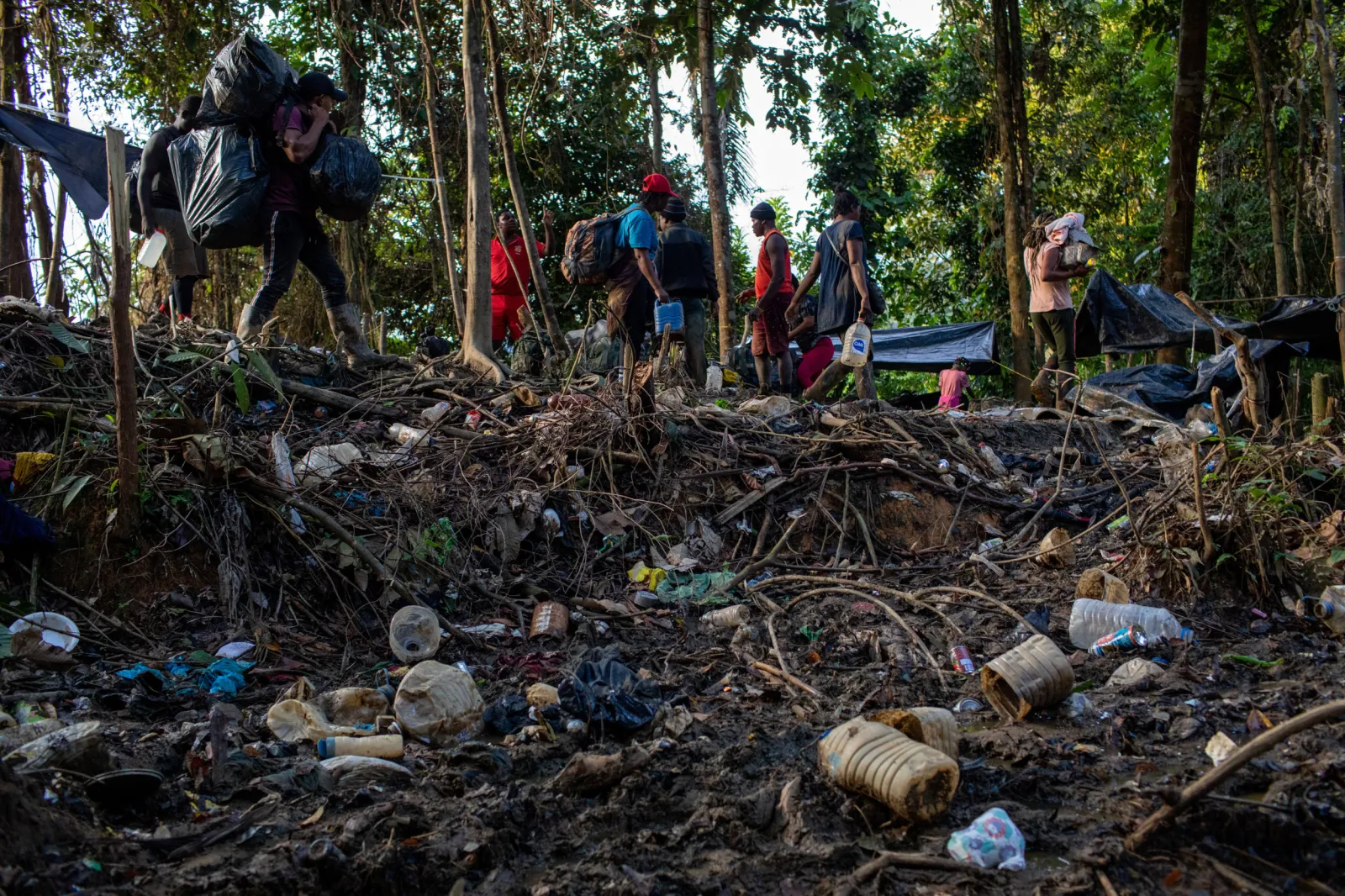
In the Darien Gap, a once-pristine stretch of rainforest connecting South and Central America, the legacy of mass migration has left behind a trail of trash, sewage and suffering.
Over a million migrants took this perilous route between 2021 and 2024, most bound for the United States. Panama's Environment Minister Juan Carlos Navarro calls it one of the worst social and environmental disasters in the country's history—and blames the U.S.
"The massive migration through the Panamanian Isthmus was a perfect social, human and environmental disaster," the longtime environmental advocate and ex-Panama City mayor told Newsweek.
Read More on World
...
"It became a major criminal enterprise for drug cartels like Colombia's Gulf Cartel and Venezuela's Tren de Aragua. Migrants were assaulted, abused and used as human bait."
Speaking ahead of the Global Climate Week and Nature Summit in Panama City in May, Navarro called on President Donald Trump to help clean up the areas heavily damaged by mass migration during Joe Biden's presidency.
"Everyone knew [about] it, and the world looked the other way. It's one of the greatest human tragedies of our century. Our government spent over $120 million annually, without any foreign help, to aid these victims so they could continue to the U.S.—while the previous U.S. administration stood by with their open borders policy," Navarro said. "When the world's greatest power promotes chaos, everything falls apart."

...
Indigenous communities in the Darien, including the Emberá, have warned that their way of life is being destroyed by migration. Panama's government estimates that more than 2,500 tons of trash have been left behind, including even bodies. "This took a toll on our forests and rivers. In the Darien region, ancient forests and pristine rivers were polluted—plastic waste, fecal matter, even human remains. We haven't cleaned it yet, but we must. We waited for supposed U.S. aid that never came."
Tests from August 2024 found dangerous levels of fecal coliform bacteria in the Turquesa River, a primary water source for indigenous communities and a habitat for fish they eat. Navarro said the Biden administration promised $3 million for cleanup. "It was all lies. We never received a penny," he said. "Then, just before they left the presidency, they said help would finally come—too late."

...
Navarro, citing government figures, estimated that just cleaning the migratory route will cost around $12 million. So far, that toll has been paid mostly by taxpayers. The average working Panamanian makes about $40 per day.
"The U.S. should help us to clean up the mess left behind," Navarro said.
...
Abigail Jackson, White House spokesperson, told Newsweek: "Joe Biden's atrocious open border policies created one of the biggest global humanitarian crises in history, and countries around the world are still recovering. Americans, and people around the world, are grateful President Trump is cleaning up Biden's mess—with border crossings through the Darien Gap dropping 99.9 percent, and the number of unaccompanied alien children arriving at the border hitting a record low."
Recent data indicates a significant fall in crossings, attributed to policy changes in Panama and the U.S. In December 2024, Panama's National Migration Service reported 302,203 migrants traversing the Darien compared with 520,085 in 2023—a 42 percent decrease. Those numbers likely dropped further after Trump's return."
U.S. Customs and Border Protection recorded 8,383 illegal border encounters in April 2025, down from 128,895 in April 2024. "Panama acted first. We made the hard calls to protect our sovereignty and forests," Navarro said. "Trump's win further helped. So, both our measures and Trump's leadership helped reduce the migrant flow." He added: "Between July and December [2024]—before President Trump won—we had already reduced migration by 60 percent."
Panama President José Raúl Mulino has fenced off parts of the jungle with barbed wire, imposed fines and used U.S.-funded flights to deport migrants.
The government is still calling for broader regional cooperation. Colombian newspaper El Espectador last year reported that migration was damaging land in key river sanctuaries in the neighboring Chocó region, threatening communities and endangered species. "This is a problem we must address together—the U.S., Panama, and all the countries in the region," Navarro said.
A Crisis Beyond the Jungle
The Panama Canal, a cornerstone of global trade and national revenue, also faces a climate threat. In 2023, Lake Gatun's levels fell to historic lows due to a prolonged drought, forcing transit restrictions that cost the country nearly $1 billion in lost revenue, according to Navarro. "We are a carbon-negative country, yet we pay the price for climate change," he said. "It's ironic, and indeed tragic, unfair and immoral, that countries like Panama suffer from climate change despite not being responsible for it."

...
Tensions over the canal's future have also been stoked by global power dynamics and speculation around foreign investments, specifically the role of China. While he declined to comment on the matter, Navarro said: "The U.S. remains Panama's top strategic and commercial partner, and always will be. This relationship must respect Panama's sovereignty and ownership of the Canal, now and forever."
View 0 Comments
Submit Correction
View Editorial & AI Guidelines