...

By Micah McCartney
Reporter
0
Share
Newsweek is a Trust Project member
See more of our trusted coverage when you search.Prefer Newsweek on Googleto see more of our trusted coverage when you search.
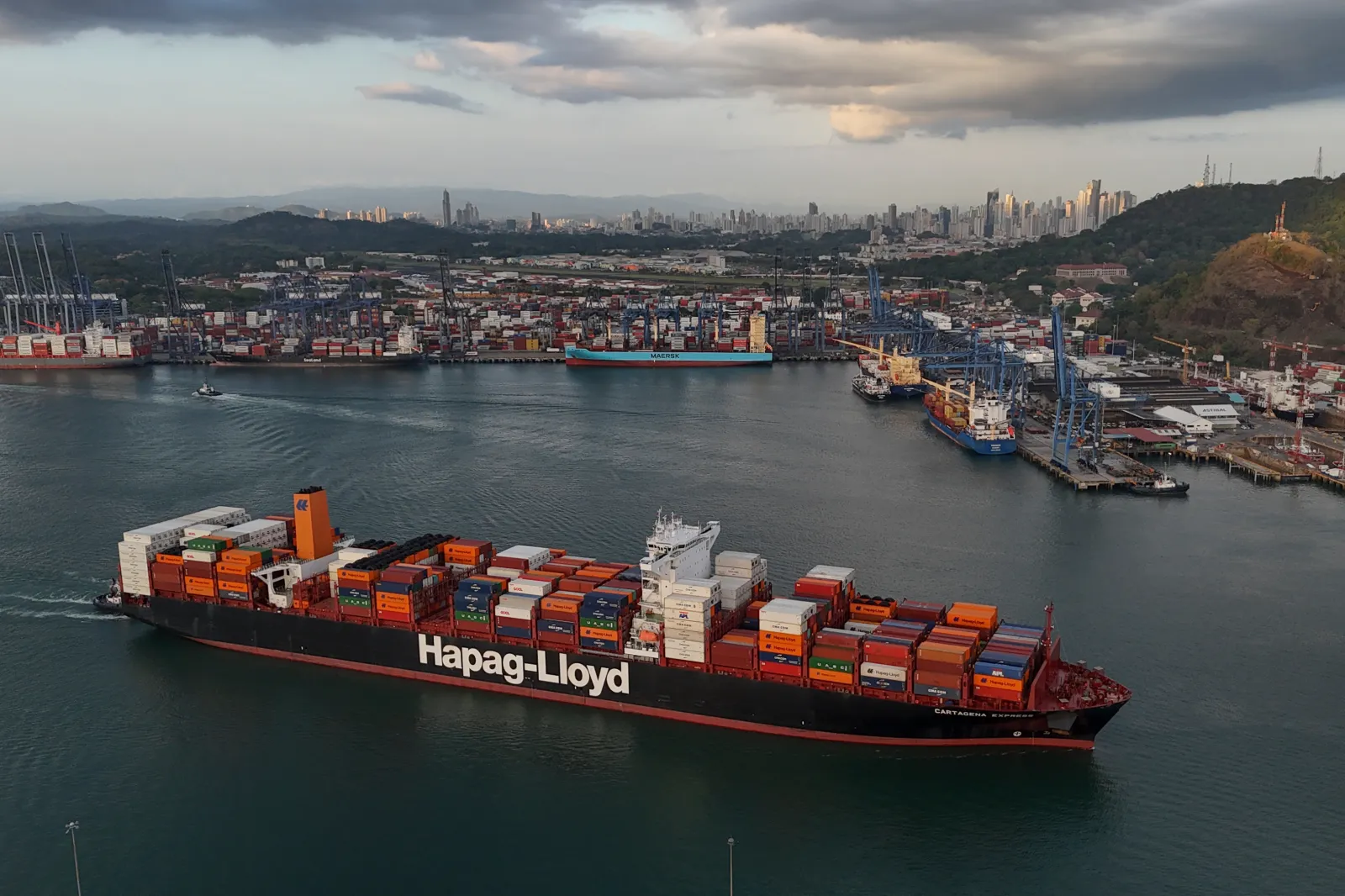
The lease contracts for ports at opposite ends of the Panama Canal held by Hong Kong-based CK Hutchison are unconstitutional, Panama’s Supreme Court ruled late on Thursday.
Why It Matters
The decision is a win for President Donald Trump, who has sought to curb Chinese influence in Latin America as the White House pivots toward the "Donroe Doctrine," a national security outlook of maintaining U.S. primacy in the Western Hemisphere including Latin America, which the United States has historically viewed as its doorstep.
Read More on World
Since returning to office one year ago, Trump has asserted that the Panama Canal has fallen under Chinese control, a claim rejected by both Beijing and Panama City.
The White House and CK Hutchison did not immediately respond to separate emailed requests for comment.
...
What To Know
The Panamanian Comptroller General Anel Flores in July filed two lawsuits seeking to annul the 25-year extension granted in 2021 to CK Hutchison for its operation of Balboa and Cristóbal ports. The official cited alleged irregularities and argued the concessions are harmful to national interests.
"The Plenary of the Supreme Court of Justice of the Republic of Panama informs the general public that during its ordinary session today…in fulfillment of its obligation as guardian of the Political Constitution, it decided to Declare [the concession contract] UNCONSTITUTIONAL," the court said in its Thursday statement.
The ruling is "inconsistent" with the 1997 law that approved the contracts, Panama Ports Company, the CK Hutchison subsidiary operating the ports, wrote in press release. "This is the latest development in a campaign by the Panamanian State impacting PPC and its investor over more than a year, including a range of surprise actions targeting the concession and PPC."
The company called for "respectful coordination and consultation to avoid disruption and protect the concession that has provided high-quality services for the benefit of Panama and the world."
China will take all measures necessary to protect the lawful interests of Chinese enterprises, China's Foreign Ministry spokesperson Guo Jiakun told reporters during the daily press conference.
"We urge U.S. politicians to stop manipulating China-related issues and make more contributions to development and prosperity in the region," he said.
The high court ruling further complicates CK Hutchison’s efforts to complete a roughly $22.8 billion sale of its majority shares in more than 40 ports worldwide.
In March last year, the company reached an agreement to sell stakes in the facilities to a U.S.-led consortium that includes asset management giant BlackRock. The deal triggered a sharp backlash from Chinese state media, which labeled it a betrayal of national interests, and remains in limbo pending approval by Beijing.
That followed another diplomatic blow for Beijing: Panama's announcement that it would terminate its participation in China’s trillion-dollar global infrastructure program the Belt and Road Initiative, ahead of the agreements’ scheduled expirations in 2027 and 2028. Chinese officials expressed regret over the decision, suggesting it had been made under U.S. pressure.
What People Are Saying
Evan Ellis, a research professor at the U.S. Army War College Strategic Studies Institute who specializes in China's relationship with Latin America, told Newsweek: "Obviously this illustrates that there was a Plan A and a Plan B to eliminate the Hutchison contract. Plan A was the BlackRock deal that was effectively blocked by China, by insisting that [state-owned shipping giant] COSCO have a controlling share, which would have been worse than Hutchison, given COSCO's ties to the People's Liberation Army.
"U.S. strategic concerns about the Chinese in Panama don't just have to do with the operation by Hutchison, but rather the much broader Chinese presence that involves COSCO's use of the canal, China Harbour Engineering Company and its construction of the fourth bridge, and the large number of other Chinese companies that operate wholesale and retail operations and various other things throughout Panama.
"To me, it's that much broader Chinese presence that provides the combination of physical presence, relationships, and technical knowledge that the Chinese could exploit in a time of war to shut down the canal, or continue to use in relation to other Panamanian actors to expand their commercial presence and political influence in what is a key global, logistics, and financial hub in peacetime."
A State Department spokesperson previously told Newsweek: "The United States remains concerned about Chinese influence near the Panama Canal, especially through companies linked to the Chinese Communist Party. We appreciate Panama’s actions to curb CCP influence in the Canal and the region through decisions such as exiting Beijing’s Belt and Road Initiative and auditing the Panama Ports concession."
What Happens Next
CK Hutchison is considering splitting the sale of its majority stakes in port holdings into separate transactions, Bloomberg reported last week, citing people familiar with the matter. The company is said to be weighing the sale of stakes in ports located in countries viewed as friendly to Beijing to state-owned COSCO Shipping, in a bid to secure final approval from the Chinese government.
Update 1/30/26, 6:03 a.m. ET: This article has been updated with statements from Panama Ports Company and the Chinese Foreign Ministry.
Update 1/30/26,10:17 a.m. ET: This article has been updated with a comment from Evan Ellis.
View 0 Comments
Submit Correction
View Editorial & AI Guidelines