...


By Sam Stevenson and Hugh Cameron
0
Share
Newsweek is a Trust Project member
See more of our trusted coverage when you search.Prefer Newsweek on Googleto see more of our trusted coverage when you search.
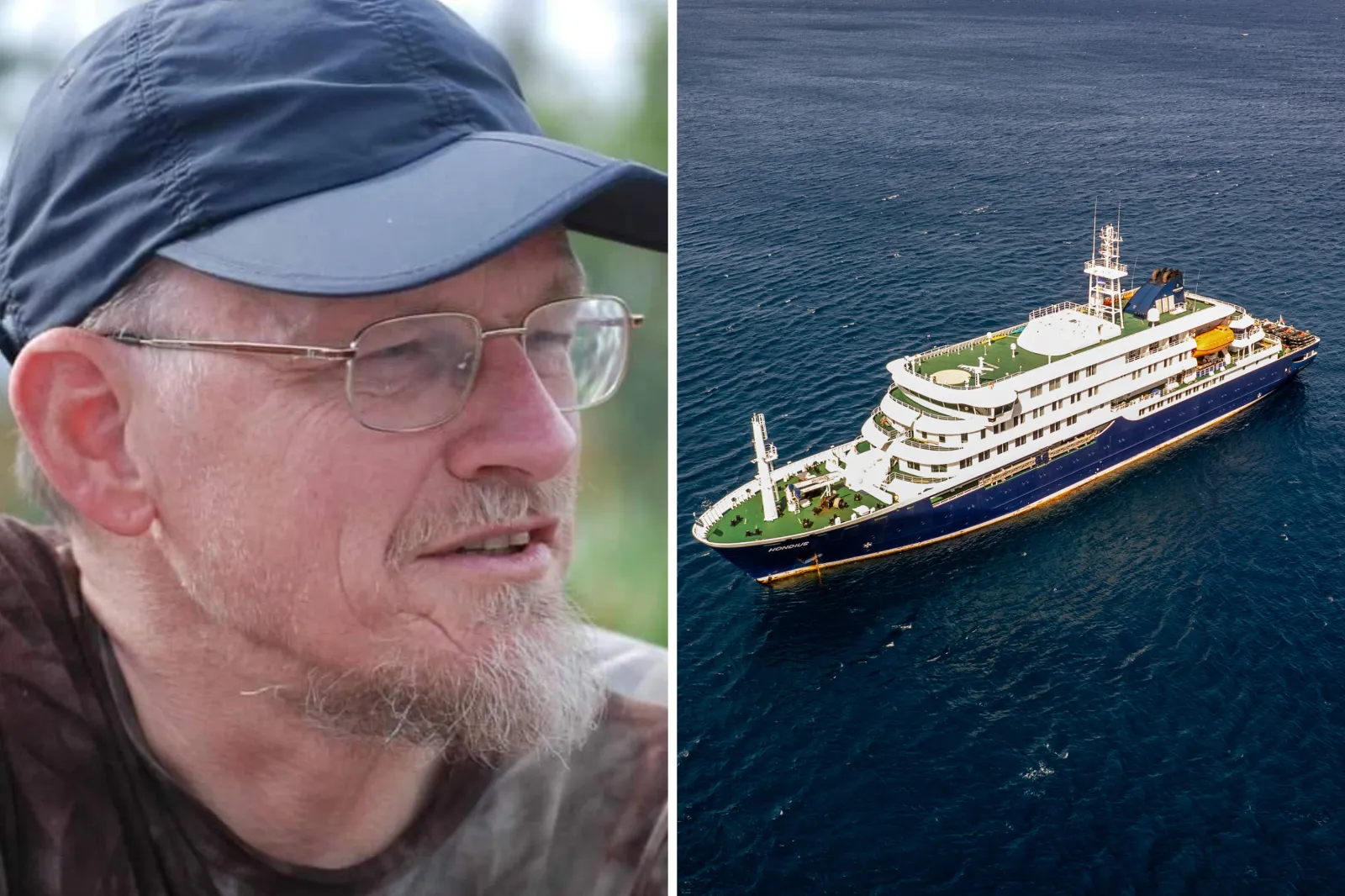
Dutch ornithologist Leo Schilperoord has been identified as the first known case in the deadly hantavirus outbreak linked to the MV Hondius cruise ship, after falling ill during an April voyage in the South Atlantic.
His case is central to efforts by global health officials to trace how the rare virus spread among passengers and across borders.
Schilperoord, 70, and his wife Mirjam, 69, were experienced birdwatchers who had spent months traveling across South America before boarding the MV Hondius on April 1. Their journey took them through Argentina, Chile, and Uruguay, with a return to Argentina in late March for what would prove to be a fatal stop.
Read More on News
Newsweek contacted the Dutch Ministry of Health, Welfare and Sport and the National Institute for Public Health and the Environment (the Dutch national public health institute) for comment via email.
What We Know About Leo and Mirjam Schilperoord
The couple, from Haulerwijk, a Dutch village with a population of about 3,000, were named in obituaries published in a local monthly magazine, the New York Post and Dutch media both report.
In a update on the outbreak published Friday, the World Health Organization (WHO) listed an unidentified adult male and adult female who were traveling together as the first cases—the man was classified as a “probable case,” while the woman’s infection was confirmed through PCR testing.
The WHO is currently investigating the origin of the outbreak in coordination with authorities in Argentina and Chile. There has been a recent spike in recorded cases in Argentina, one of the countries where officials note the couple had been travelling before embarking on April 1.
The agency said early investigation suggested “possible exposure to rodents during birdwatching activities,” based on the travel history of those first infected.
Beyond Leo’s work as an ornithologist, the Schilperoords also appear to have been seasoned birdwatchers, having documented an "unforgettable" birdwatching tour they took in 2013 in Sri Lanka in a review posted online. They also co-authored research on pink-footed geese in Southwest-Friesland for the Dutch magazine Het Vogeljaar (“Bird Year”) in 1984.
According to the WHO, the man now identified as Leo Schilperoord developed symptoms on April 6 and died onboard on April 11. His wife remained on the ship and disembarked at Saint Helena on April 24 “with gastrointestinal symptoms.”
“She subsequently deteriorated on a flight to Johannesburg, South Africa, on 25 April,” the WHO said. “She died on 26 April in a Johannesburg clinic.”
What Is Different About This Strain
The outbreak involves the Andes strain of hantavirus, a rare variant that can spread between humans, unlike most strains of the disease, which generally pass from rodent to rodent.
Its emergence on a cruise ship has triggered international contact tracing efforts across multiple countries, highlighting how quickly infections can cross borders.
Passengers, including Americans and Europeans who have since returned home, are now being monitored for symptoms as authorities race to contain further infections.
...
A Birdwatching Trip That Turned Deadly
Authorities believe the couple may have been exposed during a visit to a landfill outside Ushuaia, a remote city in Patagonia that draws bird enthusiasts searching for rare species such as Darwin’s Caracara.
The site, described by local officials as heavily contaminated, is thought to harbor rodents carrying the Andes strain of hantavirus, which is typically spread by inhaling particles from infected droppings or urine.
Illness On Board The MV Hondius
Schilperoord began showing symptoms less than a week into the voyage, including fever, headaches and gastrointestinal problems, before dying on board the ship on April 11, according to the ship operator, Oceanwide Expeditions.
At the time, hantavirus was not immediately suspected because his symptoms were similar to those of other respiratory diseases, and his death initially went unexplained and no samples were taken, according to WHO Director-General Tedros Adhanom Ghebreyesus.
His wife disembarked when the ship reached the remote island of Saint Helena on April 24, but fell ill shortly afterward. She died days later in South Africa after her condition deteriorated.
Their deaths are now believed to be among the earliest linked to the outbreak, with investigators treating Schilperoord as “patient zero” in the cluster.
A Rare Virus Spreading Beyond The Ship
The MV Hondius, carrying more than 100 passengers, became the center of a growing public health response as additional cases were identified.
At least several infections and multiple deaths have been linked to the voyage, prompting monitoring, quarantines and contact tracing in countries including the United States, the United Kingdom and across Europe.
Several passengers left the ship mid-journey and traveled internationally, raising concerns about further spread during flights and onward journeys.

...
Why This Outbreak Is Different
Hantaviruses are typically transmitted from rodents to humans and are not known for sustained human-to-human transmission.
However, the Andes strain linked to this outbreak is an exception, with health officials noting it can spread through close contact between people.
Even so, experts stress that transmission requires prolonged or intimate exposure and that the overall risk to the wider public remains low.

...
Why Experts Say A Pandemic Is Unlikely
Despite the severity of the MV Hondius outbreak, epidemiologists stress the virus lacks the one ingredient needed to trigger a global crisis: efficient human transmission.
“Pandemic potential is mostly about transmission architecture, not lethality,” Amesh Adalja, a senior scholar at Johns Hopkins, told Newsweek.
Hantavirus tends to make people seriously ill quickly, limiting how far it can spread. “It’s not the case fatality rate that matters… it’s the ability to transmit between humans,” Harvard epidemiologist Bill Hanage said.
Experts say that even the Andes strain, the only version known to spread between people, does so poorly and usually requires close, prolonged contact.
“It’s very hard to transmit it from one person to another,” Stanford epidemiologist Marc Lipsitch told Newsweek.
That combination—high severity but low transmissibility—means outbreaks can be deadly, but are unlikely to spiral into a pandemic.
Hondius Timeline
- April 1: The MV Hondius departs Ushuaia, Argentina, embarking on a voyage across the South Atlantic.
- April 11: A Dutch passenger dies on board, marking the first fatality linked to the trip.
- April 24: The man’s widow is airlifted from St. Helena to Johannesburg along with his body.
- April 25: Her condition deteriorates during the transfer and she is hospitalized on arrival.
- April 26: She dies in hospital. Authorities later confirm she had contracted hantavirus.
- April 27: A second ill passenger, a British national, is evacuated to South Africa and remains hospitalized in a critical but stable condition with a confirmed infection.
- May 2: A German passenger dies aboard the ship, though it is not yet confirmed whether hantavirus was involved.
- May 3: The vessel arrives off Cape Verde but is denied permission to dock.
- May 5: Healthcare workers board the ship off the coast of Cape Verde to assess the situation.
- May 6: The WHO confirms a third hantavirus case in a previously disembarked passenger who sought treatment in Zurich.
- May 10: The vessel reaches Tenerife, where passengers are tested before travelling to a local airport for repatriation flights.
Ongoing Investigation And Global Response
Health authorities are continuing to investigate the precise chain of transmission, including whether the infection began before passengers boarded the ship or spread during the voyage.
International agencies, including the WHO, are coordinating testing, monitoring and isolation measures while tracking passengers across multiple continents.
The focus remains on containing the outbreak, identifying any additional cases and understanding how a rare virus found its way onto a cruise ship far from its usual environment.
Update 5/10/26 10:27 a.m. ET: This article was updated with additional information.
View 0 Comments
Submit Correction
View Editorial & AI Guidelines