Photo-illustration by Newsweek/Getty

By Katherine Fung
Senior Writer
0
Share
Newsweek is a Trust Project member
See more of our trusted coverage when you search.Prefer Newsweek on Googleto see more of our trusted coverage when you search.
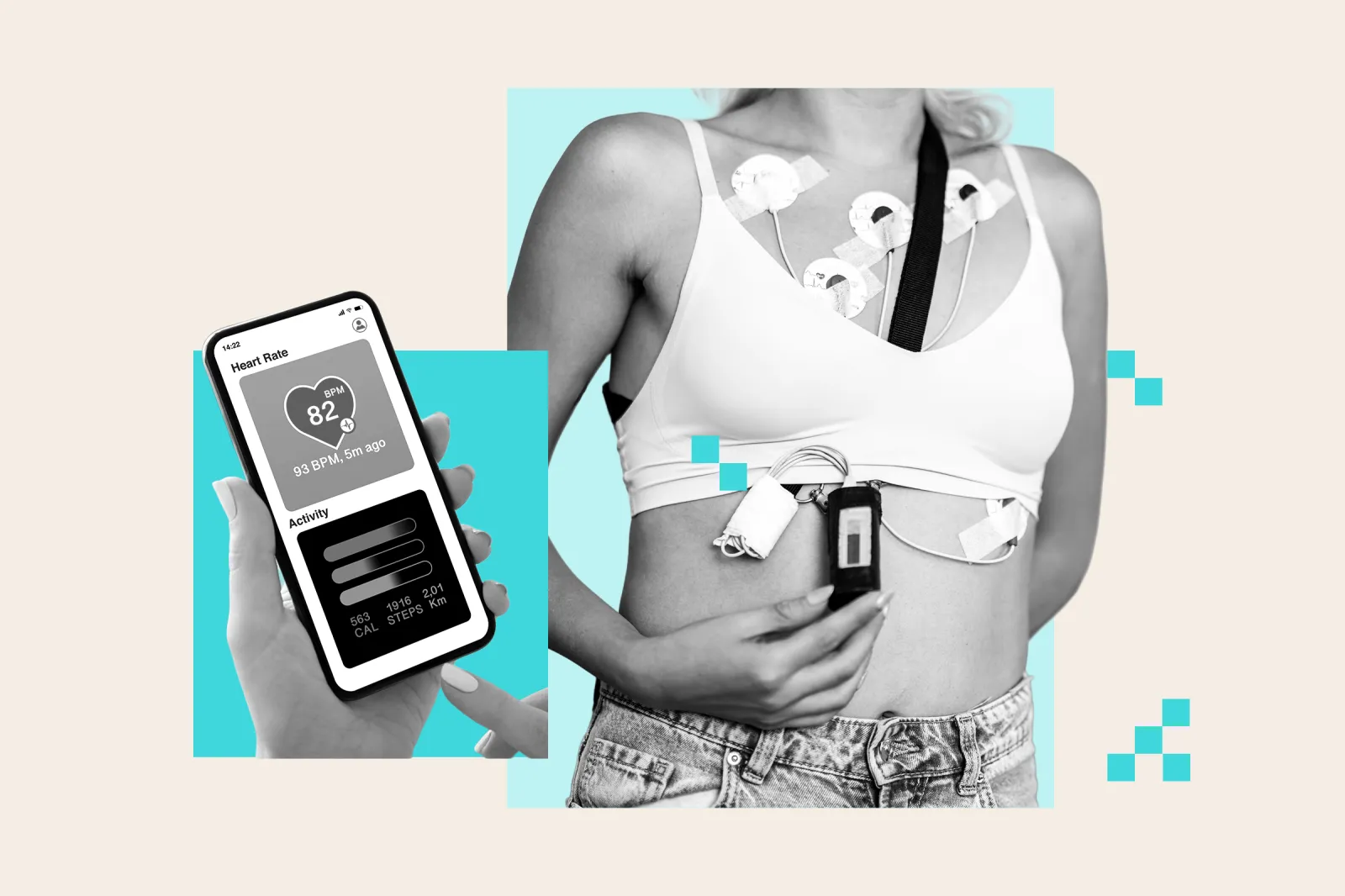
Wearable technology has become more accessible, more affordable and more trusted by consumers than ever before. But can those devices deliver measurable clinical and financial returns that justify investment by health systems—especially amid workforce shortages and tightening margins?
Experts from WHOOP, Northwell Health and Withings came together to address that very question during Newsweek’s latest webinar, “Wearables: What’s the ROI for Health Systems?”
On Thursday, January 22, Newsweek’s Healthcare Editor Alexis Kayser led WHOOP’s Head of Healthcare Product Alex Vannoni, Northwell’s Executive Vice President and Physician-in-Chief Dr. David Battinelli and Withings’ Vice President of Value-Based Care Patrick Sheehan in an hour-long discussion about how consumer demands are shaping wearable strategy, which patient populations are most likely to see the strongest ROIs and what the Food and Drug Administration's recent moves mean for the industry.
Read More on Health Care
In his opening remarks, Battinelli said there is “an enormous area” of potential for wearable devices, but that the “missing link” lies in the opportunity “for the health care industry to provide something for patients to be connected to.”
He said that the device he's most looking forward to is the blood pressure cuff, which he pointed out has not been innovated upon for the last hundred years.
"Data [from the National Health Nutrition Examination Survey] says that only 22 percent of people who actually know they have hypertension are actually adequately controlled," Battinelli said. "The reason is that the blood pressure cuff is inadequate to be able to do that job, just like a finger stick or a blood draw for glucose is inadequate."
"Somebody's going to come along and be able to actually monitor blood pressure continuously, and that's when the patients are going to believe the numbers and [know] how to better take care of themselves," he added. "No question in my mind."
Photo-illustration by Newsweek/Getty
Vannoni said that while WHOOP is not in the world of diagnoses and prescriptions, the wearable company is looking at how it can surface and escalate the “check engine light” moments recorded on its devices to medical professionals who can provide the necessary care.
“Actually, I don’t think there are check lights anymore, Alex,” Battinelli jumped in. “In my car, I get a message from BMW that tells me they’re monitoring everything about my car. And that’s the way to go.”
“These are new ways to connect patients to health care and patients to their own care, both for prevention and disease management,” he said. “This is the tip of the iceberg.”
Throughout the webinar, Northwell’s EVP and Physician-in-Chief spoke about the ubiquity of health monitoring data and urged clinicians to rethink their approach to the medical knowledge that patients now bring into the exam room. Battinelli, reflecting on his early experience as a provider during the rise of the internet, recalled that some colleagues tried to steer patients away from online medical information.
He remembered telling those peers, “You don't understand. That's the solution to your problem.”
“The better [patients] can take care of themselves, the better it's going to be,” he said. “Most people are a little concerned about being overwhelmed with too much data that they can't do anything about. But that's better than too little data.”
Vannoni agreed with Battinelli’s sentiments. He said that when he started a company focused on Parkinson’s patients a decade ago, “there was a lot of pushback” from providers “because they didn’t know how to evaluate the data, how to understand it, how to apply it to the way” they were treating their Parkinson’s patients.
“Fast forward 10 years [to] now, and what we're seeing is it's so ubiquitous, and so many patients are investing in this technology on their own,” Vannoni said. “We're seeing a lot more adoption, a lot more providers leaning in.”
Sheehan chimed in saying that it was important to empower physicians to make decisions based on as much patient information as possible. He said what Withings struggles with the most is the development of new biomarkers and how clinicians respond to those new data points.
“What we struggle with isn’t getting physicians excited; it’s getting the guidelines to really look at these innovative markers [that] are coming from wearables and connected devices [and] that empowers a physician to feel confident in knowing the right protocol and treatment and action that’s associated with that biomarker,” Sheehan said.
Vannoni said that one point of focus for WHOOP has been figuring out how to familiarize providers with wearable devices.
“The best way to get them more familiar is to have them be members and users and owners of wearables themselves, [to] understand the data, how it affects their day-to-day life, and then hopefully that extends into the way that they care for their patients,” he said.
The next Newsweek webinar, “Preventing Chronic Disease Patients From Falling Through the Cracks,” will be on Thursday, February 3, from 2 p.m. to 3 p.m. ET. Learn more and register at this link.
Subscribe to *Newsweek’*s health care newsletter, Access Health, here.
View 0 Comments
Submit Correction
View Editorial & AI Guidelines