...

By Shane Croucher
Senior Editor
0
Share
Newsweek is a Trust Project member
See more of our trusted coverage when you search.Prefer Newsweek on Googleto see more of our trusted coverage when you search.
Pete Hegseth wants you to watch. He wants you to see justice delivered in blood and on your screen.
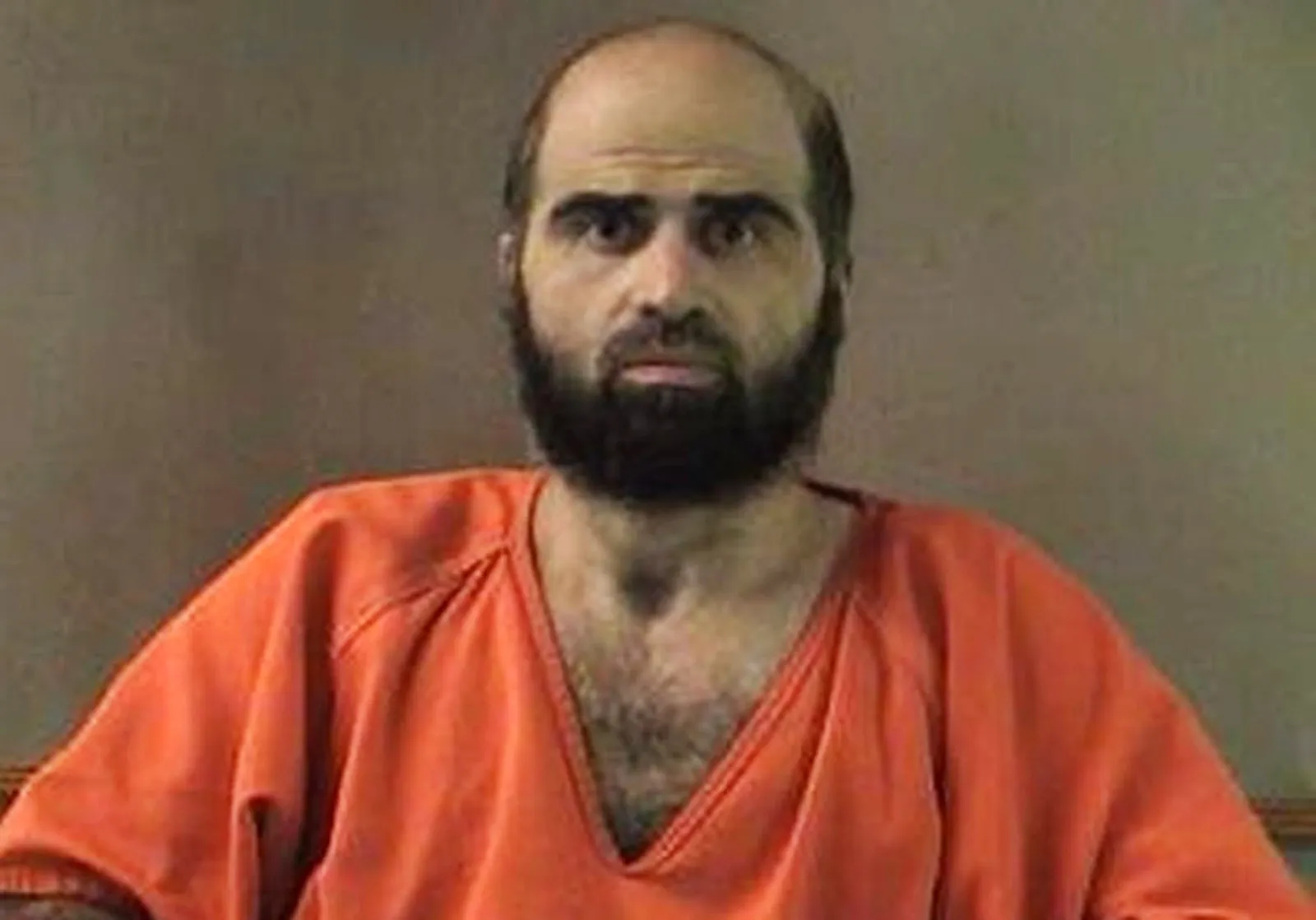
Nidal Hasan, who murdered 13 people at Fort Hood in 2009, is set to face an Army firing squad on December 3.
The Fort Hood attack came at the height of the Global War on Terrorism, and investigators concluded that Hasan was motivated by Islamic extremist beliefs.
Read More on Analysis
They cite his pre-attack email exchanges with Anwar al-Awlaki, the al-Qaeda-linked cleric who later praised the massacre, as well as Hasan's own statements.
During his court-martial, Hasan said he had acted in defense of the Taliban, described himself as having "switched sides".
The defense secretary says Hasan's death will be public. If the execution is allowed to proceed as suggested, that means via a livestream.
The point, Hegseth said, is that “people need to understand that there’s serious consequences for these types of things.” He invoked the memory of American firing squads performing executions in World War II.
Many of Hegseth’s shocked critics reached for the darkest comparison in more recent memory than 1945. “That’s disgusting. What, is he mimicking ISIS executions?” Democratic Senator Chris Murphy of Connecticut said on CNN.
The Daily Beast ran its story beneath the label “MAGA MEETS ISIS,” adding the strapline: “He’s planning something we haven’t seen in 90 years—but which ISIS reveled in.”
Others on X made the same logical leap. “Even ISIS didn’t livestream executions,” wrote Brianna Wu, a former Democratic candidate for the U.S. House, positioning Hegseth as worse than the radical Islamist be-headers of the erstwhile caliphate.
“Won't be long before this sick religious fanatic proposes to behead somebody on camera ISIS-style,” posted the journalist John Harwood, a former White House correspondent for CNN.
Related Story

The Battle of Hormuz Is Won. Now Comes the Insurgency Phase
"We’re fighting terrorism by becoming ISIS," wrote Gev Iskajyan, advocacy director of the Armenian National Committee of America. "A brilliant strategy by the frat bros running the United States."
The writer Mark Ames argued that Hegseth wants a livestream for the same reason ISIS posted its killings: to radicalize and recruit disaffected and downwardly mobile young men.
There is a strong case against broadcasting an execution, which would break a modern taboo in Western societies well beyond even having a death penalty, which is rare.
But the ISIS comparison is not it. It is lazy, it is false, and it buries the argument that might actually persuade.
Hegseth’s critics are right that this is a morbid spectacle. America stopped executing people in public, and for good reason. That Hasan has been paralyzed since officers shot him to end his rampage only makes the optics worse, despite his appalling crime.
But ISIS did not invent the public execution. For centuries it was the norm, including in Western societies, defended on much the same grounds Hegseth now offers: justice seen to be done, and a warning to anyone tempted to follow.
Britain hanged people in public until 1868. In 1936, as many as 20,000 people gathered in Owensboro, Kentucky, to watch America’s last public hanging. Murphy himself called public executions medieval.
That is exactly the point. The tradition Hegseth is reaching back to is ours, and more modern, not a caliphate’s attempt to replicate life in the 7th century desert of Prophet Mohammed.

...
What made ISIS’s executions monstrous is everything Hasan’s case is not.
The group beheaded journalist James Foley and aid worker David Haines on camera. They burned Jordanian pilot Muath al-Kasasbeh alive in a cage, in slickly produced films built to terrorize enemies and recruit followers.
Its hostages had committed no crime, and faced nothing resembling a trial. Only a brutal and excruciating death. A firing squad is a mercy in comparison.
Hasan was court-martialed and convicted of murdering 13 people, among them a pregnant 21-year-old soldier, and of trying to murder 32 more. A military jury sentenced him to death in 2013, and his appeals ran for more than a decade.
What his execution would share with ISIS’s—an audience and a message—it also shares with Victorian London and Depression-era Kentucky.
ISIS has become what the Nazis have long become in political argument, especially online. Not a comparison, but a verdict, summoned to signal villainy rather than describe anything of substance. It’s Godwin’s law for the post-9/11 age.
Related Story

Memo To America: This Is What a Crisis Looks Like
And that’s the trap. Equate a lawful execution of a jihadist mass murderer with the slaughter of hostages, and you pick a fight Hegseth wants—whether Hasan deserves to die—instead of one he would lose—whether Americans should be invited to watch.
Republican Senator Thom Tillis of North Carolina showed how to land the punch.
He said Hasan should face the death penalty. But he also called the livestream “beyond disgusting,” and noted that “public executions are what oppressive dictatorships like Iran and Afghanistan do. It should not be happening in America.”
That stings because it is truer and closer to the real argument about the values that define America, rather than hyperbole about ISIS.
Robby Soave of Reason magazine raised terrorism—and invoked ISIS too—the right way, as a warning: a broadcast hands a jihadist the publicity and martyrdom he craves. “It’s ISIS recruitment slop,” Soave said.
The case against Hegseth’s spectacle is strong enough on its own. Dressing the execution up as equivalent to ISIS doesn’t strengthen the argument. Quite the opposite.
View 0 Comments
Submit Correction
View Editorial & AI Guidelines