...

By Maria Azzurra Volpe
Reporter
0
Share
Newsweek is a Trust Project member
See more of our trusted coverage when you search.Prefer Newsweek on Googleto see more of our trusted coverage when you search.
New research is challenging assumptions about how some exceptionally skilled dogs—so-called “gifted word learners”—remember the names of objects, pointing to social motivation as the key factor behind their unusual skill.
The study, led by animal behaviourist Andrea Sommese of the University of Veterinary Medicine Vienna in Austria, compared 'gifted' dogs that quickly learn the names of toys with those that do not.
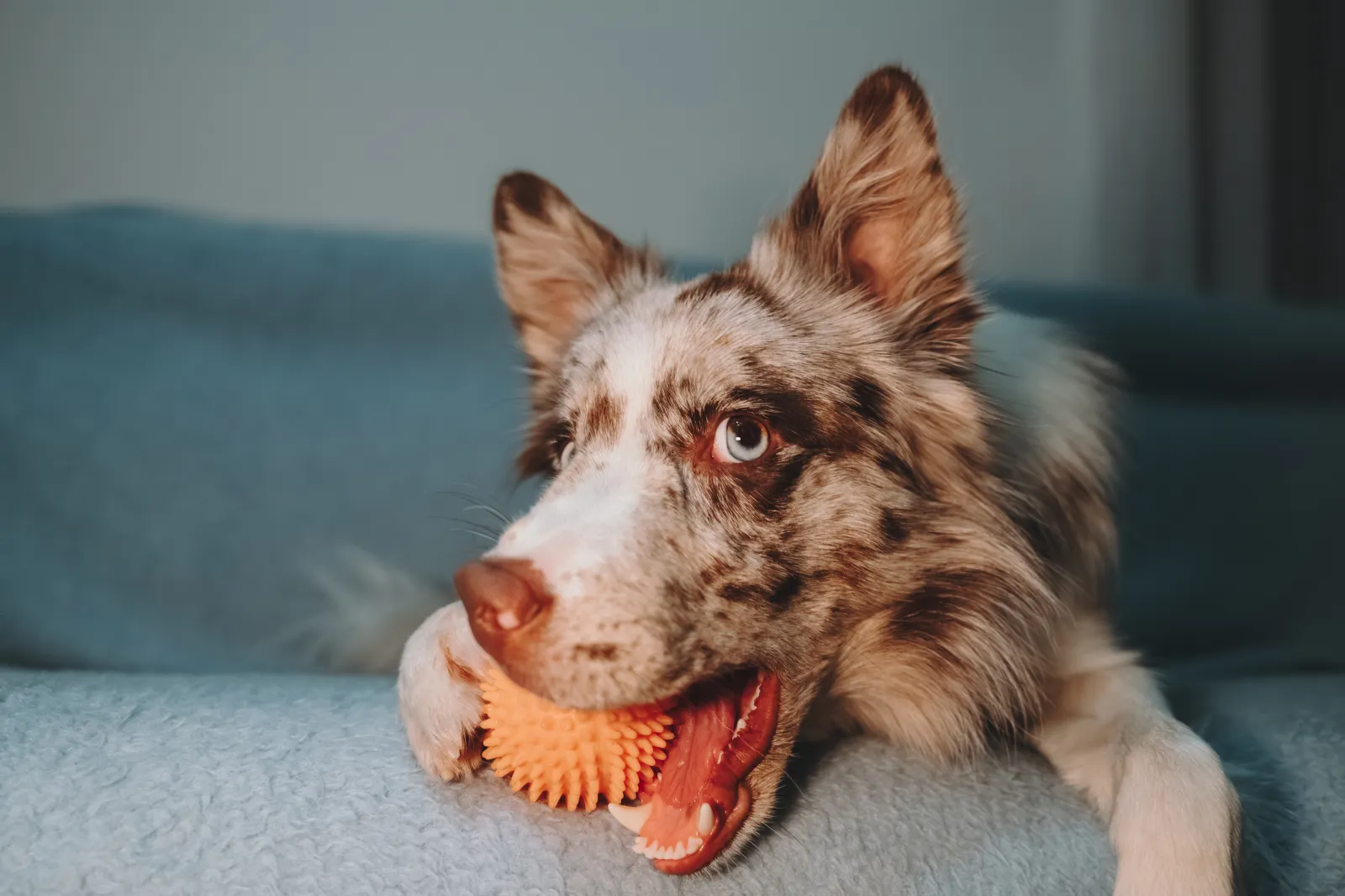
To explore what sets the gifted dogs apart, the researchers tested 10 gifted word learners and 21 typical dogs—all of whom were border collies.
Read More on Science
Over the course of two weeks each dog played at home with four toys—two whose names were repeatedly called by the respective dog's owner and two toys that were played with but never named.
The dogs were later observed in a free-exploration task including those toys and also new toys, while their caregivers stayed passive.
...
The team expected the labelled toys to attract more attention, but the results contradicted the assumption. All dogs showed a strong preference for new toys, and there was no difference between gifted and typical dogs in how much time they spent with labelled, unlabelled or novel objects.
The key distinction that emerged from the study was not about how the dogs explored objects, but how they behaved toward their caregivers. Gifted word learners were found to be significantly more likely to pick up a toy, especially a new one, and bring it to their caregiver to initiate play.
Typical dogs, by contrast, tended to stay close or lean against their caregivers without actively involving them in play with the toy. According to Sommese, this pattern suggests a difference in social style rather than curiosity.
"Gifted Word Learners seem particularly motivated to involve humans in object-centred interactions involving novel toys,”, Sommese said—suggesting that this behaviour might mirror early communication attempts in human infants, like pointing or showing objects to caregivers to attract attention.
The researchers pointed out that the study does not claim that social motivation directly causes vocabulary learning; other explanations—like differences in owners’ play habits—still need to be tested. However, the findings shift the focus away from the objects themselves and toward the relationship between dogs and humans.
"Our results suggest that to understand why some dogs learn words, we may need to look less at the toys and more at the relationship," Sommese said. She concluded: "This opens new directions for studying how language-related skills can emerge in species that live so closely with humans."
Do you have a tip on a science story that Newsweek should be covering? Do you have a question about gifted dogs? Let us know via science@newsweek.com.
Reference
Sommese, A., Miklósi, Á., Nostri, S., Temesi, A., & Fugazza, C. (2026). Toy exploration in gifted word learner dogs and typical dogs. Animal Cognition. https://doi.org/10.1007/s10071-026-02047-3
View 0 Comments
Submit Correction
View Editorial & AI Guidelines