...

By Amira El-Fekki
Middle East News Reporter
0
Share
Newsweek is a Trust Project member
See more of our trusted coverage when you search.Prefer Newsweek on Googleto see more of our trusted coverage when you search.
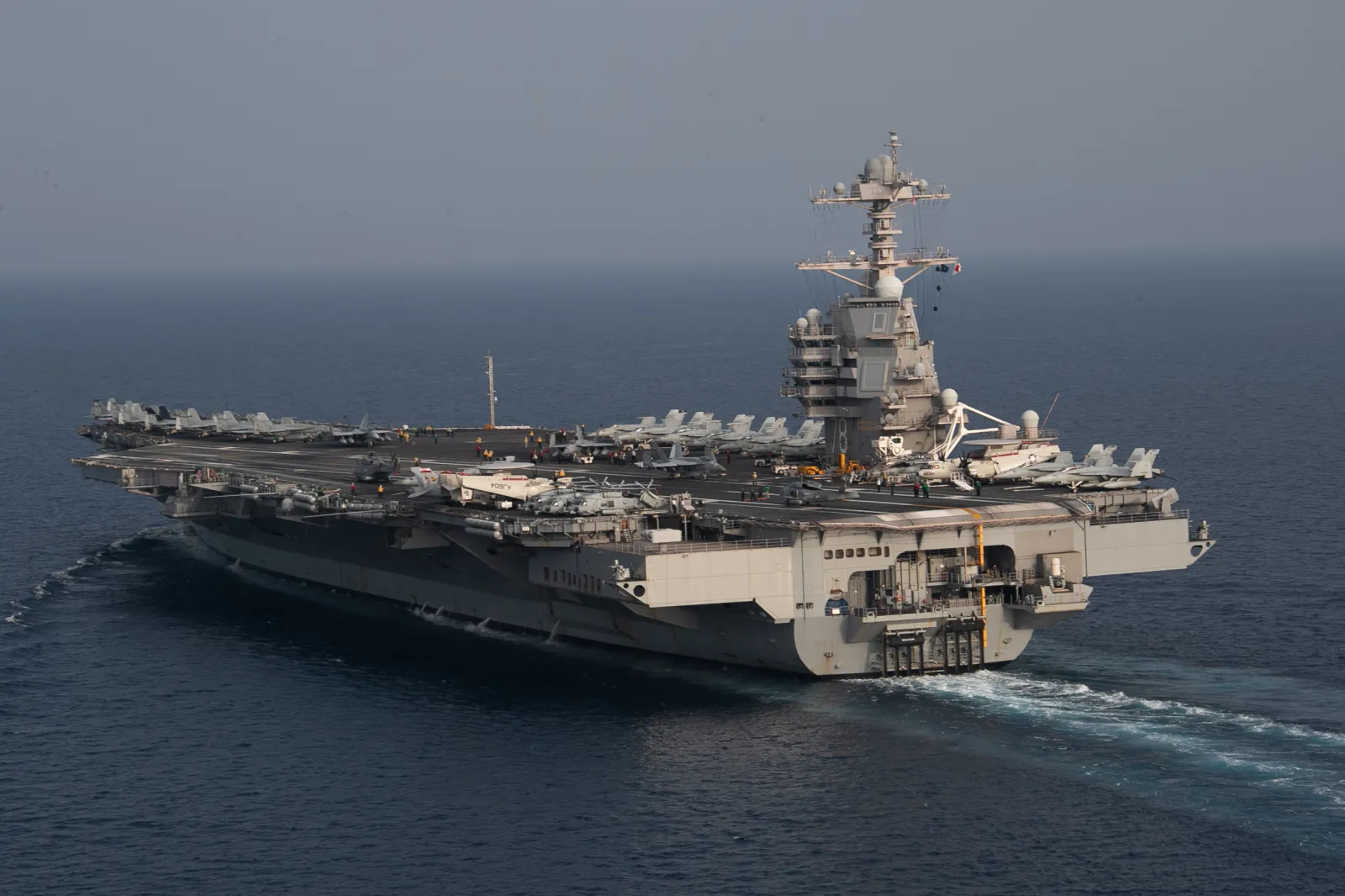
The USS Gerald R. Ford, the U.S. Navy’s most advanced nuclear-powered aircraft carrier, has entered the Atlantic Ocean after transiting the Strait of Gibraltar on Tuesday.
The Ford had spent the past days resupplying and regrouping with its strike group elements in the Mediterranean Sea, according to ship-tracking data, ahead of its retasking to the Caribbean Sea, where the United States is staging a major military campaign against drug cartels in Venezuela.
Newsweek has reached out to the U.S. Southern Command (SOUTHCOM) for comment.
Read More on U.S.
Why It Matters
The U.S. has stepped up moves to counter drug trafficking in the waters off South America, with Defense Secretary Pete Hegseth placing the Ford Carrier Strike Group under the authority of the U.S. Southern Command. U.S. forces have intensified strikes on suspected drug-running boats in the Caribbean and eastern Pacific, part of a broader push against what Washington calls “narco-terrorist” routes.
The surge of American forces to the eastern Caribbean in particular has inflamed tensions with Venezuela and its leader, Nicolás Maduro, with U.S. officials accusing his regime of aiding narcotics networks. Caracas, in turn, has accused Washington of seeking regime change.
In a 60 Minutes interview aired over the weekend, President Donald Trump refused to confirm whether he was considering land strikes in Venezuela against suspected cartel strongholds. He did, however, agree that Maduro's days were numbered.
What To Know
The Ford is accompanied by Arleigh Burke-class guided missile destroyers including the USS Bainbridge, according to the Navy Times newspaper. The carrier strike group's arrival will add to a mix of U.S. warships already operating in the Caribbean, including amphibious warfare ships the USS Iwo Jima, USS Fort Lauderdale, and USS San Antonio, which together carry around 6,000 personnel.
On Tuesday, Hegseth announced another strike on a drug‑smuggling vessel in the eastern Pacific that killed two, bringing the Trump administration’s campaign in South American waters to at least 16 strikes and 66 deaths, according to The Associated Press.
Warships carrying nearly 200 Tomahawk missiles are deployed near Venezuela. which sees the surge in U.S. operations posing a national security threat and a political test. Maduro's government views the development as a major security threat and has placed its armed forces on alert and appealed to the United Nations to intervene.
Congress has not authorized military action, against the suspected cartels boats or Venezuela, and lawmakers have raised questions about the administration's legal justification for the strikes.
...
What People Are Saying
Defense Secretary Pete Hegseth wrote in an X post on Tuesday: "We will find and terminate EVERY vessel with the intention of trafficking drugs to America to poison our citizens. Protecting the homeland is our TOP priority. NO cartel terrorist stands a chance against the American military."
U.N. High Commissioner for Human Rights Volker Türk wrote on X on October 31: "Airstrikes by the USA on boats in the Caribbean and the Pacific, allegedly linked to drug trafficking, violate international human rights law and are unacceptable."
What Happens Next
The escalating U.S. military presence in the Caribbean is stoking concerns that tensions with Venezuela could edge toward open confrontation.
View 0 Comments
Submit Correction
View Editorial & AI Guidelines