10
Loading video...

By Dan Gooding
Associate News Editor
0
Share
Newsweek is a Trust Project member
See more of our trusted coverage when you search.Prefer Newsweek on Googleto see more of our trusted coverage when you search.
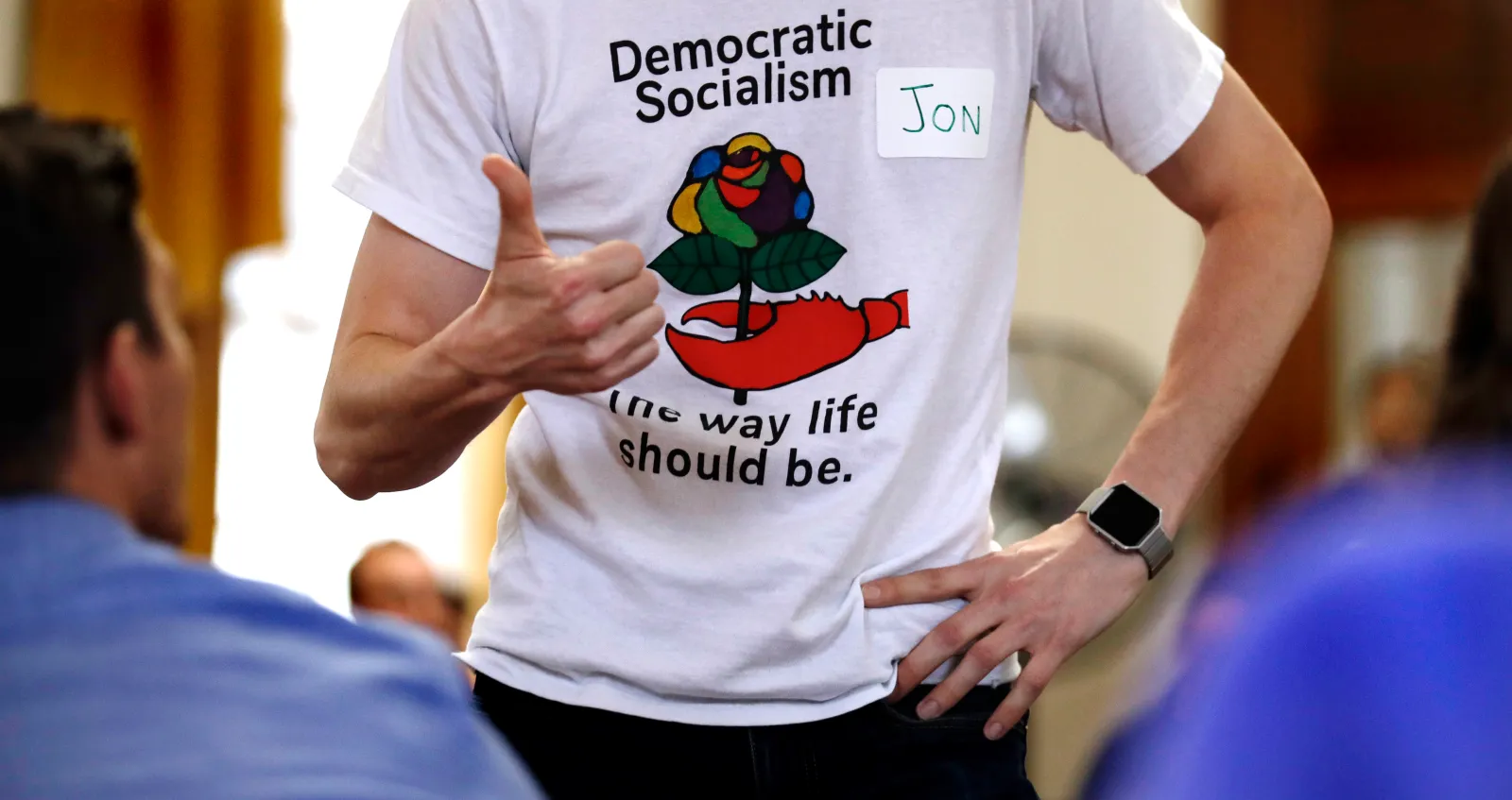
As Republicans and some moderate Democrats increasingly portray democratic socialists as out of step with mainstream America, polling suggests a more complicated reality—a majority of Republican voters support several of the economic policies championed by the Democratic Socialists of America (DSA) and prominent figures on the party's left flank.
The disconnect highlights a recurring feature of American politics. While "socialism" remains a negative label for many conservatives, specific policy proposals often perform far better when voters are asked about them directly.
Recent polling has found notable Republican support for ideas including paid family leave, raising the minimum wage, taxing billionaires, expanding government health coverage and slowing the rapid expansion of AI data centers.
Read More on Politics
The findings come as the rise of democratic socialist-backed candidates such as New York City Mayor Zohran Mamdani and Michigan Senate nominee Abdul El-Sayed has fueled renewed debate inside both parties about how far left Democrats should move ahead of this year's midterms.
Republicans have frequently sought to tie Democrats to the DSA, arguing the organization's agenda is outside the political mainstream.
Newsweek reached out to the DSA, and the Democratic and Republican National Committees for comment via email Friday afternoon.
Related Story
Is the DSA Platform Unpopular? What Polls Reveal About 5 Key Issues

...
Paid Family Leave
One of the clearest examples is paid family leave, a policy long advocated by progressives and labor groups.
A February Pew Research Center survey found that 69 percent of Americans support requiring employers to provide paid family leave. Support extended across party lines, with 59 percent of Republicans favoring the proposal. The survey found Republican support lagged Democratic backing but still represented a clear majority. The findings are based on a survey conducted between September 2-8, 2025, among 8,750 U.S. adults.
Paid family leave has been a longstanding goal for many democratic socialists, who argue workers should not have to choose between a paycheck and caring for a newborn, aging parent or sick family member. While Congress has repeatedly failed to enact a national paid leave program, polling suggests the concept itself is far less divisive than the ideological battles that surround it.
Raising the Minimum Wage
For decades, some Republican lawmakers largely opposed significant increases in the federal minimum wage, arguing they could hurt businesses and employment.
Yet recent polling indicates many GOP voters are more supportive of wage hikes than the party's elected officials. Morning Consult polling found that roughly three-quarters of Americans support raising the federal minimum wage to $15 an hour, including 75 percent of Republicans. The poll surveyed 1,100 Americans between March 17-18, 2026.
That finding aligns with broader trends showing minimum wage ballot initiatives have often succeeded even in conservative-leaning states. The policy has been a central demand of democratic socialists and progressives who argue wages have failed to keep pace with rising living costs.
Supporters contend the issue reflects growing frustration over affordability pressures that have become a dominant concern for voters across the political spectrum.
Related Story

Why Trump’s Mail-In Ballot Win Is Likely Too Little, Too Late
Higher Taxes on Billionaires
Calls for higher taxes on billionaires and large corporations have become a defining feature of the progressive economic agenda, championed by figures including independent Senator Bernie Sanders and Representative Alexandria Ocasio-Cortez.
For democratic socialists, taxing wealth is a central argument in favor of financing expanded social programs and reducing economic inequality. Advocates say the issue resonates because many voters believe the wealthiest Americans are not paying their fair share.
While Republicans in Washington have generally opposed tax increases, polling suggests many voters are open to the idea.
A Reuters/Ipsos survey conducted in August found broad support for increasing taxes on corporations and billionaires, with 62 percent of Americans backing the idea and 16 percent opposed. Support was especially high among Democrats, at 87 percent, but the proposal also drew support from 59 percent of independents and 40 percent of Republicans.
While Republicans were more divided than other groups, support still exceeded opposition among GOP respondents, with 34 percent opposed. The poll was conducted between July 29 and August 3, 2026, among 4,505 respondents.
Medicare for All
Universal healthcare remains one of the most recognizable proposals associated with democratic socialism.
A November 2025 Data for Progress survey found that 65 percent of voters support Medicare for All when it is described as a national insurance program covering all Americans and replacing most private insurance. Support included 78 percent of Democrats, 71 percent of independents and a plurality of Republicans at 49 percent.
Notably, researchers found support remained above 50 percent even after respondents were presented with common criticisms, including higher taxes and the replacement of many private health insurance plans. The poll was conducted between November 14-17, 2025, among 1,207 likely voters.
The issue has long been viewed as politically contentious, especially among moderates. But polling suggests that while Republicans remain divided, the party is no longer uniformly opposed to expanded government involvement in healthcare.
Related Story

Democratic Socialists vs. Communists: How They Differ as Trump Lobs Attacks
Opposition to AI Data Centers
As the race to build artificial intelligence infrastructure accelerates across the country, opposition to large-scale AI data centers has surged among Americans of all political backgrounds.
A June Heatmap poll found that about seven in 10 Americans oppose construction of a data center near their homes. The survey showed opposition cutting across partisan lines, with 63 percent of Trump voters opposed to a nearby project.
Heatmap reported that hostility toward data centers was "nearly as likely" among Republicans as Democrats, driven by concerns over electricity costs, water use, environmental impacts and quality-of-life issues. The poll of 4,118 American registered voters was conducted by Embold Research via text-to-web responses from May 15-28, 2026.
While opposition to data centers is not traditionally considered a socialist issue, some democratic socialist politicians have criticized the industry's energy demands and called for greater oversight of large technology companies. The issue highlights how skepticism toward powerful corporations can unite voters from both the left and right.
What Critics Say
Republican leaders have increasingly portrayed democratic socialism as synonymous with communism, while several prominent Democratic figures have also sought to distance themselves from the DSA.
House Minority Leader Hakeem Jeffries, a New York Democrat, recently said he does not support the DSA's agenda, while Democrat Kentucky Governor Andy Beshear has called socialism a "failed experiment," and veteran strategist James Carville has described DSA activists as a "pack of fools."
In a previous statement to Newsweek, White House spokesperson Allison Schuster wrote: “The Democrats’ full-blown embrace of socialism and communism is a mortal threat to American liberty. President Trump will never allow America to become a socialist or communist country.”
Related Story

Many Floridians Escaped Socialism; Now They Could Elect One to the Senate
Why This Matters Now
The polling underscores a distinction that political analysts have increasingly noted—voters often react differently to ideological labels than they do to specific policy proposals.
Republicans continue to view "socialism" negatively as a political brand while GOP candidates have frequently used the label to attack Democrats. But when individual policies are detached from partisan branding, support can be considerably broader.
As the Democratic Party debates whether to embrace or distance itself from democratic socialist candidates and ideas heading for the November midterms, the polling suggests the challenge may be less about the policies themselves and more about how those policies are packaged and presented to voters.
Contact Newsweek editors for this story: Jason Lemon and Anthony Murray.
View 0 Comments
Submit Correction
View Editorial & AI Guidelines