...

By Aliss Higham
Reporter
0
Share
Newsweek is a Trust Project member
See more of our trusted coverage when you search.Prefer Newsweek on Googleto see more of our trusted coverage when you search.
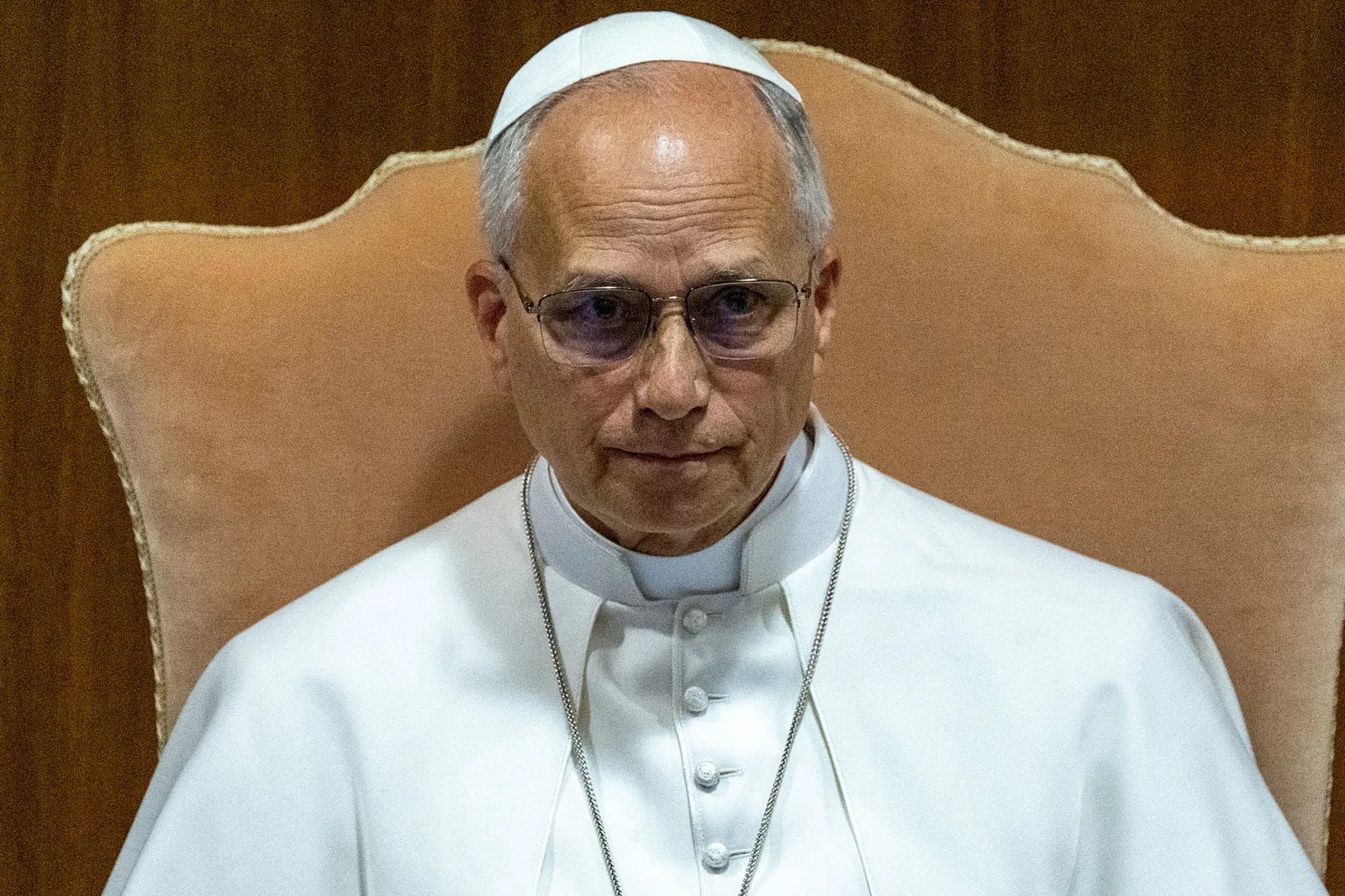
Pope Leo XIV has issued the first encyclical of his papacy, setting out a sweeping vision for how the Catholic Church should respond to the rise of artificial intelligence, modern warfare, migration and historical injustices.
The 235-page document, Magnifica Humanitas: On Safeguarding the Human Person in the Time of Artificial Intelligence, outlines the pope’s concerns about the rapid expansion of AI while urging governments and companies to ensure the technology serves humanity rather than undermining it.
Encyclicals are among the highest forms of papal teaching within the Roman Catholic Church and are traditionally addressed to bishops and the world’s 1.4 billion Catholics. In recent decades, however, popes have increasingly used them to speak to a broader global audience. Pope Francis, Leo's predecessor, for example, devoted his first encyclical to environmental protection.
Read More on News
Leo’s first encyclical follows that tradition, addressing not only Catholics but political leaders, technology companies and society more broadly as he warns that the digital revolution is reshaping human life in ways that are "not yet fully predictable."
...
Artificial Intelligence
At the center of the encyclical is a warning about the growing influence of artificial intelligence and emerging technologies.
Leo writes that humanity is entering "a new situation" in which AI, robotics and digital systems are becoming deeply embedded in daily life and decision-making. While he acknowledges that technological progress has improved living standards throughout history, he argues that modern technology also carries serious risks if not directed toward the common good.
"We must ask God for the wisdom to interpret the great trends of our time, particularly technological advances," the pope wrote. "Technology should not be considered, in itself, as a force antagonistic to humanity."
Still, he warned that the scale and speed of technological change now raise new ethical concerns about human dignity, social justice and the long-term consequences of AI-driven systems.
Drawing on the biblical story of the Tower of Babel, Leo argued that humanity risks creating systems centered on domination and uniformity rather than cooperation and human flourishing. He said the Babel story serves as a warning against projects that "dominate and ultimately dehumanize," insisting instead that AI development should involve diverse perspectives and communities.
The pope also called for governments to regulate the private companies driving AI development and urged the creation of "robust legal frameworks" alongside independent oversight. He also called for protections for workers whose jobs may be displaced by automation, retraining programs for affected employees and stronger education systems that teach students how to critically evaluate AI-generated content.
Leo further urged action to shield children from violent, hypersexualized and misleading online material often created or amplified by artificial intelligence.
"The primary choice is not between a ‘yes’ or ‘no’ to technology," the pope wrote, "but rather between constructing Babel or rebuilding Jerusalem."
Chris Olah, co-founder of the AI company Anthropic, which has been involved in legal disputes with the Trump administration over the military use of its technology, broadly praised Leo's critical stance.
"We need more of the world—religious communities, civil society, scholars, governments—to do what His Holiness has done here: to take this seriously, to look closely, and to push events in a better direction," Olah said. "We need informed critics who will tell the labs when we are failing. We need moral voices that the incentives cannot bend."

...
"Just War" Theory Is Outdated
Another major focus of the encyclical is war and the growing role of AI in modern conflicts. Leo argued that advances in weapons technology and autonomous systems have made warfare increasingly detached from human responsibility. He warned that AI could normalize violence by making conflict feel more remote and impersonal.
"Today, more than ever," he wrote, "it is important to reaffirm that the ‘just war’ theory, which has all too often been used to justify any kind of war, is now outdated." The pope said diplomacy, dialogue and forgiveness are more effective ways to resolve conflicts and warned that violence inevitably causes devastating consequences for civilians.
Although Leo did not identify specific conflicts by name, the encyclical comes after public disagreement with Vice President JD Vance, who converted to Catholicism in 2019 and criticized the pope after Leo condemned the ongoing U.S.-Israel war against Iran.
"When the pope says that God is never on the side of people who wield the sword, there is more than a 1,000-year tradition of just war theory," Vance said during an April 14 event hosted by Turning Point USA at the University of Georgia. "We can, of course, have disagreements about whether this or that conflict is just."
Leo also warned against the growing use of autonomous weapons systems, saying they lower the threshold for violence by reducing human control over warfare: "AI does not remove the intrinsic inhumanity of conflict; indeed it can only bring about conflict more quickly and render it more impersonal, lowering the threshold for resorting to violence, transforming defense into threat prediction and thus reducing victims to data."
"It is not permissible to entrust lethal or otherwise irreversible decisions to artificial systems," the pope wrote. "No algorithm can make war morally acceptable."
He also argued that AI-driven warfare risks turning victims into "data" while making violence seem inevitable and easier to justify.
Treatment of Migrants a "Litmus Test"
The encyclical also devotes attention to migrants and refugees, which Leo wrote the treatment of as a moral measure of society itself.
"A litmus test for social justice today is the treatment of migrants, refugees and those forced to move due to poverty, violence, climate change and environmental disasters," Leo wrote. " The way a society treats them reveals whether its sense of justice is driven by fear or by the spirit of fraternity."
"They are people with dignity, resources and dreams, who have the right to be treated with respect and to ask to become active members of the societies that welcome them."
He called for safe and legal migration pathways, humane treatment and meaningful opportunities for integration into host societies. At the same time, he argued that governments should address the underlying causes of forced migration, including economic inequality and climate change.
"When these rights are respected," the pope wrote, "migration can become an opportunity for encounter and mutual enrichment among peoples."
The Church’s Role in Slavery
The encyclical also addresses the Catholic Church’s historical relationship with slavery and colonialism. Leo acknowledged that the Church was slow to condemn slavery and formally apologized for its role in systems that enabled exploitation and oppression.
"This constitutes a wound in Christian memory, one from which we cannot consider ourselves detached. It is impossible not to feel deep sorrow when contemplating the immense suffering and humiliation endured by so many in stark contrast to their immeasurable dignity as persons infinitely loved by the Lord. For this, in the name of the Church, I sincerely ask for pardon."
In the 1400s, a series of Vatican decrees gave Portugal and Spain permission to conquer lands in Africa and the Americas and enslave non-Christians. One decree issued by Pope Nicholas V in 1452 said the Portuguese could invade non-Christian territories, take land and property, and force people into slavery.
These decrees became part of the "Doctrine of Discovery," which was used to justify colonial expansion. The Vatican formally repudiated doctrine in 2023.
View 0 Comments
Submit Correction
View Editorial & AI Guidelines