...

By Hannah Millington
Health Reporter
0
Share
Newsweek is a Trust Project member
See more of our trusted coverage when you search.Prefer Newsweek on Googleto see more of our trusted coverage when you search.
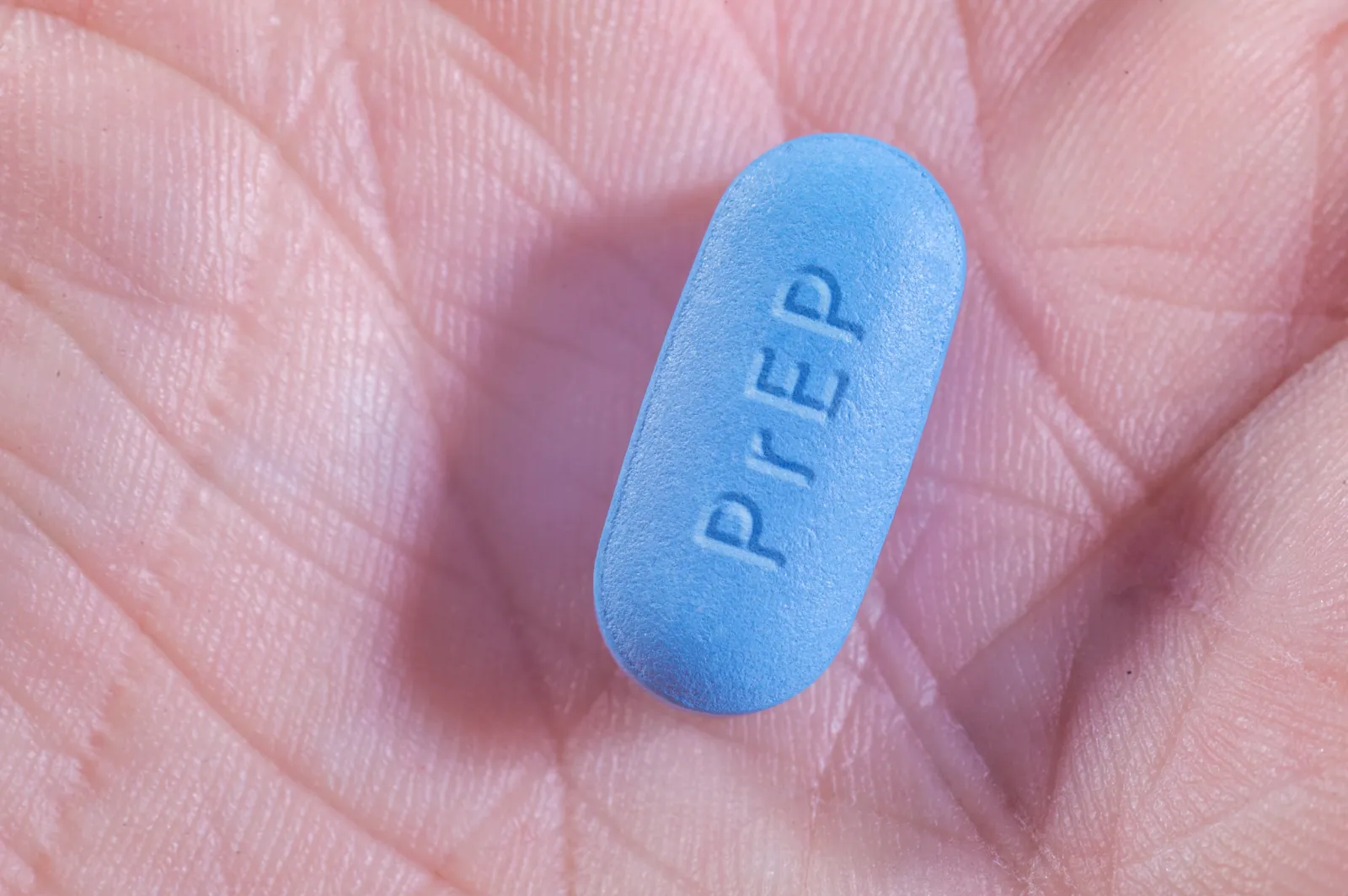
A new pre-exposure prophylaxis (PrEP) drug has shown promise as a once-monthly oral pill to help prevent HIV.
PrEP plays a key part in reducing the number of new HIV infections by stopping the virus talking hold in the body and replicating.
While the most common PrEP therapies are highly effective at shielding people from HIV, the pills need to be taken once a day to maintain protection.
Read More on Health
Current "long-acting" PrEP therapies, meanwhile, require injection by a healthcare provider typically every couple of months, which isn't always feasible.
Hence, a pill that only needs to be taken monthly could improve accessibility, adherence, privacy and reduce concerns about stigma.
...
In 2024, 1.3 million people were newly infected with HIV, a figure that has reduced by 61 percent since the peak in 1996.
In 2022, there were 31,800 estimated new HIV infections in the U.S., which has decreased by 12 percent overall from 2018. However, around 1.2 million people across the country live with HIV and about 13 percent of them aren't aware of this and need testing.
"The development of combination ARV therapy [antiretroviral therapy] with effective, tolerable and convenient dosing regimens, has led to tremendous reductions in HIV-associated morbidity and mortality, allowing HIV to become a manageable, chronic disease," study authors including Izzat Raheem and Tracy Diamond of Merck & Co., Inc. wrote in the paper.
When the right treatment is available, people can live a normal life with HIV and have an undetectable viral load.
"Nonetheless, unmet needs remain for prevention of new HIV infections, globally," the researchers added. "Of the currently available ARVs, the mechanisms of action of NRTTIs [nucleoside reverse transcriptase translocation inhibitors] have emerged as particularly compelling due to their potent antiviral activity and potential for long-acting HIV pre-exposure prophylaxis.
"Long-acting oral HIV pre-exposure prophylaxis (e.g., once-monthly) could provide an opportunity to address challenges, such as improving the persistence and adherence, compared with a daily pre-exposure prophylaxis regimen."
The researchers took part in a "lead optimization" campaign to develop a new type of NRTTI, which prevent viral replication through multiple different mechanisms.
Using a known NRTTI called islatravir as a starting point, the team used several medicinal chemistry strategies to modify the structure and optimize it using both in vitro (outside a living organism) and in vivo (in a living organism) tests.
The lead compound, dubbed MK-8527, showed robust antiviral activity in vitro and animal studies demonstrated that it may be suitable as a long-acting oral therapy.
"Even though daily oral PrEP has helped reduce HIV acquisition rates, taking a pill every day can be challenging for many people. Current long-acting PrEP formulations are injectables that need to be administered in a healthcare setting, which can be difficult for some people to access and challenging for some clinics to implement," Rebeca Plank, scientist at Merck Research Laboratories, told Newsweek.
"We hope that MK-8527, taken by mouth monthly, could provide a user-friendly, healthcare system-friendly prevention option that could be broadly available in a variety of settings. We believe that this product could transform PrEP delivery and implementation models. If the Phase 3 studies are successful, MK-8527 could expand the range of delivery settings beyond medical clinics, to locations that allow for more flexibility and privacy."
MK-8527 is now entering two large clinical studies to better understand its safety and efficacy in approximately 9,000 people across the world. This includes one that will evaluate MK-8527 among people with greater likelihood of HIV exposure in 16 countries, and another that will evaluate it in young women and adolescent girls in sub-Saharan Africa.
"In the future, if MK-8527 is approved, it could help support opportunities to accelerate access in the U.S. and around the world so that more people could start and stay on PrEP," Plank added.
"Outside the U.S., a once-monthly oral PrEP option could play a role in global efforts to reduce HIV incidence by addressing some of the persistent HIV prevention implementation challenges like access to healthcare and the stigma associated with daily HIV pills."
Do you have a tip on a health story that Newsweek should be covering? Do you have a question about PrEP? Let us know via health@newsweek.com.
Update 08/27/25, 06:50 a.m. ET: This article was updated with additional comments from Rebeca Plank.
Correction 08/27/24, 4:55 p.m. ET: This article was updated to remove the description of NRTTIs as a "new class of drugs," as such has not been formally established by the FDA.
Reference
Raheem, I. T., Girijavallabhan, V., Fillgrove, K. L., Goh, S. L., Bahnck-Teets, C., Huang, Q., Li, F., Wan, B.-L., O'Donnell, G. T., Patteson, J. B., Cilento, M. E., Bennet, A., Hayes, R. P., Tummala, S., McHale, C., Wiltsie, J., Ellis, J., Asante-Appiah, E., Hazuda, D. J., Hale, J., Grobler, J. A., Xu, M., Diamond, T. L., & Lai, M.-T. (2025). MK-8527 is a novel inhibitor of HIV-1 reverse transcriptase translocation with potential for extended-duration dosing. PLOS Biology, 23(8). https://doi.org/10.1371/journal.pbio.3003308
View 0 Comments
Submit Correction
View Editorial & AI Guidelines