...

By Shane Croucher
Senior Editor
0
Share
Newsweek is a Trust Project member
See more of our trusted coverage when you search.Prefer Newsweek on Googleto see more of our trusted coverage when you search.
The Federal Trade Commission (FTC) warned businesses on Wednesday that secretly using personal data to set individualized prices may violate federal law, opening a new front in the affordability fight.
The number on your screen increasingly reflects not the marketplace as it is for everyone, but a judgment about you personally, calculated from as much data as a vendor can harvest about your life.
Inflation politics, which steers so many of our elections, is collective. It asks why everything costs all of us more than before. Person-specific pricing adds a more intimate question: Why does it cost me more than you?
Read More on Analysis
That is a subtle shift with profound consequences. It twists affordability from a shared argument about the state of the economy into an individual one about equal treatment, and about the fairness of the system setting the prices.
The FTC’s draft enforcement policy says businesses should disclose when a price is personalized, why it differs, and what data informed it.
The agency says Congress has not authorized it to ban personalized pricing in all circumstances, although concealed or misleading personalization may violate Section 5 of the FTC Act.
Chairman Andrew Ferguson said shoppers expect the "same price that everyone else sees."
That expectation is threatened by an emerging system in which people get different prices from one another, and do not know it. A discount for thee, but not for me.
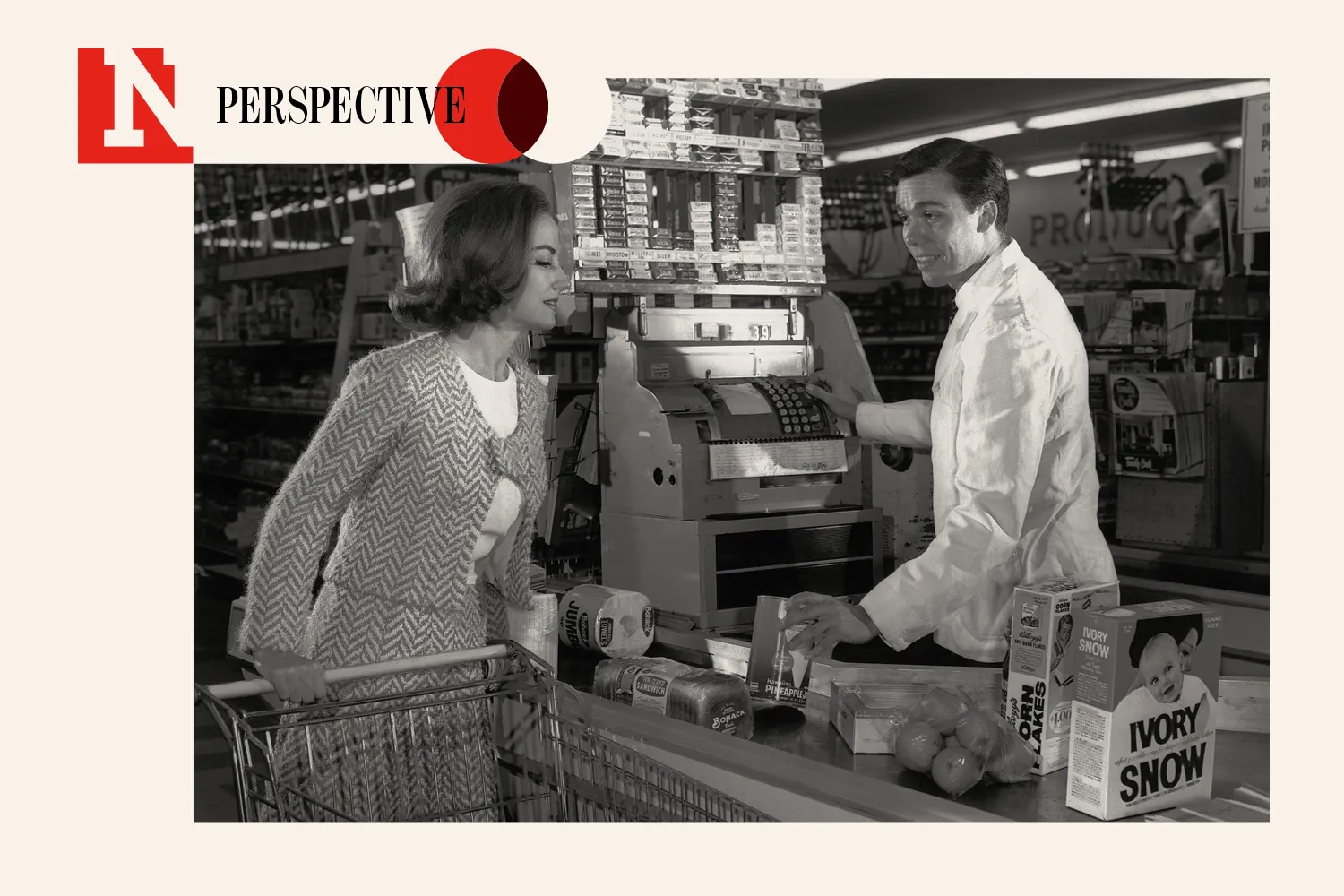
The Posted Price Created a Common Reference Point
FTC staff have traced the American shift from haggling to affixed price tags to the 1870s, when sellers began labeling goods and doing away with the need to negotiate. Most goods and services now carry posted prices: a public offer to accept or reject.
That gave shoppers a common reference point. They could blame inflation, scarcity, or a merchant’s markup, but the norm meant they generally expected another person, at the same place and time, to see the same number.
Person-specific pricing unsettles that assumption even when it lowers the average price.
Different Prices Can Mean Different Things
The debate turns on three practices that are often blurred together.
Dynamic pricing responds to supply, demand, or timing, and need not touch personal data at all.
Personalized offers vary coupons, promotions, and product rankings while holding a common base price.
And person-specific pricing uses individual data to change the actual number shown to each shopper.
The FTC’s 2025 study described tools spanning all three. Its latest statement concedes that the real-world scale and consumer effects remain unclear, and that competition limits pricing power in most settings.
The politics therefore depends on adoption: an opt-in loyalty coupon poses a different fairness question from two unexplained prices for the same item.
Affordability Has Become a Fairness Test
Affordability keeps moving voters as each election comes and goes.
Donald Trump’s 2024 win was tied to anger over the "Bidenflation" era. An AP Voter Poll then found economic worries dominated the 2025 off-year elections.
In a Reuters/Ipsos survey released this month, 48 percent said cost of living would be their most important midterm factor. A Financial Times/Focaldata poll found almost 57 percent of independents feel worse off financially since Trump returned to office.
What makes person-specific pricing potent is that it offers a transaction-level fairness test rather than another partisan account of national inflation.
A voter need not accept either party’s economic diagnosis to resent a retailer using browsing history or location to pick a price.
Washington has already noticed this unfolding. Two weeks before the FTC moved, a Senate Judiciary subcommittee chaired by Josh Hawley, with Richard Durbin as ranking member, held a hearing on the consumer cost of AI surveillance pricing.
It produced something increasingly rare in these divided times: bipartisan agreement that Congress should act. Hawley called the practice a sophisticated form of price gouging. The two sides are converging on the same grievance.
Ferguson’s own trajectory on this issue is telling. He dissented from the release of the FTC’s preliminary findings in January 2025, and paused the follow-up inquiry once he became chairman. Now he is the one issuing the warning.
In Defense of Personalized Pricing
Price discrimination has plenty of defenders, of course, because there are a number of upsides.
An OECD review found personalized pricing can serve consumers who would be priced out of a market entirely under a single uniform price.
Wharton professor Z. John Zhang told a Senate panel that the practice can benefit firms, consumers, or at minimum lower-income consumers when properly used.
"Personalized pricing is not inherently sinister when viewed through the lens of economics," Zhang said in his written testimony. "It is not only about 'your data' and 'their profit'; it also affects consumer access, market competition, and social welfare."
A field experiment by Jean-Pierre Dubé and Sanjog Misra, run at a business-to-business recruiting firm, found more than 60 percent of customers paid less under personalization than under the best available single price.
Total consumer surplus—the value customers received beyond what they paid—still fell 23 percent. The authors’ own conclusion cuts both ways: restricting data, they warn, does not automatically improve consumer welfare.
Americans already accept a great deal of pricing variation in their lives. Airfares, insurance premiums, college financial aid, negotiated car deals, and senior discounts all price the individual. The common-price norm has been partial for some time now.
If shoppers tolerate all that, checkout personalization may never break through as a substantial grievance.
Disclosure Is the Cautious Option
The FTC will take comment for 30 days. David French of the National Retail Federation, an industry group, said it would fight to protect loyalty programs that "deliver timely savings and personalized offers."
Consumer Reports, a nonprofit, called the FTC’s proposal encouraging while pressing again for an outright ban.
Disclosure is also the most cautious option available. Maryland, Connecticut, and New Jersey have already moved to ban personalized pricing in grocery stores. The federal question is not whether to act, but how far behind the states it is preferable to stay.
If person-specific pricing stays rare, transparent, and confined to voluntary discount programs, it may not eat into the politics of affordability after all.
But if it does not, the price tag’s authority goes with it—a common number, in public view, for everyone. Affordability politics would then turn on something no inflation report measures: who got which price, and why.
View 0 Comments
Submit Correction
View Editorial & AI Guidelines