10
Loading video...

By Amanda Castro
Associate News Editor
0
Share
Newsweek is a Trust Project member
See more of our trusted coverage when you search.Prefer Newsweek on Googleto see more of our trusted coverage when you search.
Puerto Rican boxing pro Prichard Colón died Thursday at age 33, ending an 11‑year fight for survival after the catastrophic brain injury he suffered in a 2015 bout against Terrel Williams.
His father, Richard Colón, confirmed the death early in the day.
Colón, once a rising star with a 16‑0 record, had lived in a persistent vegetative state since collapsing after the Williams fight, undergoing years of therapy but never regaining speech.
Read More on News
In his Facebook post, the boxer's father wrote in Spanish: “Good morning, my people. I regret to inform you of the passing of my son Prichard from this earthly world. He is now in a better place. I did everything possible to fulfill his wish, his dream of bringing him on vacation to Puerto Rico as he so deeply wanted, but it could not be done.
"Thank you for so many years of love and prayers. As much as you can, please keep us in your prayers.”
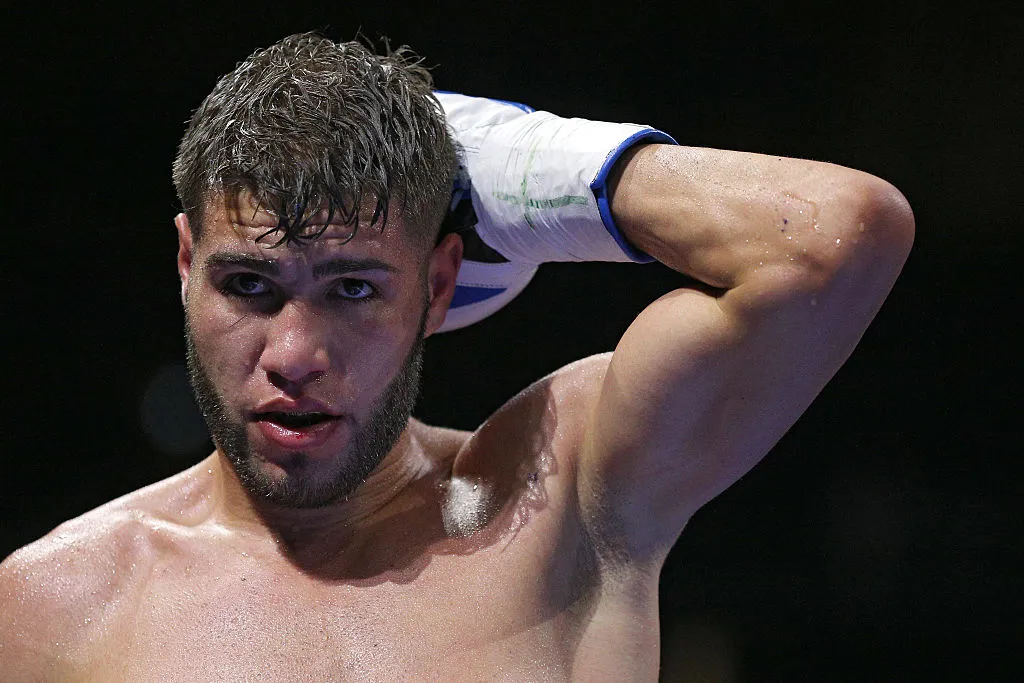
...
Prichard Colón Dead at 33: What We Know
Richard Colón was Prichard's coach throughout the boxer’s amateur and professional careers. No additional details about the circumstances of Prichard's death were released, but the family noted he had continued living in the United States while receiving care.
The former welterweight had spent more than a decade in intensive rehabilitation after suffering a left‑sided subdural hematoma during his October 17, 2015, fight. He remained in a coma for 221 days and never recovered his ability to speak, relying on computer assistance and physical therapy to communicate and respond to commands.
His mother, Nieves, frequently shared updates documenting small but meaningful signs of progress, including a 2018 video showing him following verbal cues.
His family continued to care for him until his death, navigating a long‑running lawsuit filed in 2017 against the ringside doctor and fight promoters—litigation that, according to Nieves, may never be resolved.
Related Story

Bare Knuckle Boxing is an Emerging Player in the Combat Sports World
What Was Colón’s Cause of Death?
No official cause of death has been released. However, Colón’s condition had been defined for more than a decade by irreversible brain injuries stemming from the 2015 fight.
He was diagnosed with a 1.5‑centimeter subdural hematoma with significant midline shift, requiring an emergency hemicraniectomy to relieve swelling.
After emerging from his coma, Colón remained in a persistent vegetative state. He was unable to speak, required full‑time care, and continued physical therapy in hopes of regaining limited mobility.
His mother reported in 2023 that he was still undergoing rehabilitation but had not recovered speech.
Given the severity and permanence of his injuries, Colón’s death at 33 is widely understood to be connected to complications stemming from the trauma he suffered in the ring—though the family has not publicly confirmed a medical cause.
What Happened in the Ring in 2015?
The turning point of Prichard Colón’s career came on October 17, 2015, during a bout that should have been routine. Instead, it became one of the most scrutinized fights of the decade.
Throughout the early rounds, Colón repeatedly signaled to referee Joe Cooper that he was being struck in the back of the head — blows known as rabbit punches, banned because they can cause catastrophic neurological damage.
Cooper warned Terrel Williams at least once, according to later legal filings, but the fight continued. By the seventh round, Colón went down after another illegal shot and instinctively clutched the back of his head, a visible sign that something was wrong.
Williams knocked Colón down twice during the ninth round, and the Puerto Rican fighter appeared disoriented and unable to defend himself. When the round ended, Colón’s corner mistakenly believed the fight could not continue and began removing his gloves. Under boxing rules, a fighter cannot re-enter the ring without gloves, and because the team could not replace them in time, Colón was disqualified.
He left the ring with assistance, vomited in the dressing room, and collapsed — the moment doctors later identified as the onset of his brain bleed.
Inside the $50 Million Lawsuit
The lawsuit Colón’s parents filed in 2017sought more than $50 million, arguing that multiple failures during the fight contributed to the severity of their son’s injury. The suit named ringside physician Dr. Richard Ashby, his medical practice, and the event promoters, alleging that Ashby allowed the fight to continue despite Colón reporting dizziness and pain after repeated illegal blows.
Some filings also referenced the sanctioning body, asserting that officials failed to intervene when Colón showed visible neurological distress.
The lawsuit argued that an earlier stoppage — particularly after the seventh‑round knockdown and Colón’s complaints — could have changed the outcome. It also claimed that promoters did not ensure adequate medical safeguards for a fight added late to the card.
Although the case moved between courts and narrowed over time, the core allegation remained: that the systems meant to protect fighters failed Colón at multiple points. Nearly nine years later, the lawsuit has no public verdict or settlement, leaving the family without legal closure.
Prichard Colón's Boxing Record
Before the injury that ended his career, Colón’s record marked him as one of Puerto Rico’s most promising young fighters. He compiled a 16‑1 professional record, with 13 wins by knockout, fighting aggressively and frequently across Puerto Rico, the Dominican Republic, Canada, and the United States.
His final fight—against Williams—was his only loss, recorded as a disqualification after his corner mistakenly removed his gloves between rounds.
That bout followed a string of dominant victories, including a fourth‑round knockout of Vivian Harris and a second‑round stoppage of Michael Finney, which had positioned him as a rising welterweight contender.
Colón’s amateur résumé was equally formidable: five national championships, a 170‑15 record, and a gold medal at the 2010 Pan American Youth Championship.
His father moved him to Puerto Rico at age 10 so he could represent the island, a decision that shaped both his identity and his career.
Contact Newsweek editors on this story: Kate Nalepinski, Dave Siminoff, Sam Wilson.
View 0 Comments
Submit Correction
View Editorial & AI Guidelines