...

By Robyn White
Nature Reporter
0
Share
Newsweek is a Trust Project member
See more of our trusted coverage when you search.Prefer Newsweek on Googleto see more of our trusted coverage when you search.
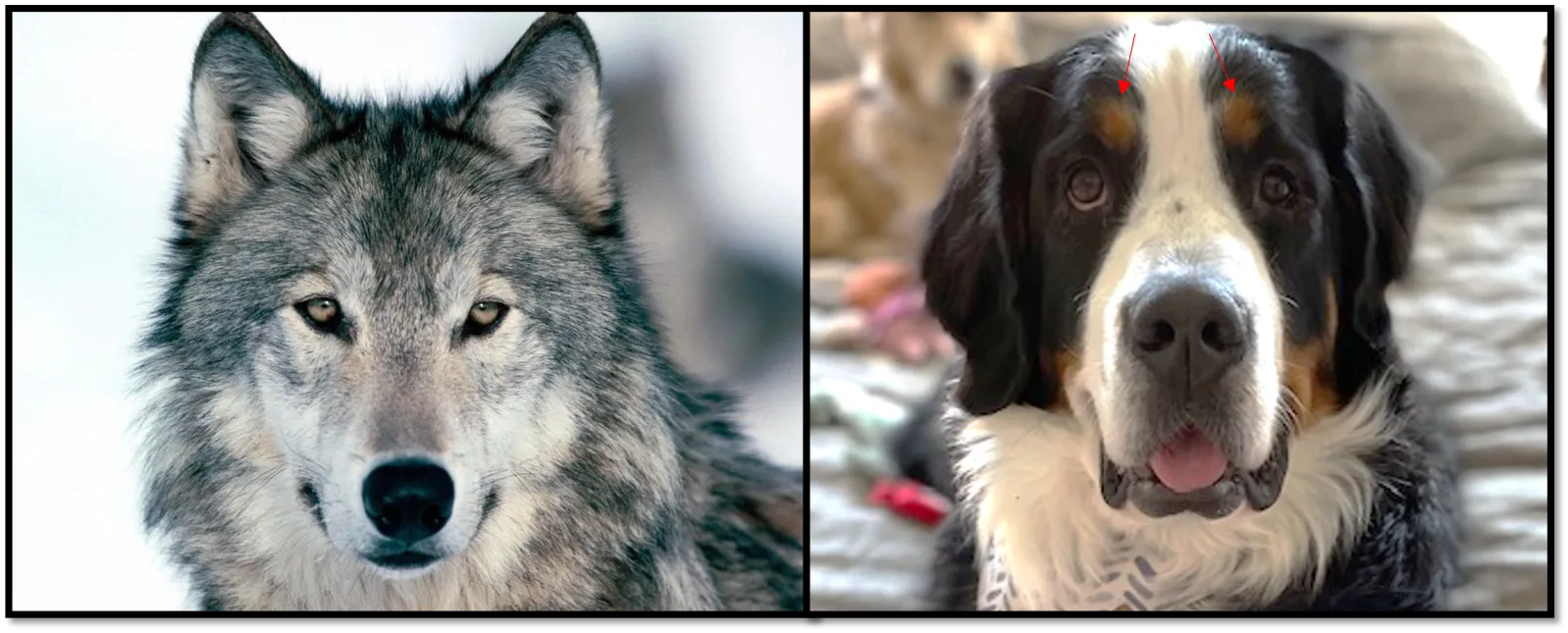
The reason we cannot resist our pets adorable puppy dog eyes has been discovered by scientists, with our canine companions having a special facial muscle that allows for better communication with us.
Humans have fast-twitch mimetic muscles which means they can form fast but fleeting facial expressions. These fast-twitch fibres allow for greater facial mobility and enable small but meaningful movements, such as the raising of an eyebrow.
Researchers compared the muscles used to form facial expressions in dogs and wolves, and found several key differences between the two species. Dogs were found to posses an additional facial muscle, which scientists said likely contributes to the "puppy dog eye" effect.
Read More
Deer Pictured Gnawing on Bone in Wild3 min read

This Is How Boas Are Able To Suffocate Prey Without Killing Themselves4 min read

Invasive Deadly Ant Discovered in Indiana for First Time3 min read

Their findings were presented at the Experimental Biology 2022 meeting in Philadelphia.
...
While comparing the facial twitch muscles of dogs and wolves, scientists found that wolves had a higher percentage of slow-twitch muscles, meaning they do not form facial expressions as rapidly.
Dogs were found to have a higher percentage of fast-twitch muscles, similar to humans. The study said that slow-twitch fibres found in wolves are important for extended muscles movements required for howling. It is possible that as dogs branched off from wolves, the need for these muscles dwindled.
Further research into these muscles showed that dogs evolved this way because of selective breeding by humans. The findings suggest that as dogs branched off from wolves around 33,000 years ago, their facial expressions evolved to be more appealing to humans.
Anne Burrows, senior author of the study and professor at Rangos School of Health Sciences at Duquesne University in Pittsburgh, said in a press release that these similar muscles have created a "mutual gaze" between man and dog. This makes dogs unique, as no other mammal has used facial expressions to bond with humans.
"These differences suggest that having faster muscle fibers contributes to a dog's ability to communicate effectively with people," she said. "Throughout the domestication process, humans may have bred dogs selectively based on facial expressions that were similar to their own, and over time dog muscles could have evolved to become 'faster,' further benefiting communication between dogs and humans."
Burrows told Newsweek that the study was pursued to answer more in-depth questions on how dogs used their facial expressions to interact with humans.
"The present study gives us a glimpse of how mimetic muscles in dogs differs from those in wolves at a functional level. We anticipate that future research in our lab will focus more on how barking in dogs may have developed and why humans selected for barking during the course of dog domestication," she said.
"In addition, we hope to expand this study to cover musculature in other domestic mammals to see if the process of domestication similarly shaped their mimetic muscle physiology."

...
View 0 Comments
Submit Correction
View Editorial & AI Guidelines