
...

By David Averre
0
Share
Newsweek is a Trust Project member
See more of our trusted coverage when you search.Prefer Newsweek on Googleto see more of our trusted coverage when you search.
October has been a great month for Vladimir Putin.
The Russian president struck a lucrative diesel deal with President Donald Trump and secured a limited relaxation of U.S. sanctions, all while restrictions on Elon Musk's Starlink and Starshield satellite communications temporarily hobbled some of Ukraine's most effective drone strike operations. He even had time to celebrate his birthday.
But his diplomatic gains haven't come from nowhere; the Kremlin has been pursuing a strategy so calculated it could have been lifted from a manual entitled How to Train Your Trump.
Read More on Analysis
That Moscow is working overtime to influence the White House should come as no surprise. In July, spokesman Dmitry Peskov openly stated that Russia must exploit the "dualism" of a U.S. administration that simultaneously arms Ukraine but ultimately seeks peace. The efficacy of its strategy, however, should be a serious cause for concern.
Putin's playbook for getting what he wants from the White House can be boiled down to three simple steps.
Step 1: Praise
Begin with the basics: tell the target what he wants to hear.
Assure him he is exceptionally wise, uniquely respected, and perhaps the only man alive capable of fixing the problem. Take every opportunity to pay him a compliment or criticize those who criticize him.
This approach need not be limited to the American president. It can be applied to any influential figure whose ego requires regular polishing. Flattery is cheap; it demands nothing beyond words, but empty platitudes can carry remarkable psychological power.
Putin began laying the groundwork before Trump had even started his second term.

...
Two days after Trump's November 2024 election victory, Putin declared his admiration for America's once-and-future president, describing his raised fist in response to an assassination attempt at a Pennsylvania campaign rally as the behavior of a "real man."
"He proved himself, in my opinion, in the right way. Courageously, like a man," the Russian president said, before taking a jab at Trump's opponents who dismissed him as a businessman with no place in politics.
Putin ramped up the sickly sweet rhetoric upon Trump's return to the Oval Office in January 2025, casting his decision to invade Ukraine as an unfortunate consequence of America's failure to deliver Donald a second consecutive term.
"I cannot disagree with him in that if he'd been president, if he hadn't had his victory stolen in 2020, then perhaps there would have never been the crisis in Ukraine that erupted in 2022."
Months later, in October, he capitalized on the Nobel Peace Prize's decision to overlook the U.S. president's work on the Gaza ceasefire in favor of Venezuelan opposition politician María Corina Machado.

Truth Social/@realDonaldTrump/@realDonaldTrump/Truth Social
"There have been cases where the committee has awarded the Nobel Peace Prize to people who have done nothing for peace... In my view, these decisions have done enormous damage to the prestige of this prize," Putin told reporters.
He took care to avoid saying Trump should've received the prize; just criticizing the organization itself was enough to elicit a "Thank you to President Putin!" from Trump on Truth Social. No need to overdo it.
On Wednesday, Putin extended the treatment to Elon Musk, hailing the SpaceX founder as a "real genius" while acknowledging Russia remained far behind his Starlink satellite network—a generous compliment for a man whose technology has underpinned Ukraine's resistance to Moscow for years.
Once the target feels appreciated and admired, it is time to cash in the goodwill.
Step 2: Reward
Never perform the trick before collecting the treat.
Washington has long used its economic, military and political power to dominate and manipulate; it will offer rewards, but only in return for sacrifice. You must reverse this pattern.
Identify something the White House urgently wants—or needs—and let it be known you can provide it. Make the prospect so tantalizing that Washington becomes willing to offer a reward before the result is delivered.
When one reward arrives, present it as progress toward a greater achievement. Introduce new opportunities for further rewards, while keeping the ultimate prize just out of reach.
The Kremlin employed this tactic to the letter this month.
On October 1, Peskov complained that Washington was holding economic cooperation hostage to a peace settlement in Ukraine.
"Unfortunately, the Americans continue to tie this entire process, despite the obvious benefits, to a Ukrainian settlement," Peskov said. "They say, 'First comes the settlement, then the implementation of projects.' We believe we shouldn't have to wait. We could have been working to our own advantage right now."
Meanwhile, American fuel prices were soaring amid Washington's confrontation with Iran, just weeks before pivotal midterm elections. What might the president want?
Eight days later, following a call with his Kremlin counterpart, Trump announced a deal to bring Russian diesel onto global markets—billed as a solution to soaring prices. The U.S. Treasury issued a temporary license authorizing transactions involving Russian diesel, easing sanctions on the fuel. By October 25, Trump was telling reporters that prospective energy deals with Russia could proceed and that the American oil industry should not be held hostage.
In just 24 days, the argument Moscow had been pressing on Washington was coming out of the American president's mouth. Naturally, the Kremlin is moving on to bigger and better things.
Putin's investment envoy, Kirill Dmitriev, has since floated the prospect of further U.S.-Russia cooperation on uranium, fertilizer, aluminum, rare earths and Arctic energy ventures. And on Wednesday, Putin aide Yuri Ushakov confirmed discussions were underway over lifting U.S. sanctions on the Russian Direct Investment Fund—once described by Washington as Putin's "slush fund"—which Dmitriev happens to lead.
The Kremlin has offered no ceasefire in return, just the promise of additional diesel supplies. But Russian energy analyst Sergei Vakulenko has noted Moscow was already exporting around 40 million tonnes of diesel a year before Trump struck his deal. Relaxing sanctions may simply make Russia's existing exports cheaper to ship and more profitable to sell, without producing much additional fuel.
In the meantime, a ceasefire in Ukraine remains elusive. For complaints about delayed delivery, consult step 3.
Related Story
In Putin’s Head, It’s Always the Summer of ’69
Step 3: Redirection
When the promised result fails to materialize, never accept responsibility.
Assure the target that he has done everything correctly. You have acted in good faith, too. The problem must therefore lie elsewhere.
Identify a suitable scapegoat, preferably Ukraine or Europe. Convince Washington that these troublesome outsiders are sabotaging your shared success.
...
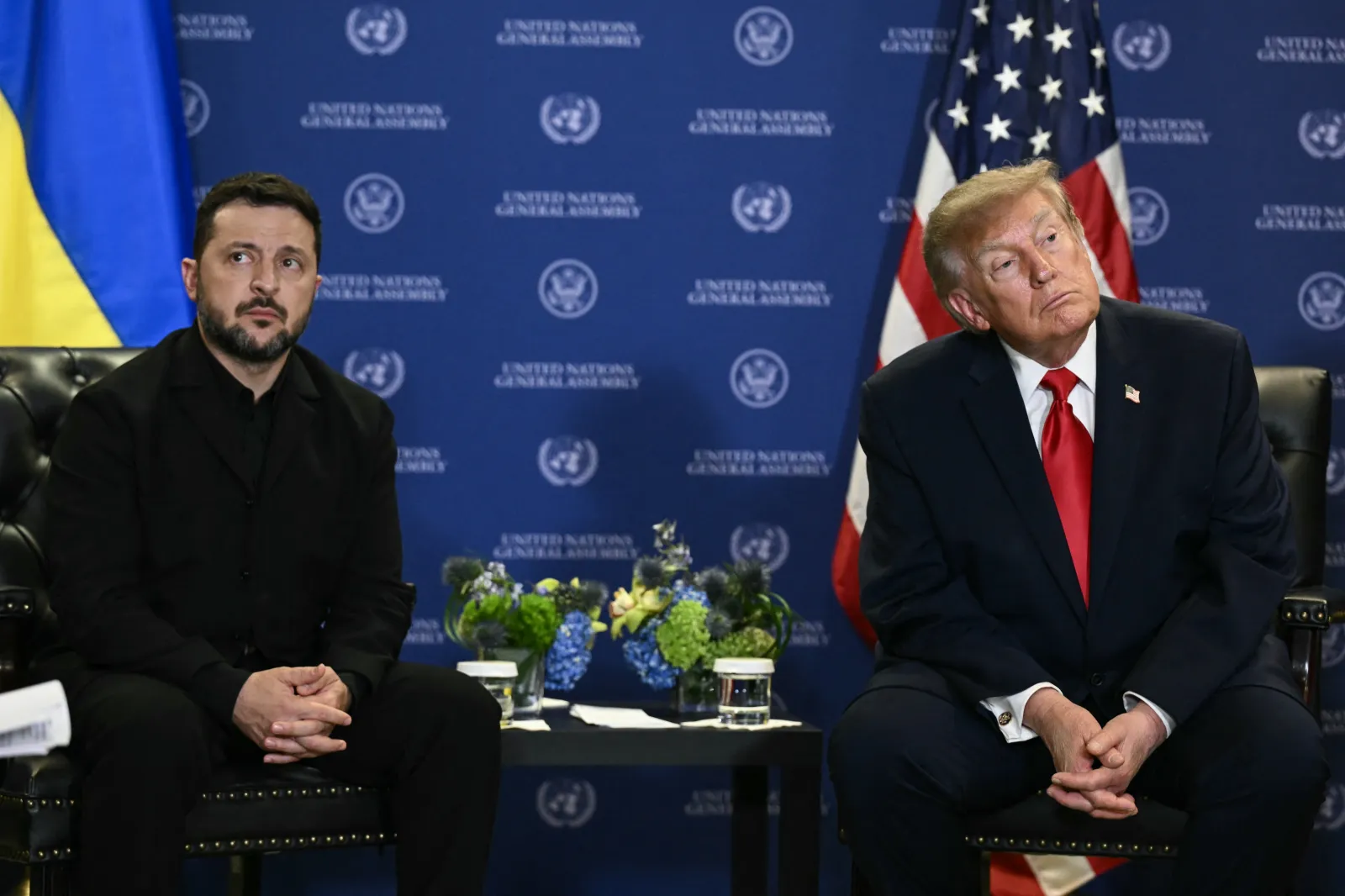
Putin would have Trump believe that Russia and America are the responsible adults negotiating world peace; Ukraine and Europe are miscreants interrupting their meeting.
When Trump announced his diesel deal with Moscow, he quickly rounded on Ukrainian President Volodymyr Zelensky for criticizing it. Ukraine needed a new leader who could make a deal, according to the White House.
Not to let a good opportunity go to waste, Russia's wily foreign minister Sergei Lavrov repackaged Zelensky's complaints as a personal assault on Trump's authority.
"This is a direct challenge, and a rude one at that, to President Trump, who actively supported this deal," Lavrov declared.
Objecting to your most important ally striking a deal with your invader is insulting, or so the Kremlin would have you believe. Ukraine is reduced to nothing but a troublemaker, obstructing a perfectly agreeable transaction between two great powers.
On Wednesday, Ushakov was again blaming Ukraine for derailing ongoing peace negotiations, while insisting that representatives of meddling Europe deserved no seat at further talks.
"We agreed that trilateral negotiations will resume with representatives from Russia, Ukraine, and the United States…[The Europeans] can get in if they buy tickets, but no one is going to invite them to the negotiating table," he said.
And thus, the cycle is complete. The manual practically writes itself: praise the target, collect the advance and, when peace talks stall, blame Ukraine. If negotiations falter, blame Europe. If Washington gets impatient, return to step one.
Rinse and repeat.
View 0 Comments
Submit Correction
View Editorial & AI Guidelines