...

By Soo Kim
Reporter
0
Share
Newsweek is a Trust Project member
See more of our trusted coverage when you search.Prefer Newsweek on Googleto see more of our trusted coverage when you search.
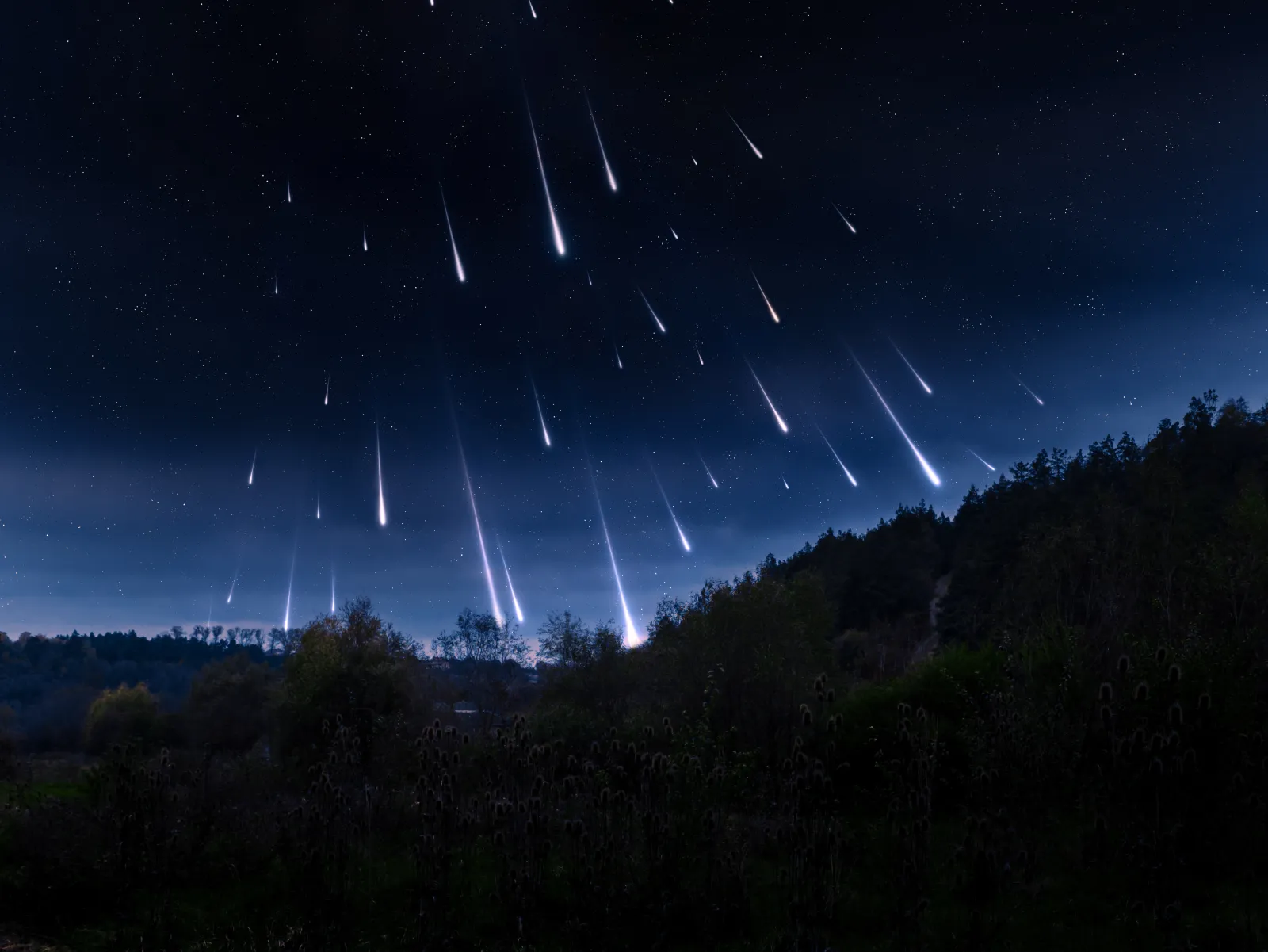
Stargazers are in store for a treat this weekend, with the annual Quadrantids Meteor Shower due to light up our skies.
Peaking during early January, the Quadrantids are considered to be one of the best annual meteor showers. They are best viewed in the northern hemisphere during the night and predawn hours, according to NASA.
Meteors come from leftover comet particles and bits from broken asteroids that form debris trails as their parent bodies orbit the sun.
Read More on Science
“Every year the Earth passes through these debris trails, which allows the bits to collide with our atmosphere where they disintegrate to create fiery and colorful streaks in the sky," NASA explains.
Quadrantids are known in particular for their bright meteors, which form large fireballs that typically last longer than an average meteor streak.
In 2026, the Quadrantids are forecast to peak from 9 p.m. to midnight Universal Time on January 3 and 4. This time window favors viewers in Asia, while those catching it from the southern hemisphere will “not see much activity at all as the radiant does not rise very high in their sky before dawn intervenes,” explains the American Meteor Society (AMS).
Observers in North America are expected to see fewer than 10 Quadrantids per hour at most. Over in Europe, maximum viewing rates are projected to be closer to 10 per hour. Those observing from Asia under clear and transparent skies may see 10 to 20 Quadrantids per hour, according to the AMS.
Lunar conditions in 2026 are a major factor as the moon reaches its full phase on January 3, the AMS says, noting this means that “faint meteors, which make up a majority of the activity, will be obscured by the bright moonlight.”
...
While comets may be best viewed with telescopes, meteor showers can usually be observed with just your own field of vision. The naked eye can spot any lights, shooting stars, and fireballs.
NASA advises observers to find an area that’s a good distance away from the city or streetlights to view the Quadrantids.
“Come prepared for winter weather with a sleeping bag, blanket, or lawn chair. Lie flat on your back with your feet facing northeast and look up, taking in as much of the sky as possible,” the space agency says.
By facing the northeastern quadrant of the sky, you'll be "able to see meteors shoot out of the radiant in all directions,” the AMS notes.
NASA says: “In less than 30 minutes in the dark, your eyes will adapt and you will begin to see meteors. Be patient–the show will last until dawn, so you have plenty of time to catch a glimpse.”
Various "peaks and valleys of activity" will occur during the shower, and viewers should watch for at least an hour, as doing so “guarantees you will get to see the best this display has to offer,” the AMS says.
Do you have a tip on a science story that Newsweek should be covering? Do you have a question about meteor showers? Let us know via science@newsweek.com.
View 0 Comments
Submit Correction
View Editorial & AI Guidelines