10
Loading video...

By Alice Gibbs
Senior Reporter
0
Share
Newsweek is a Trust Project member
See more of our trusted coverage when you search.Prefer Newsweek on Googleto see more of our trusted coverage when you search.
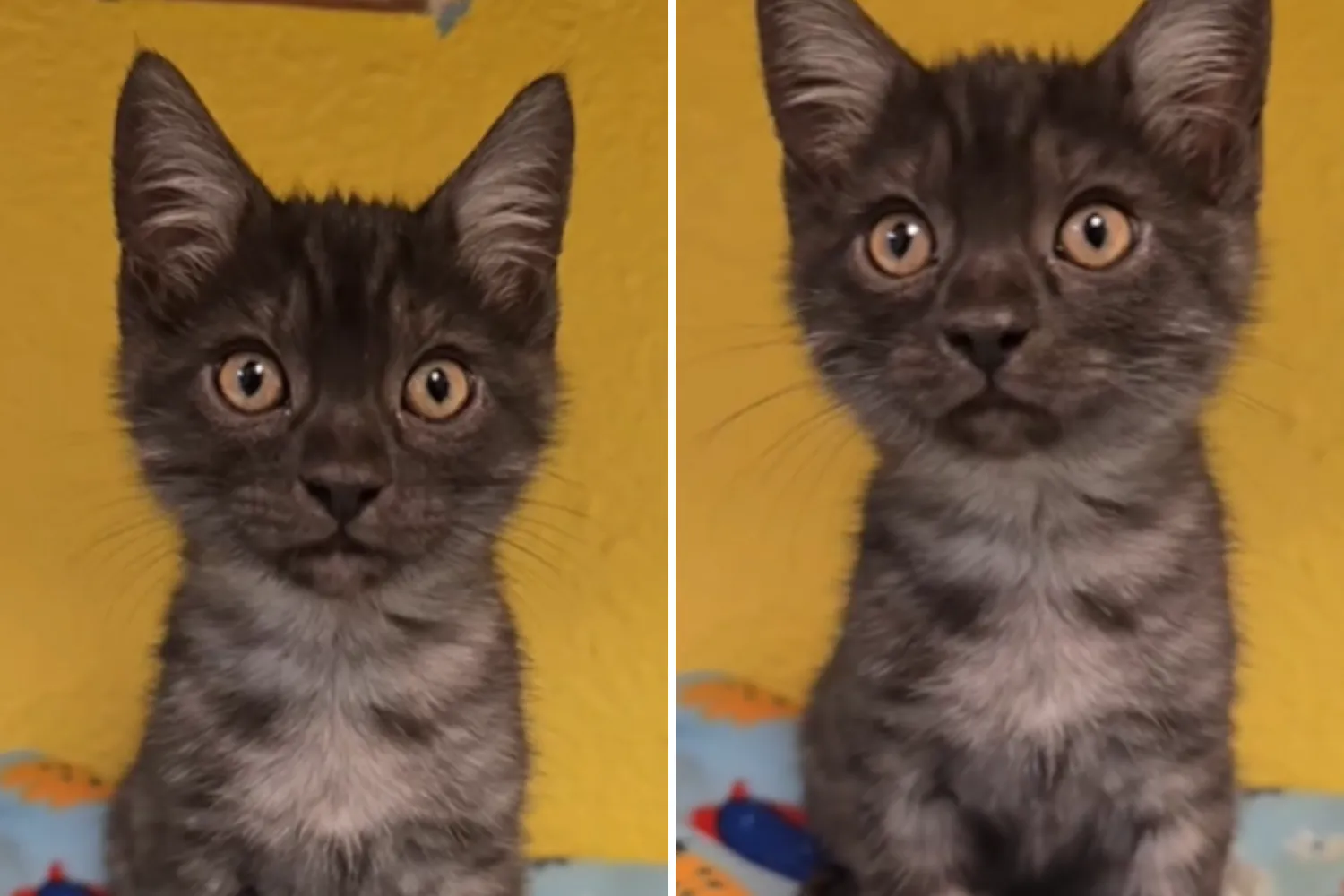
A rare cat has captured hearts for his striking looks, finding the perfect forever home in no time thanks to his smoke black fur.
“Gunna is a 3-month-old smoke black kitten… which is a quite rare and beautiful coloring. He came to us from another rescue, and his unique markings are indeed what make him stand out,” Sim Kaur from the Valley Animal Center in California told Newsweek.
Why Is Gunna So Rare?
Gunna’s stunning “smoke black” coat is more than just striking—it’s a genetic marvel.
Read More on Life
“Smoke black cats like Gunna get their unique coloring due to a special gene that suppresses pigment at the base of each hair,” Kaur said.
Unlike a standard solid-black cat whose pigment runs from root to tip, a smoke black cat’s hairs have a silvery or lighter base with a darker tip. It gives the effect of the coat being “smoked in” from within.
The reason for this striking look is the inhibitor gene which suppresses pigment deposition at the base of the hair shaft, giving the cat the shimmering effect.
...
From Rescue to Forever Home
Just three months old, Gunna was not in the shelter for long before his perfect family arrived.
“He has a sweet and playful personality and loves attention from anyone he meets,” Kaur said.
The shelter shared a video of Gunna on their Instagram page where it gained more than 200,000 views. The caption read: "Meet Gunna, our rare black smoke kitten. With a coat that shifts from silver to charcoal in the light, Gunna’s as magical as he looks."
“Such a beauty!” said one commenter. While another wrote: “They are also sometimes called ghost tabbies.”
“Absolutely a beautiful kitty,” said another viewer.
Thanks to the viral attention on Instagram, it was not long before Gunna found a family. “Gunna was adopted shortly after the video, so he’s now in his forever home,” Kaur said.
His swift adoption makes Gunna one of the lucky ones. According to Shelter Animals Count’s 2025 mid-year report, around 2.8 million dogs and cats entered U.S. shelters in the first half of the year—a 4 percent decrease from 2024—but shelters still face overcapacity problems.
Cats make up nearly half of all shelter intakes, 59 percent of which are strays. Adoption rates for both cats and dogs hold steady at 56 percent of total intakes, though adult and senior cats saw a 7 percent drop in adoptions compared to 2024. Kittens remain especially vulnerable—65 percent of all cat non-live outcomes involve kittens under 5 months old, showing that younger felines continue to face higher euthanasia risks in overcrowded shelters.
Do you have funny and adorable videos or pictures of your pet you want to share? Send them to life@newsweek.com with some details about your best friend, and they could appear in our Pet of the Week lineup.
View 0 Comments
Submit Correction
View Editorial & AI Guidelines