10
Loading video...

By Daniella Gray
Reporter
0
Share
Newsweek is a Trust Project member
See more of our trusted coverage when you search.Prefer Newsweek on Googleto see more of our trusted coverage when you search.
A pregnant woman “praying to the lord” she doesn’t go into labor before midnight is going viral on social media.
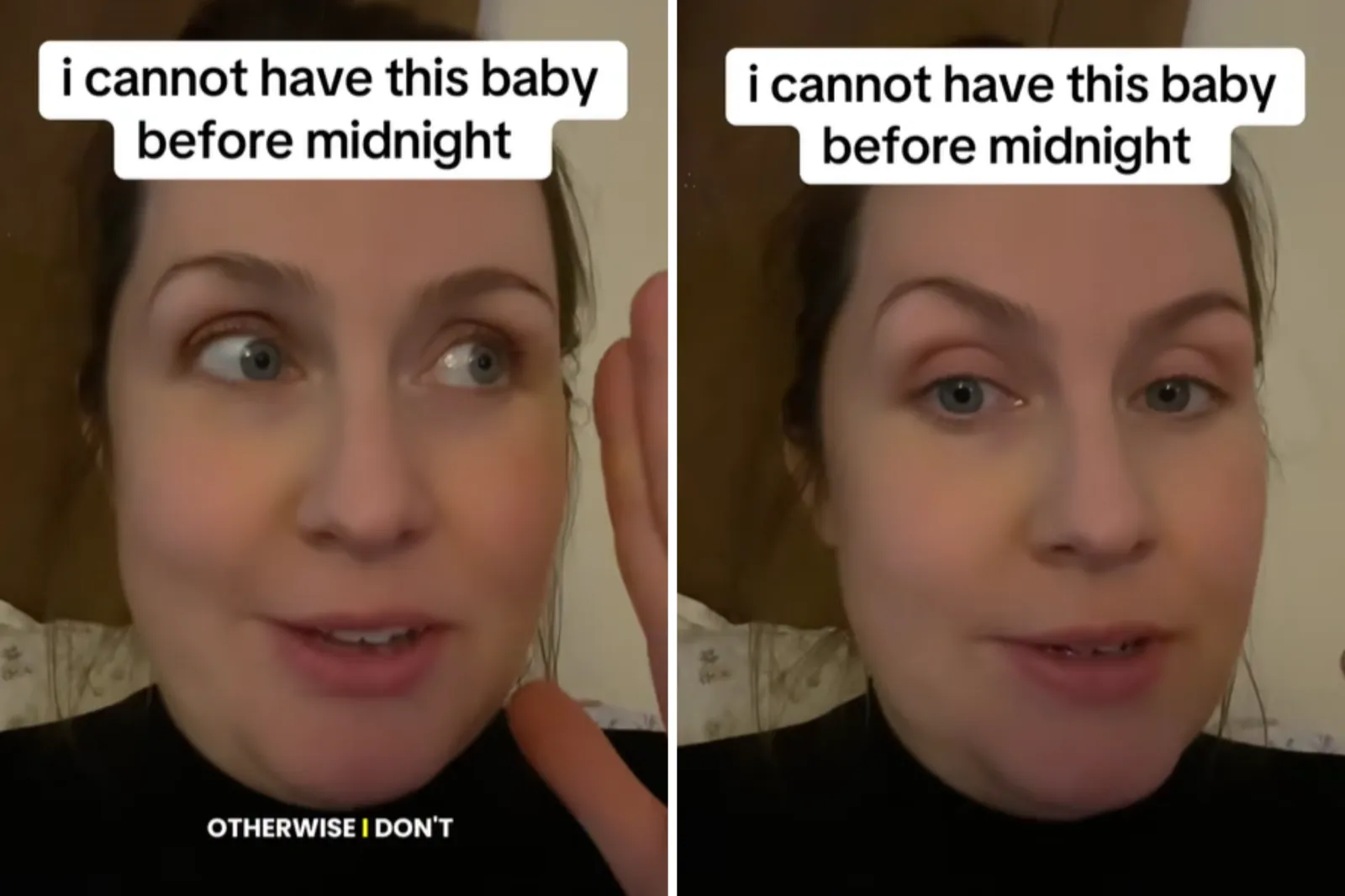
Al Sienkiewicz (@tales_of_a_working_mama) explained the high stakes in a clip on TikTok.
If her baby arrived too early, she would lose access to federally protected leave and full pay from her employer, forcing her back to work just six weeks after giving birth.
Read More on Family & Parenting
...
During a prenatal appointment on December 9, doctors confirmed that Sienkiewicz, 38, was already four centimeters dilated.
Sienkiewicz, already a mom to her 2-year-old son with her husband, 42, knew labor with a second child could move quickly.
“I went home and didn’t move,” she told Newsweek. “I had to make it to midnight to be fully qualified for benefits and pay.”
Sienkiewicz had started a new job on December 9, 2024, unaware she would soon be navigating one of the most precarious timelines working parents face.
She and her husband wanted a second child, but the pregnancy progressed faster than expected. Her due date was first set for December 21, then moved up to December 15 as the baby measured larger and more advanced.
At work, Sienkiewicz kept her pregnancy private until she informed HR, only to learn just how narrow the margin was.
To qualify for FMLA (a U.S. law providing eligible employees up to 12 weeks of unpaid leave for family reasons) and receive 100 percent paid leave from her employer, she had to give birth after December 9.
If the baby arrived before that date, she would only qualify for six weeks of New York State disability at 60 percent pay—no job protection, no extended leave.
On December 9, doctors warned labor could start within a day or two. For Sienkiewicz, everything hinged on the clock.
“I planned to go get a pedicure but I quickly decided that it was a no-go,” Sienkiewicz said. “As the day progressed, I began to feel more anxious. I was panicking; asking questions like, what are we going to do for childcare for a newborn and how will be pay bills and live with a smaller income?”
The situation spiraled into anger at a system that places parents in impossible positions. She shared her fears online, not expecting the response that followed.
The clip received over 3.5 million views and thousands of comments poured in, as many other mothers from the U.S. could sympathize with the situation.
Others came from outside the U.S. who couldn't relate at all. “This is dystopian,” one wrote. “I’m too Australian for this,” said another.
“I was thankful and surprised and had all sorts of emotions, including resentment at the system,” Sienkiewicz said. “I’m lucky, but many women and families aren’t and have been in the same situation with difficult outcomes.”
Sienkiewicz posted two more videos that evening and went to bed. At 1 a.m., contractions began. By 3:45 a.m., she was admitted to labor and delivery. Her baby arrived quickly—but crucially, after midnight on December 10.
“Baby understood the assignment,” she added.
View 0 Comments
Submit Correction
View Editorial & AI Guidelines