...

By Aliss Higham
Reporter
0
Share
Newsweek is a Trust Project member
See more of our trusted coverage when you search.Prefer Newsweek on Googleto see more of our trusted coverage when you search.
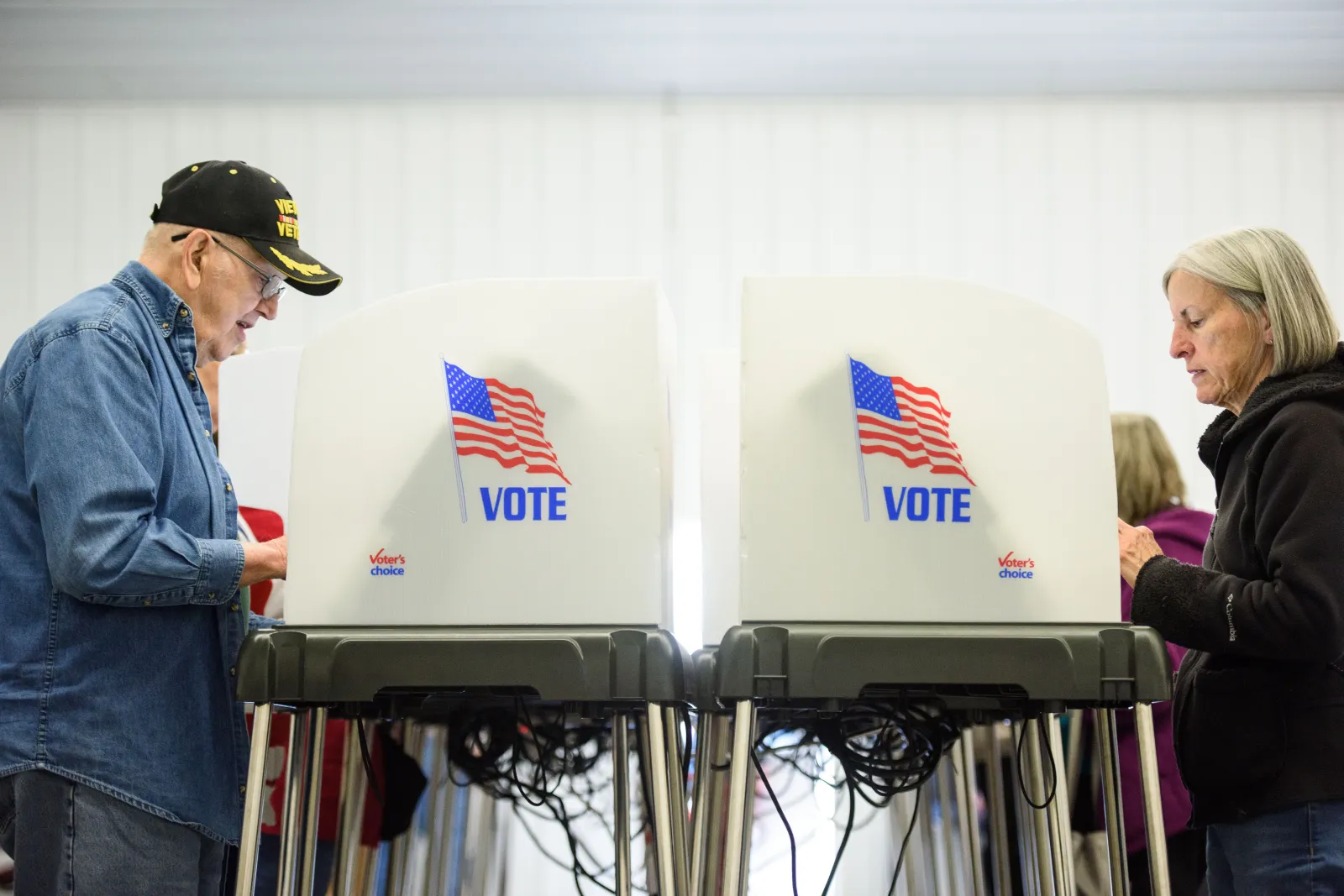
House Majority Leader Steve Scalise has proposed amendments to election legislation that would require all voters to present a photo ID to cast their ballot.
Newsweek has contacted Scalise via the contact form on his website for comment.
Why It Matters
The Safeguard American Voter Eligibility (SAVE) Act was passed by the House of Representatives in April 2025, but it has since stalled in the Senate. It would mandate that states require in-person proof of U.S. citizenship—such as a passport or birth certificate—before registering someone to vote, and direct states to identify and remove noncitizens from existing voter rolls.
Read More on News
It is part of a wider Republican push to ensure that only U.S. citizens can cast ballots in federal elections. The SAVE Act follows a March 2025 executive order from President Donald Trump's administration that directs federal agencies to enforce the citizenship requirement for voting in federal elections. It requires the Election Assistance Commission to update mail-in voter registration forms to include proof of U.S. citizenship, such as passports, REAL ID-compliant IDs, military IDs, or government-issued IDs with citizenship verification.
SAVE Act Changes
Scalise has now raised the prospect of introducing a requirement for photographic ID when people vote being added to the bill.
When asked about his thoughts on the SAVE Act, Scalise told Fox News' The Big Weekend Show: "What we're looking at doing is passing an even better bill over to the Senate to give them even more incentive to go protect the sanctity of every American's vote, and that is the SAVE Act Plus."
"Look, you can't even get on an airplane. You can't go to a bar tonight without showing a picture ID. Yet there are people in many states where the states actually have laws saying you can't show ID, which is a recipe for fraud."
...
Voter identification requirements vary by state: some require a photo ID such as a driver’s license, state ID, or passport, while others may accept non-photo documents like a birth certificate or Social Security card. Registered voters are not required to bring their voter registration card, though it can be used as identification, and even voters without the requested ID may still be allowed to vote, often by signing a form affirming their identity.
"I think a lot of Americans would like that protection because if they're following the rules, they just want everybody else to. What makes people angry is when you see boxes of ballots showing up two weeks after an election, and the next thing you know, lo and behold, a Democrat takes the lead after being behind for three weeks after Election Day." Scalise did not provide any examples where this has happened in recent elections.
In March 2025, Scalise, House Speaker Mike Johnson and other Republican lawmakers released a statement urging Congress to pass the bill.
"American citizens—and only American citizens—should decide American elections," and that it "puts in place common sense safeguards to prevent noncitizens from abusing our democratic process."
Backlash
Since it was proposed in 2025, the SAVE Act has received backlash from left-leaning groups. The Center for American Progress (CAP) has said the legislation would "invert the responsibility to verify a person’s eligibility and citizenship status from election officials and the government onto every single American citizen, making citizens convince the government that they’re eligible to exercise their right to vote."
According to the League of Conservation Voters, the SAVE Act would create significant barriers for many voters. In the 42 states that rely on online or mail-in voter registration, individuals would now need to appear in person even for simple updates like a change of address or party affiliation. This could pose challenges for military, Tribal, and rural voters who live far from polling locations—during the 2022 election cycle, 8 million people registered online and 3 million by mail, email, or fax.
Low-income voters would also be disproportionately affected, as only one in five Americans earning under $50,000 a year has a valid passport.
Particular concerns have been raised for married women. The CAP has reported that "as many as 69 million American women do not have a birth certificate with their legal name on it and thereby could not use their birth certificate to prove citizenship" if they do not have an up-to-date passport.
In a polarized era, the center is dismissed as bland. At Newsweek, ours is different: The Courageous Center—it's not "both sides," it's sharp, challenging and alive with ideas. We follow facts, not factions. If that sounds like the kind of journalism you want to see thrive, we need you.
When you become a Newsweek Member, you support a mission to keep the center strong and vibrant. Members enjoy: Ad-free browsing, exclusive content and editor conversations. Help keep the center courageous. Join today.


View 0 Comments
Submit Correction
View Editorial & AI Guidelines