...

By Nick Reynolds
Senior Reporter, Politics
0
Share
Newsweek is a Trust Project member
See more of our trusted coverage when you search.Prefer Newsweek on Googleto see more of our trusted coverage when you search.
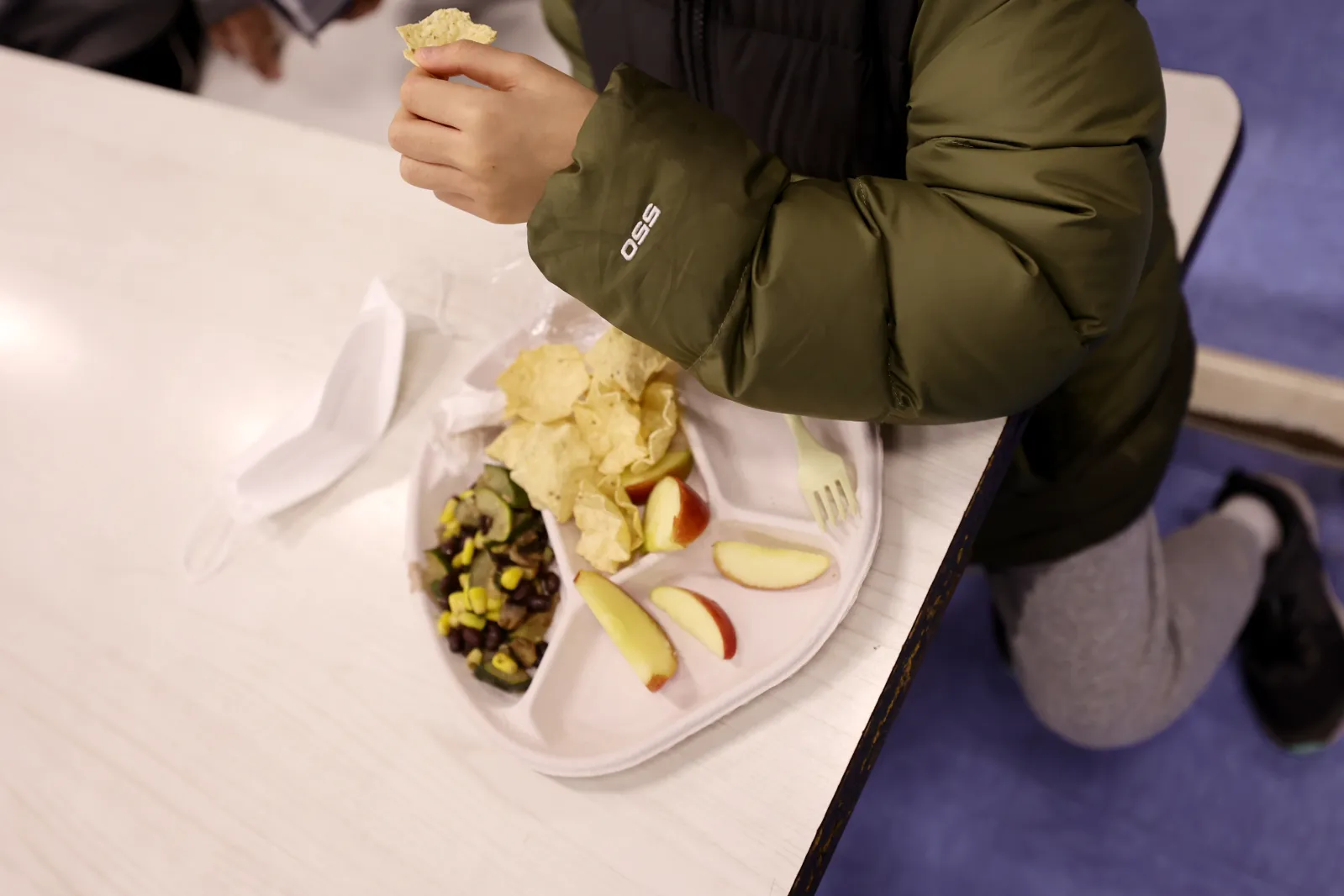
The largest ideological caucus in the House Republican conference is proposing steep cuts to free and reduced school lunch programs nationwide, citing the need to "prevent the widespread fraud present in the program."
Embedded deep in the Republican Study Committee's (RSC) recommended budget released Wednesday night, the plan calls for a series of reforms designed to cut federal funding for school lunches and encourage states to increase their shares of funding for the program—a move the RSC argues will encourage state legislatures to restrict the eligible population receiving school lunch to "truly needy" households.
The decision comes on the heels of the sunset of a widespread expansion of free school lunch programs during the COVID-19 pandemic, a policy decision the federal government said actively proved to reduce childhood hunger.
Read More
What’s Inside Republican Plans For Social Security5 min read

Fox Host Rejects Top Republican’s ‘Impossible’ Immigration Plan3 min read

Republican Calls Out D.C. Crime After Staffer Attacked3 min read

Republicans also argue that the program is rampant with fraud, leading the U.S. Department of Agriculture (USDA) to amass cost overruns of roughly $2.445 billion in the five-year period between 2016 and 2021. And that might have been an underestimation: In 2019, the Government Accountability Office assessed that the USDA was improperly categorizing some of the reimbursements, potentially opening the door to even greater levels of fraud.
...
According to the U.S. Census Bureau, food insecurity nationwide fell by about 7 percentage points from the start of the pandemic to 14.2 percent by the end of the summer of 2021, a sign the U.S. Census Bureau claimed was a direct result of expanded school lunch programs.
A majority of those with children receiving assistance were already receiving food stamps, while about half of all families using programs reported either having difficulty meeting monthly expenses or needing to borrow from friends and family to make ends meet.
Many others who have traditionally relied on the program, however, did not report similar circumstances, fueling arguments from conservatives that the program was ripe for additional oversight and regulation.
"Doing so would have no impact on children from low-income families because these children would still be eligible for free- and reduced-priced meals," Jonathan Butcher, a policy analyst for the conservative Heritage Foundation, wrote in a critique of the program in 2019. "The move would simply help to control school meal programs that are ballooning into a federal food entitlement for every child, regardless of need."
There have been notable recent examples of fraud after the federal government expanded access to USDA funds to non-profits providing afterschool meals and breakfasts during the pandemic. In March 2022, a Minnesota nonprofit was accused of siphoning and then laundering millions of dollars in afterschool lunch funds in order to finance lavish real estate purchases, marking the most significant example of USDA fraud in years. Such examples proved to be the impetus for the RSC's recommendations.
"A disappointing consequence of the federal government spending so much on assistance programs is the inevitable fraud," they wrote in their budget proposal. "This is an issue that has only been made worse by the pandemic and the plethora of newly-created aid programs related to it."
Newsweek reached out to an RSC spokesperson via email for comment on the proposal. The program has already received ample criticism from Democratic lawmakers like Pennsylvania Senator John Fetterman, who lambasted Republicans' "fetish for preventing hungry kids from getting fed" in a Friday tweet.
There's also the question of how Republicans seek to address it. Last year, the entire federal free school lunch program cost an estimated $28.7 billion—far beyond the average annual improper payment estimate of $489 million alleged by the RSC.
But the specific policy solutions they intend to replace the current system have also long been criticized by policymakers.
According to a policy brief, the RSC budget would "streamline" funding for child nutrition programs by condensing all of the programs into a single block grant for each individual state. While Republicans claim a block grant approach would give states flexibility to allocate the funds as they see fit, critics have said a block grant-based approach would require an annual appropriation by Congress and would be less able to address variables like more lower-income students moving into a school district, or rising food costs.
But the proposal also includes a "phased-in state cost share," which the RSC claims would incentivize the efficient administration of funding to prevent fraud and help ensure free or reduced lunches go only to those who need it most.
While some states like Minnesota, New Mexico, California and Colorado have already enacted universal school lunch programs, with others—like South Carolina—considering similar programs, other states, such as Alaska, Alabama, Oklahoma, Montana and Kentucky, have not, likely leaving their state legislatures to find their own means of making up the shortfall.
View 0 Comments
Submit Correction
View Editorial & AI Guidelines