10
Loading video...

By Lucy Notarantonio
Senior Reporter
0
Share
Newsweek is a Trust Project member
See more of our trusted coverage when you search.Prefer Newsweek on Googleto see more of our trusted coverage when you search.
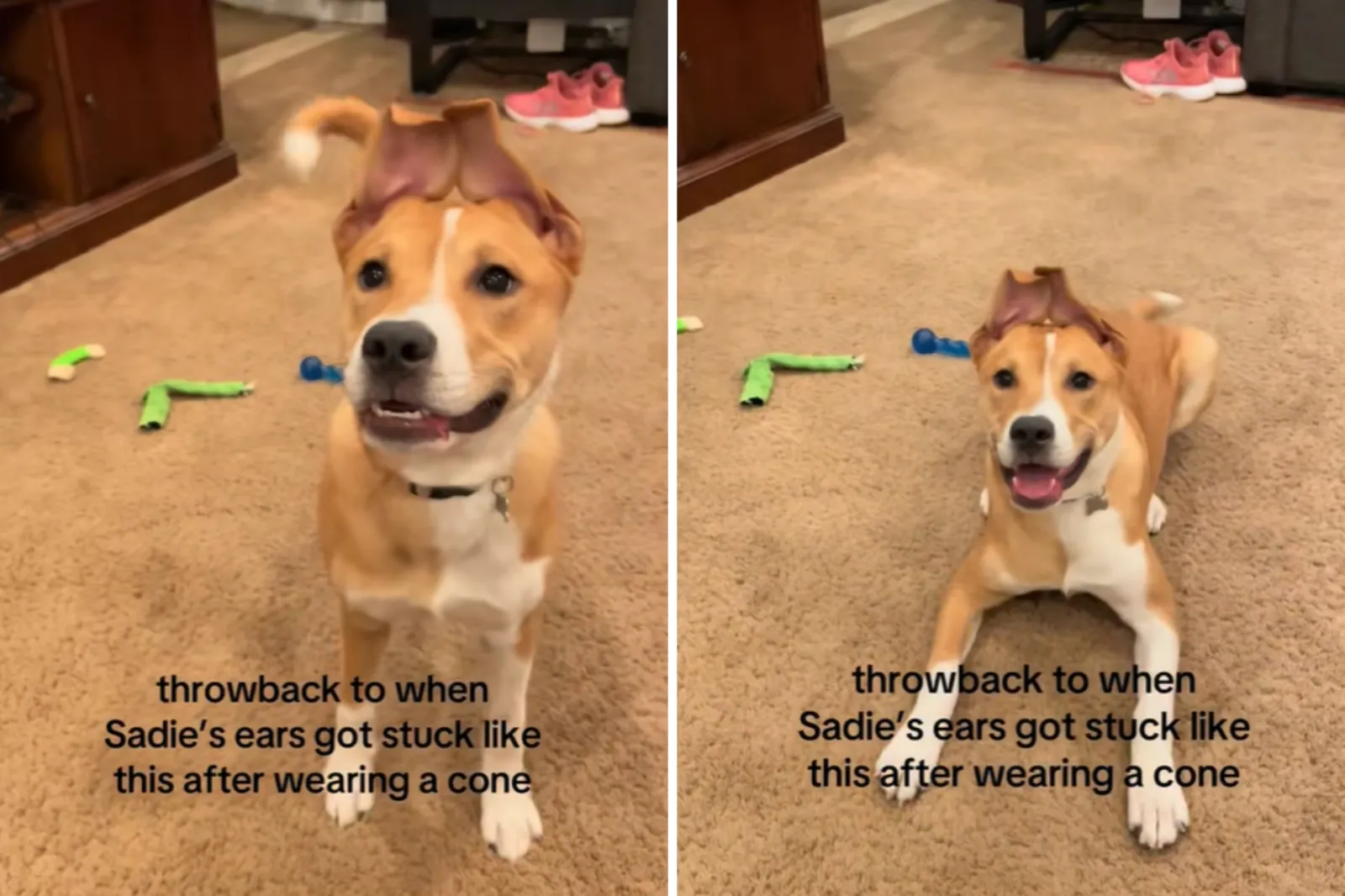
A rescue dog from New York has unintentionally become the subject of online amusement after having her recovery cone removed.
The pit bull mix called Sadie (@sardine.sadie), had a cut on her face so the owner placed the cone around her neck to prevent her from scratching it.
Her owner told Newsweek: "Her ears went back to normal after a week! They were just a little silly throughout that week
Read More on Pets
In the now‑viral clip, Sadie appears to be a playful mood, completely unfazed by her newly elevated ears, earning almost 1 million views and over 193,000 likes.
...
It is unclear how long it took for her ears to return to their natural position, but, for now, dog lovers are flooding the comments section with their reactions.
"They’ve got surround sound!" one user posted.
"I thought they had been glued together," another wrote.
A third added: "The humble satellite dish."
Why Dogs Dislike Wearing Cones
The video doesn't explain why Sadie was wearing a cone in the first place, but, often, they are used to prevent pets from licking or biting at wounds, surgical sites, or hotspots.
The American Kennel Club (AKC) explains that cones—also known as Elizabethan collars—are protection that helps avoid infection, irritation, or suture damage, allowing the area to heal properly.
But cones also disrupt a dog’s normal experience of the world:
- They block peripheral vision.
- They distort how sound reaches the ears.
- They make navigating around furniture more difficult.
- Eating, drinking, and sleeping become awkward.
Because of these changes, many canines show signs of stress or confusion. Some may even refuse to eat or become lethargic while wearing one. Keeping a dog calm and comfortable can make the healing process smoother.
Tips for Helping Your Dog Adjust to a Cone
Because wearing the ‘cone of shame’ can be uncomfortable for dogs, it is important for owners to watch for signs of stress such as pinned ears, a tucked tail, or avoidance. To help make the experience easier on pets, the AKC offers the following tips:
- Place the cone on the ground, scatter treats around it, and let your dog explore so they form a positive association.
- Once your pup is comfortable, hold up the cone and reward any interest, such as sniffing or touching it.
- When your dog gets excited to see the cone, turn the wide end toward them and reward any movement of their head into it.
- After they willingly enter the wide end, turn the cone around and repeat the process with the narrow end facing them.
- When your canine can pop their head in and out, build duration by feeding treats while their head stays inside.
- Fasten the cone and reward your dog for making small movements and for tolerating gentle taps on the sides.
- Take short indoor walks and practice simple cues like sit or lie down, rewarding generously to keep the experience positive.
View 0 Comments
Submit Correction
View Editorial & AI Guidelines