...

By Robert Alexander
Senior Crime & Court Reporter
0
Share
Newsweek is a Trust Project member
See more of our trusted coverage when you search.Prefer Newsweek on Googleto see more of our trusted coverage when you search.
A growing number of U.S. retailers and manufacturers are pursuing legal action against the federal government as they seek to protect their ability to reclaim tariffs imposed under President Donald Trump.
The litigation comes as the Supreme Court considers a major test of presidential authority under the International Emergency Economic Powers Act (IEEPA). A ruling could determine not only the scope of executive power but also whether affected companies may recover duties they argue should never have been collected.
Newsweek contacted the Department of Justice and attorneys for the plaintiffs for comment via email outside of normal office hours on Tuesday.
Read More on U.S.
Why It Matters
A growing wave of retailers challenging President Donald Trump’s tariff authority underscores what is at stake as the Supreme Court weighs whether the administration overstepped its emergency powers.
The outcome of Trump v. V.O.S. Selections could reshape the balance of power between the White House and Congress, expose the government to billions in potential refund claims, and determine how deeply tariffs continue to affect supply chains and consumer prices.
The litigation reflects both the financial risks companies face under the current tariff regime and the broader constitutional questions the Court must resolve.
...
What To Know
Costco’s Legal Challenge And Industry Response
Tariffs are extra charges the Trump administration has put on imported goods, and retailers are worried because if the Supreme Court later rules those charges were illegal, they want to make sure they can get their money back.
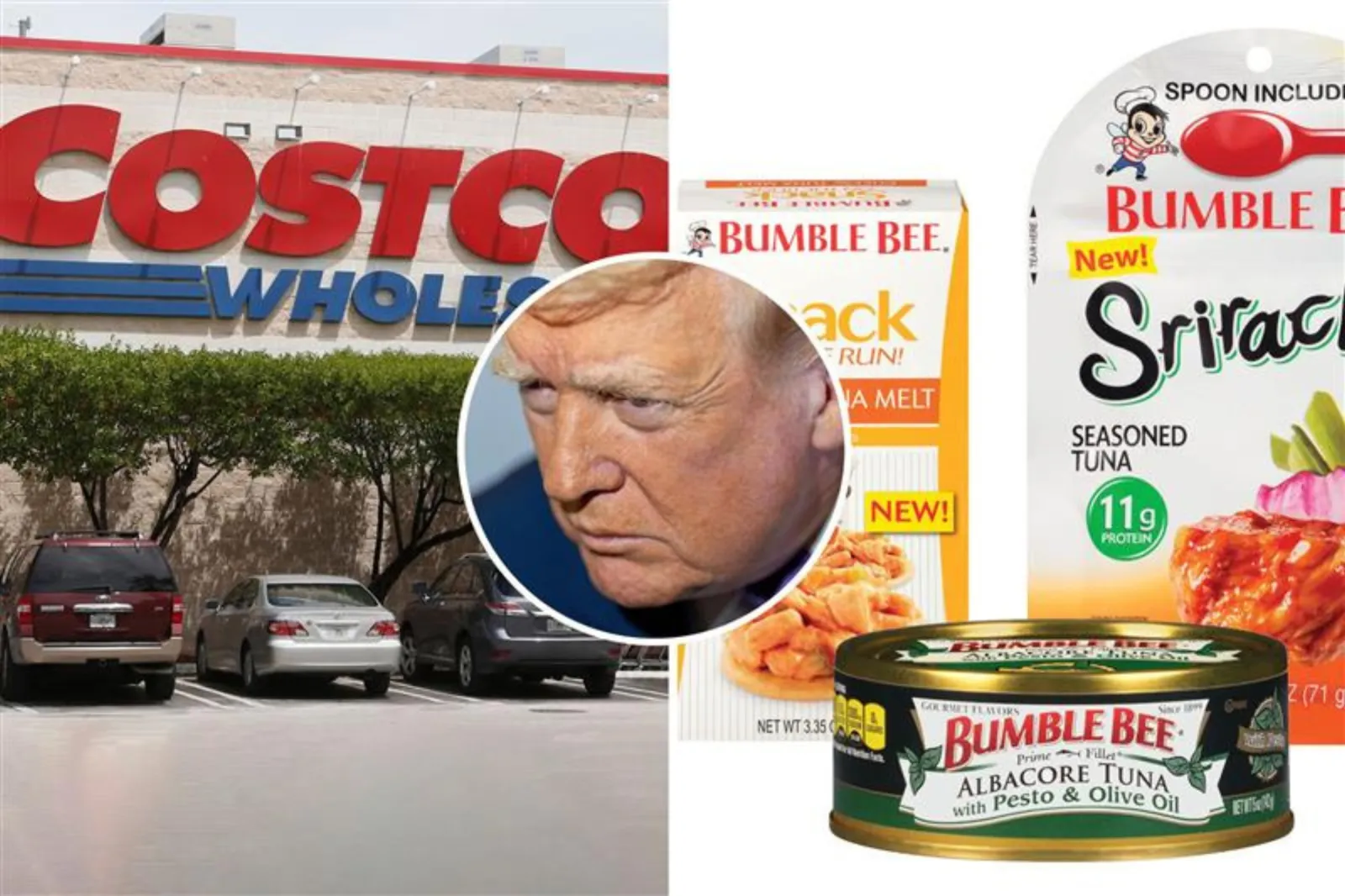
Costco is one of the most prominent plaintiffs in a complaint filed in the U.S. Court of International Trade. The company said Trump’s use of IEEPA to impose tariffs created significant uncertainty around future refunds.
Court filings show that other retailers and import-dependent companies have taken similar steps, as reported by Bloomberg Law. These include Bumble Bee Foods, eyewear conglomerate EssilorLuxottica—maker of Ray-Ban—Kawasaki Motors, Revlon and Yokohama Tire.
Each has sought to preserve its ability to claim refunds should the justices determine that the emergency-powers law does not authorize unilateral tariff actions.
Costco has argued that U.S. Customs and Border Protection denied its request for additional time to finalize tariff calculations—an outcome the company said jeopardizes its ability to obtain full repayment should the Supreme Court strike down the tariff orders.
The retailer said it has attempted to mitigate tariff-related costs by consolidating suppliers, increasing domestic sourcing and expanding its Kirkland Signature product line. “The Challenged Tariff Orders cannot stand,” Costco’s attorney wrote, arguing that “because IEEPA does not clearly authorize the President to set tariffs … the defendants are not authorized to implement and collect them.”
What The Supreme Court Is Weighing
The Supreme Court’s eventual decision could have broad implications. During oral arguments on November 5, justices from both conservative and liberal wings questioned whether Trump possessed the legal authority to impose sweeping trade restrictions without congressional approval.
Justice Neil Gorsuch noted that “Congress, as a practical matter, can’t get this power back once it’s handed over to the president,” calling it “a one-way ratchet toward the gradual but continual accretion of power in the executive branch.”
Legal experts assessing the arguments have reached differing conclusions.
Former federal prosecutor Neama Rahmani told Newsweek he believes the Court may remain deferential to the administration, particularly on matters framed as national security.
Others, including University of Massachusetts Amherst professor Paul Collins, said the justices appeared skeptical.
“The oral arguments were rough for the Trump administration,” Collins said, suggesting that multiple legal paths discussed by the Court “indicate that the tariffs go beyond the power of the president.”
Should the administration lose, the question of repayment remains unresolved.
Some companies and analysts have speculated that a ruling against Trump could lead to broad government liability for collected duties, but Collins previously told Newsweek that such an outcome is uncertain: “Some have suggested that the government will have to pay back the tariffs. I tend to think that’s unlikely, but the Court will have to wrestle with what a loss for the Trump administration means in practice.”
How The Administration Is Defending The Tariffs
Meanwhile, the Trump administration maintains that the tariffs are necessary to address long-standing economic and national-security challenges, including trade deficits and fentanyl trafficking.
In a recent interview with Fox News’ Bret Baier, Trump said: “I heard the court case went well today. But I will say this, it would be devastating for our country if we lost that. It’s one of the most important cases in the history of our country.”
No precise timeline has been set for the Court’s ruling, but decisions in expedited cases can come within months. If the justices treat the matter as urgent, a decision could arrive this year, though the Court traditionally resolves major cases by June of the following term.
For now, the list of retailers suing to protect potential refunds continues to grow, reflecting the high financial stakes of the case and the broader uncertainty facing companies navigating the administration’s tariff regime.
Late on Tuesday, a spokesperson for the U.S. Customs and Border Protection said: "We defer to the White House’s recent statement regarding this issue: 'The economic consequences of the failure to uphold President Trump’s lawful tariffs are enormous, and this suit highlights that fact. The White House looks forward to the Supreme Court’s speedy and proper resolution of this matter.' – WH Spokesman Kush Desai."
What People Are Saying
Jeffrey M. Schwab, attorney at Liberty Justice Center, said, as per Reuters: “These unlawful tariffs are inflicting serious harm on small businesses and jeopardizing their survival.”
Joseph Spraragen, Customs and International Trade Attorney at Grunfeld, Desiderio, Lebowitz, Silverman & Klestadt LLP, commenting on the implications for refund claims if the tariffs are voided, said, according to Reuters: “If they’re illegal today, they were illegal in February 2025 and in April, when the reciprocal tariffs kicked in.”
What Happens Next
The Supreme Court has not announced when it will rule on Trump v. V.O.S. Selections, the case that will determine whether President Trump legally used emergency powers to impose broad tariffs, but a decision could arrive this year or by June 2026 at the latest.
Until then, lawsuits filed by companies such as Costco, Bumble Bee Foods, EssilorLuxottica, Kawasaki Motors, Revlon and Yokohama Tire remain in place as businesses seek to protect their ability to claim refunds if the tariffs are struck down.
A ruling against the administration could be difficult to implement, potentially forcing the government to navigate complex questions about repayment and the scope of presidential authority under the emergency-powers law.
Update 12/02/2025, 15:59 p.m. ET: This article has been updated with comment from U.S. Customs and Border Protection
View 0 Comments
Submit Correction
View Editorial & AI Guidelines