...

By Alia Shoaib
Reporter
0
Share
Newsweek is a Trust Project member
See more of our trusted coverage when you search.Prefer Newsweek on Googleto see more of our trusted coverage when you search.
Robot dogs and AI tools are being deployed as part of an unprecedented security operation ahead of this week’s FIFA World Cup kickoff across the U.S., Canada and Mexico.
The tournament comprises 48 international teams competing in 104 matches in 16 cities, with millions of fans expected to travel for it.
"There’s never been a summer like this in American history from a security angle," said Andrew Giuliani, the executive director of President Donald Trump’s World Cup task force overseeing security.
Read More on U.S.
Robot dogs will be part of the sweeping push to monitor and respond to potential threats, alongside AI-powered cameras and drone-detection technology, as authorities coordinate a vast, multiagency security effort.
A shooting which injured nine near England’s World Cup base in Kansas City, Missouri, on Saturday highlights the need for heightened security. While it appears unrelated to the tournament—and occurred before the England team arrived—it underscores the broader reality of gun violence risks to players, staff and traveling fans.
Gun violence in the United States remains comparatively common, with more than 400 mass shootings recorded in 2025, according to the Gun Violence Archive.
Why It Matters
The stakes couldn't be much higher. As well as being the largest World Cup in history, President Donald Trump has taken a close interest in the event by hosting FIFA's chief Gianni Infantino at the White House and accepting a peace prize at the draw for the tournament. The president has also expressed an interest in attending some matches.
What To Know
Giuliani, the son of former New York City Mayor Rudy Giuliani, likened it to there being "78 Super Bowls over 39 days."
He noted that authorities were "as prepared as we can be," and that so far no credible threats have been identified.
The Federal Emergency Management Agency has distributed $625 million to the 11 U.S. host cities to help cover security costs. An additional $250 million is being directed toward tracking and neutralizing suspect drones.
Across the U.S, more than 400 law enforcement agencies are working with the federal government and private security companies to secure the stadiums, as well as secondary locations such as the teams’ base camps and hotels, according to ESPN.
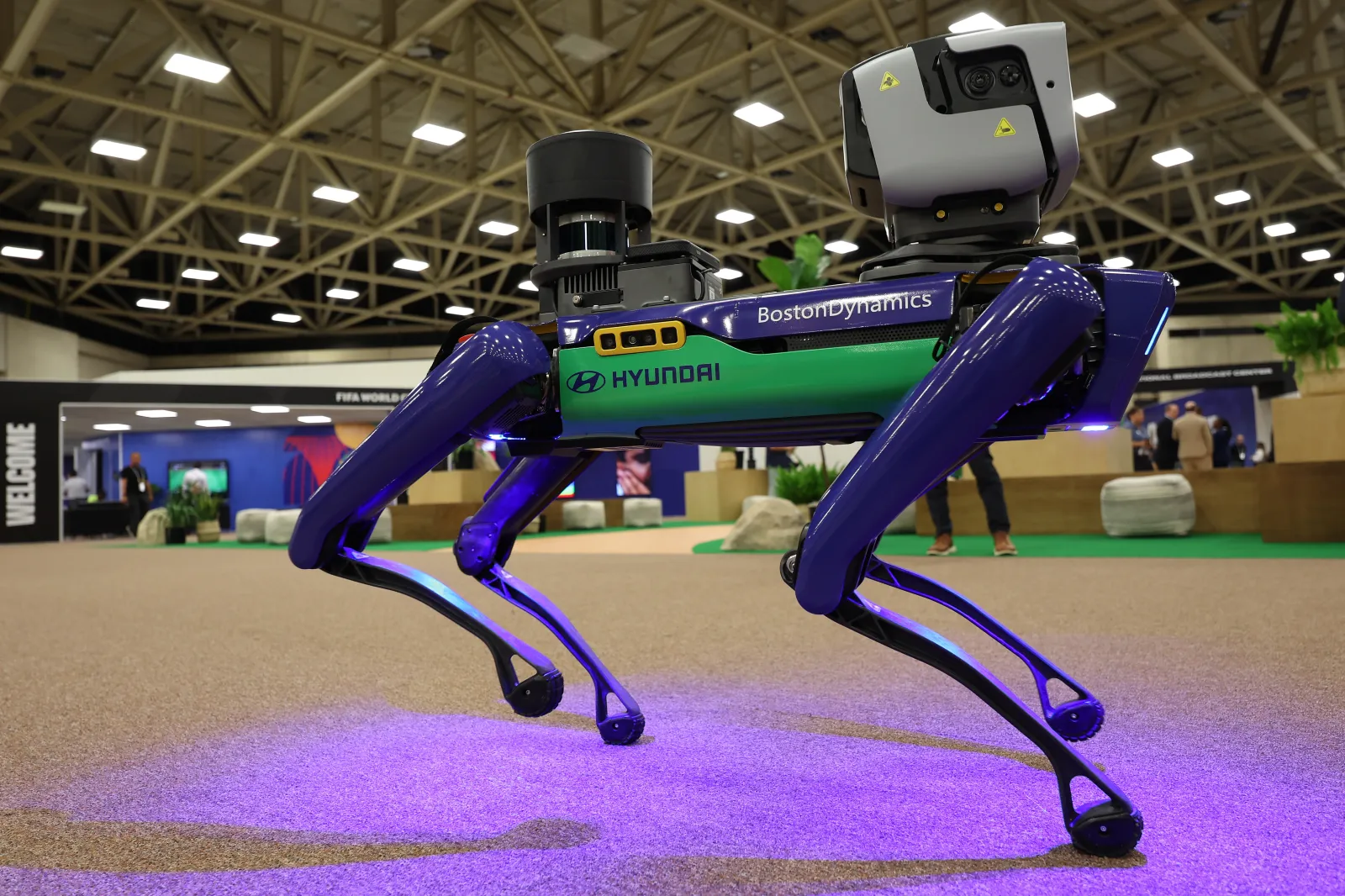
The nationwide security operation will use various types of high-tech equipment, including robot dogs deployed at select venues.
In the U.S, Boston Dynamics’ four-legged Spot robots, made by the Hyundai-owned company, will support officers. A company spokesperson told Chron the robot dogs will "assist security personnel with investigating things like suspicious packages or other potentially hazardous materials."
...
Mexico also plans to deploy its own four-legged robotic dogs at certain match venues.
Some police teams in the U.S. will have body cameras equipped with the ability to perform real-time translations, which will help officers communicate with international fans.
There will also be giant X-ray trucks and thousands of AI-powered cameras trained on public spaces soon to be thronged by fans.
One of the biggest potential security threats comes from drones, which are prohibited over stadiums and fan zones.
Several drone detection and mitigation companies are joining efforts to help federal agencies secure the skies. One company, Fortem, said it will be deploying quadcopters that can shoot nets at encroaching drones to trap them in midair.
Security officials are also factoring in heightened geopolitical tensions including the ongoing war with Iran. Iran is participating in the tournament, making it the first time a World Cup host country is at war with a participating nation.
What Happens Next
The World Cup kicks off on Thursday, June 11, with co-host Mexico and South Africa going head to head in Mexico City.
The Associated Press contributed to this report.
View 0 Comments
Submit Correction
View Editorial & AI Guidelines