...

By Giulia Carbonaro
Senior Reporter
0
Share
Newsweek is a Trust Project member
See more of our trusted coverage when you search.Prefer Newsweek on Googleto see more of our trusted coverage when you search.
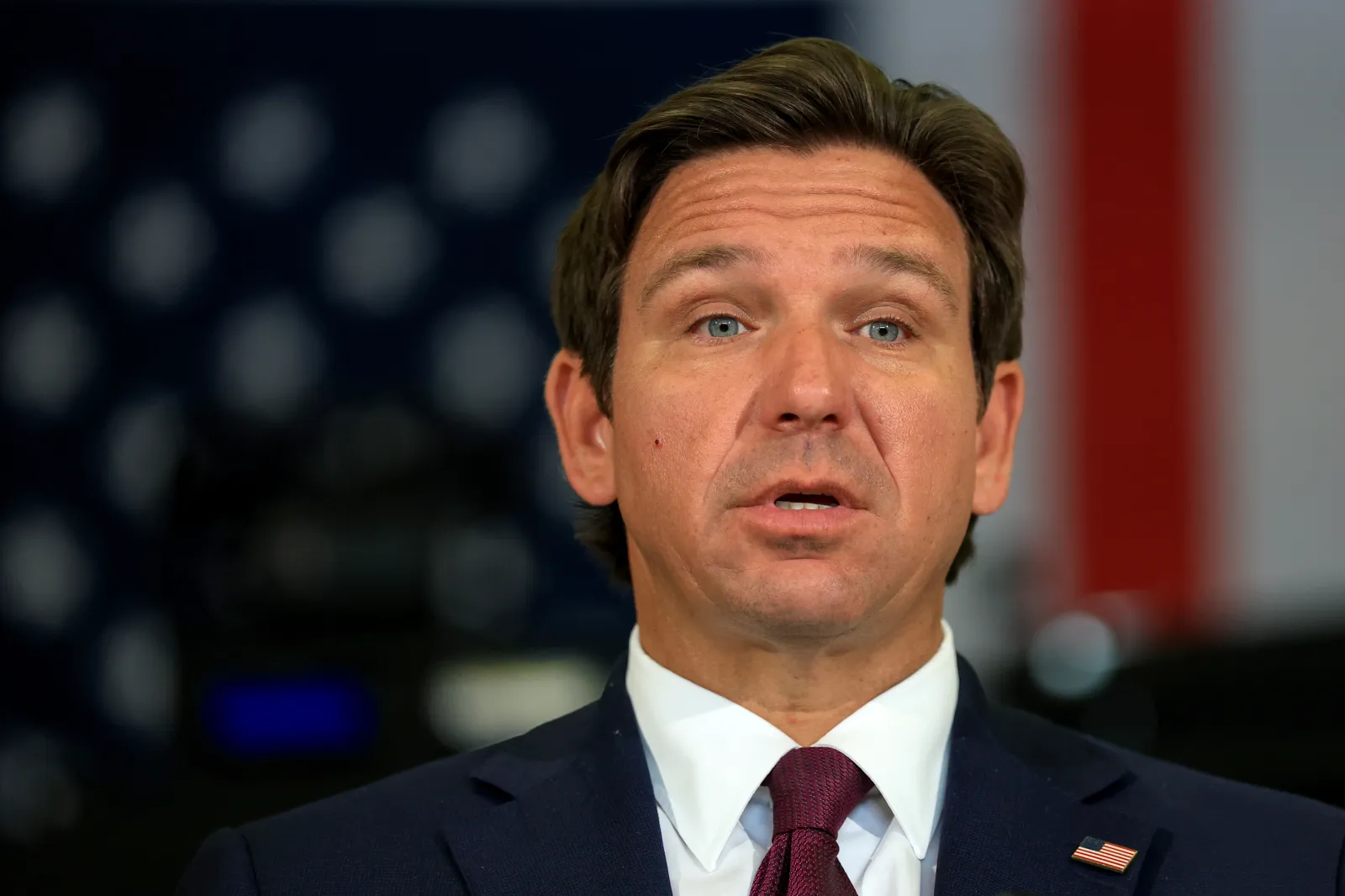
Florida Governor Ron DeSantis has unveiled his plan for property tax reform, calling for an increase in the state’s homestead exemption that would virtually wipe out taxes for millions of residents.
The plan—which DeSantis shared in a one-page summary—would increase the state’s homestead exemption from $50,000 to $250,000, a move that would virtually eliminate property taxes for about 60 percent of Florida residents who now qualify for the exemption, according to POLITICO.
DeSantis wants to increase the exemption level further over the next few years.
Read More on News
“If it’s successful, when you raise it to the $500,000 limit, that’s 92 percent of all Florida residents [who] would be tax-free. I think this bottom-up approach is a better approach,” DeSantis said during a press conference on Wednesday.
DeSantis: 'Florida Homeowners Need Relief'
...
In a post on social media, the governor blamed the recent increase in property tax bills in Florida on local governments’ growing budgets.
“Property tax revenue collected by local governments has nearly doubled in the past seven years (from $32 billion to $60 billion) and is expected to reach an astounding $83 billion by 2032,” DeSantis wrote on X. “Florida homeowners need relief. Now is the time to stand up for taxpayers, enact a historic reform, and save the home of every Floridian.”
The Republican governor, who is in the last few months of his second and last mandate, also called for a special legislative session on property taxes on Monday, which will restart talks about how to best deliver property tax reform.
The proposal promises to revive the much-debated (but recently stalled) issue of how to offer relief to homeowners in the Sunshine State struggling with higher property tax bills.
The Florida House passed a bill before the end of the legislative session that would have gradually increased the homestead exemption over 10 years, fully exempting homesteads from non-school taxes by 2037. But the state Senate failed to pick up the bill, and it had remained in limbo until now. It is not yet clear whether lawmakers will proceed with the governor’s plan.
The Florida House’s Proposal
The Florida House’s proposal, House Joint Resolution 203 or HJR 203, was passed by the chamber on February 19 but died in the Senate on March 13 when the legislative session ended without the measure even being heard.
The proposal would have gradually increased the homestead exemption from all ad valorem (according to value) taxes—except school district levies—by $100,000 each year for ten years, beginning in 2027. The plan was to have all homestead property exempt from non-school ad valorem taxes by 2037.
The bill also established a constitutional protection for public safety, banning counties and municipalities from reducing total funding for law enforcement, firefighters, and other first responders below their 2024 or 2025 levels to make up for the loss in revenues from property taxes.
The Governor’s Proposal
DeSantis’ proposal, called “Save Our Homes From Excessive Property Taxes,” would begin with exempting the first $250,000 of a homestead’s value from paying property taxes. Eventually, in the governor’s plan, property taxes would be completely eliminated in the state.
“Taxing something that you own repeatedly, which is a property tax, is the worst way to do taxation,” DeSantis said at a press conference on Wednesday, as reported by Realtor.com. “You pay all these taxes to acquire that property, and then, year after year, you have to write a check just for the privilege of being able to maintain ownership of something that is supposedly yours.”
...
The governor promises to ensure that local governments use whatever property taxes they are still collecting to pay “solely” for “core public needs including public education, infrastructure, and natural resources.” He also wants to limit future property tax assessment on businesses and “create a more stable tax environment for local businesses.”
As DeSantis said earlier this month, he wants long-term Florida residents to benefit from this reform, not newcomers or snowbirds. “I don’t want every Tom, Dick, and Harry from out of state moving and rushing to buy a home here because they get a tax benefit,” the governor said during a roundtable in Brevard County last week, as reported by the Florida Phoenix.

...
Under his proposal, anyone establishing Florida residency after January 1, 2027 would need to stay a resident for up to five years before being able to benefit from the increased homestead exemption and property tax cut.
Seemingly taking into consideration concerns raised by experts and local governments that cutting property taxes will result in the underfunding and loss of crucial public services, DeSantis also wants to create a state trust fund that would help local governments continue paying for core local services.
The plan released so far by the governor did not specify the size of the trust fund and did not detail how much this would cost the state government—and ultimately taxpayers.
What Reform Proposal Will Prevail?
When the newly announced special session on property taxes kick off on Monday, lawmakers will have a chance to discuss putting a new initiative to make homestead property tax-free on the ballot.
That could be the governor’s proposal, the House’s, or another one entirely. Whatever that would be, lawmakers have to come out with a plan supported by a supermajority of the legislature before mid-August, the deadline to print out proposals for the November ballot.
Any constitutional amendment would need to be backed up by a 60 percent supermajority of voters.
Senate President Ben Albritton, R-Wauchula, praised DeSantis’ proposal.
“I can’t think of a more meaningful way to celebrate America’s 250th anniversary than the passage of $250,000 in tax relief for every Florida homeowner. I believe this amendment will provide meaningful relief for Florida families, while protecting businesses from extreme tax increases and safeguarding local funding,” he said in a statement.
House Speaker Daniel Perez, R-Miami, who has clashed with the governor over the issue of property tax reform, said he was “pleased the Governor has finally gotten around to share an actual proposal,” as reported by the Tallahassee Democrat. He added: “We look forward to reviewing it once we have received the language.”
Democratic lawmakers have been more critical of the governor’s proposal, warning of the risk of weakening public services in the state.
“We’re open to solutions that create affordability, but not at the expense of working families, of small businesses and local governments who rely on property taxes to repair roads, provide public safety through law enforcement and police departments and fire, and to maintain beautiful parks, support our schools and so much more,” House Democratic Leader Fentrice Driskell of Tampa said.
View 0 Comments
Submit Correction
View Editorial & AI Guidelines