
...

By Anna Skinner
Associate News Editor
0
Share
Newsweek is a Trust Project member
See more of our trusted coverage when you search.Prefer Newsweek on Googleto see more of our trusted coverage when you search.
A Royal Caribbean cruise ship arriving in Alaska this month carried a grim and highly visible reminder of one of the ocean’s least seen threats: a dead whale draped across its bow.
The 61-foot fin whale, an endangered species, was discovered when the ship docked in Seward on June 19, prompting a federal investigation into what officials say was likely a fatal vessel strike. Scientists later confirmed the whale had suffered blunt-force trauma consistent with a collision and was pregnant at the time of its death, although necropsy results are still pending.
While the case has drawn international attention because of its graphic nature, experts say it is far from rare. In fact, it highlights a much larger global crisis that is largely invisible: thousands of whales are struck and killed by ships each year in oceans crowded with commercial traffic.
Read More on News
The cruise line acknowledged the incident in a statement.
“We are saddened to hear that one of our ships struck a whale while on its way to Seward. We take any impact to marine ecosystems very seriously. The ship immediately reported the incident to the proper authorities. We are cooperating fully with NOAA and are awaiting the necropsy results,” a company spokesperson said, according to an Alaska Beacon report.
Newsweek reached out to NOAA Fisheries via email for comment.
...
How Many Whales Are Killed by Ships Each Year?
Scientists estimate that vessels kill around 20,000 whales annually worldwide, a figure widely cited in recent global research.
That number is likely an underestimate. Many collisions go entirely undetected because whales often sink after being struck, never washing ashore or reaching ports where they can be examined. As a result, the true scale of mortality is difficult to measure, even as vessel strikes are recognized as one of the leading causes of death for large whale species globally.
"Vessel strikes are now one of the leading causes of death for large whales worldwide, and the risk is only going to rise," Andrew Trites, a professor and director of the Marine Mammal Research Unit at the University of British Columbia, told Newsweek. "More and more ships are now sailing through the same waters where whales return to feed. It is this growing overlap that is the core of the problem."
The issue has grown alongside global shipping. Roughly 90 percent of the world’s traded goods are transported by sea, and shipping lanes increasingly overlap with key whale habitats and migration routes.
Shipping occurs across 92 percent of whale ranges, Oceana Senior Campaign Director Gib Brogan told Newsweek. Less than 7 percent "of whale risk hotspots contain management strategies to reduce whale collisions," Brogan said.
In the United States, federal scientists say vessel strikes can occur anywhere boats intersect with marine life, but the risk is highest in busy shipping corridors where whales congregate to feed or migrate. This overlap means even well-regulated waters remain dangerous.
What Whale Species Are Most at Risk of Vessel Strikes
Large whale species are particularly vulnerable to ship strikes, in part because of their size and behavior. The National Oceanic and Atmospheric Administration (NOAA) and other scientists say species commonly affected include blue whales, fin whales, humpback whales and North Atlantic right whales.
"Many whale populations, particularly humpbacks, fin whales, blue whales and right whales, are recovering from historical whaling and are reoccupying feeding and migration areas, while at the same time global shipping traffic has expanded dramatically," Trites said.
Fin whales—the species involved in the Royal Caribbean case—are considered especially at risk. NOAA has identified them as among the most vulnerable species after North Atlantic right whales, in part because they frequent busy shipping routes and are difficult for vessel operators to detect,
North Atlantic right whales face even greater danger. With fewer than 400 individuals remaining, vessel strikes are considered one of the primary threats to the species’ survival. These whales often swim close to the surface and can be difficult to spot, particularly in poor visibility, increasing the likelihood of collisions.
Is It Illegal to Strike a Whale With a Ship?
Whales are protected by the Marine Mammal Protection Act in the U.S., which makes it illegal to “take” a marine mammal—defined broadly to include killing, injuring, or harassing the animal.
However, ship strikes occupy a complicated legal gray area. If a vessel unintentionally hits a whale, it may still be considered a “take,” but enforcement depends on the circumstances, including whether operators followed required safety measures or reporting procedures.
Vessel strikes are typically reported to authorities, and investigations like the one underway in Alaska aim to determine whether any laws or regulations were violated. In some cases, enforcement actions, including fines, may follow depending on the circumstances.
What Can Be Done to Help?
Experts say one of the most effective ways to reduce vessel strikes is surprisingly simple: slow ships down. Studies show that reducing vessel speed significantly lowers both the likelihood of collisions and the severity of injuries when they occur.
"There are two proven means to reduce risk of vessel strikes: slowing down and rerouting vessels away from whale habitats," Brogan told Newsweek. "Changing international shipping lanes is a lengthy process that involves international processes. Speed zones are readily available and effective to reduce the risk of vessel strikes and have been in place in some U.S. regions for decades."
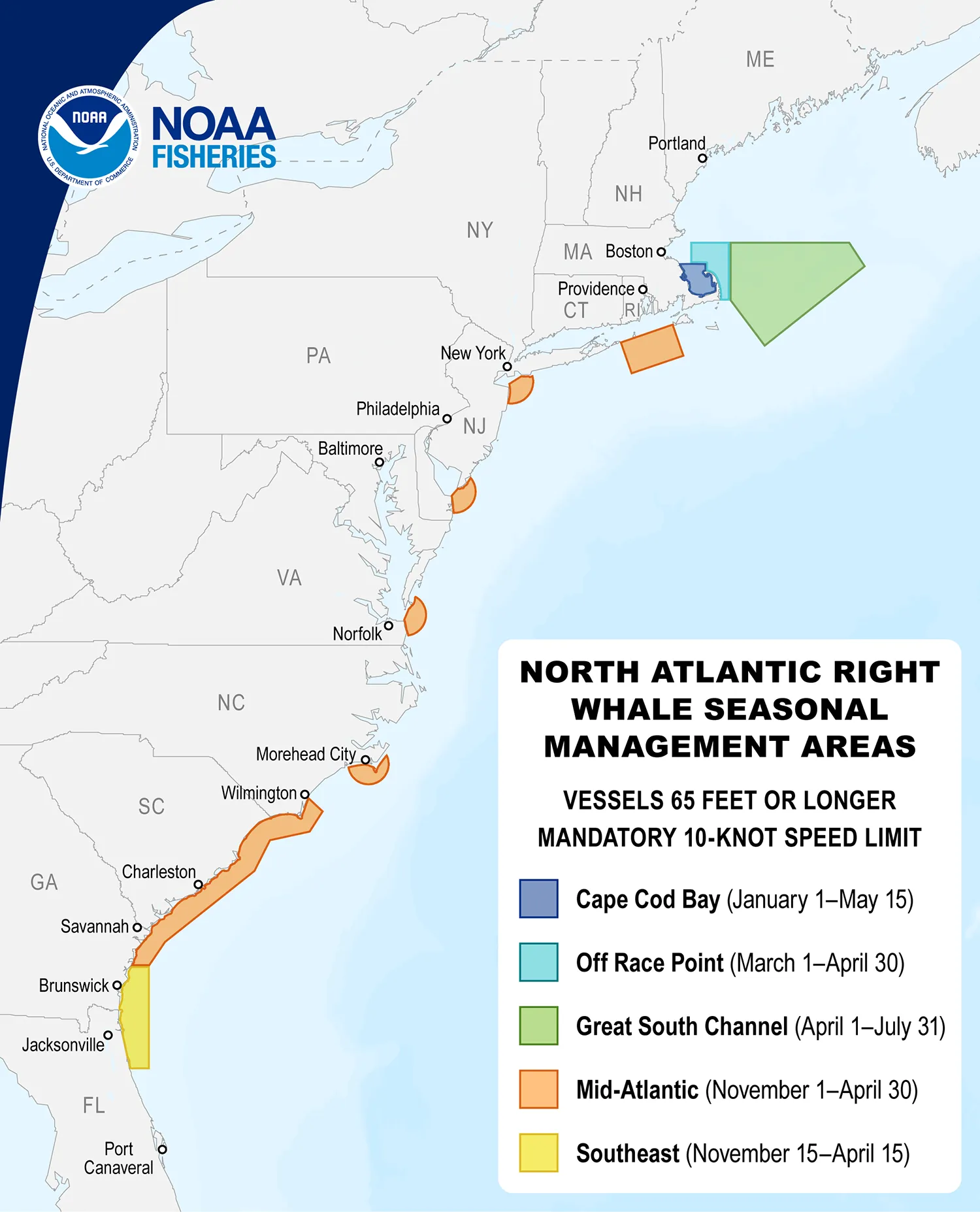
Along parts of the U.S. East Coast, for example, ships must travel at 10 knots or less in designated areas to protect endangered North Atlantic right whales, a measure shown to reduce fatal collisions.
...
New technology is also emerging. Researchers are developing monitoring systems that use acoustic sensors and real-time data to alert ship operators when whales are nearby. While still expanding, these tools represent a promising step toward preventing collisions before they happen.
"While many of these technologies show promise none are available for widespread use at this time," Brogan said.
Ultimately, the Royal Caribbean incident underscores a stark reality: vessel strikes are not isolated accidents, but a systemic problem tied to the modern global economy. As shipping traffic grows and oceans become more crowded, scientists warn that without stronger protections, the toll on whale populations could continue to rise—largely out of sight beneath the waves.
View 0 Comments
Submit Correction
View Editorial & AI Guidelines