...

By Leonardo Feldman
White House Reporter
0
Share
Newsweek is a Trust Project member
See more of our trusted coverage when you search.Prefer Newsweek on Googleto see more of our trusted coverage when you search.
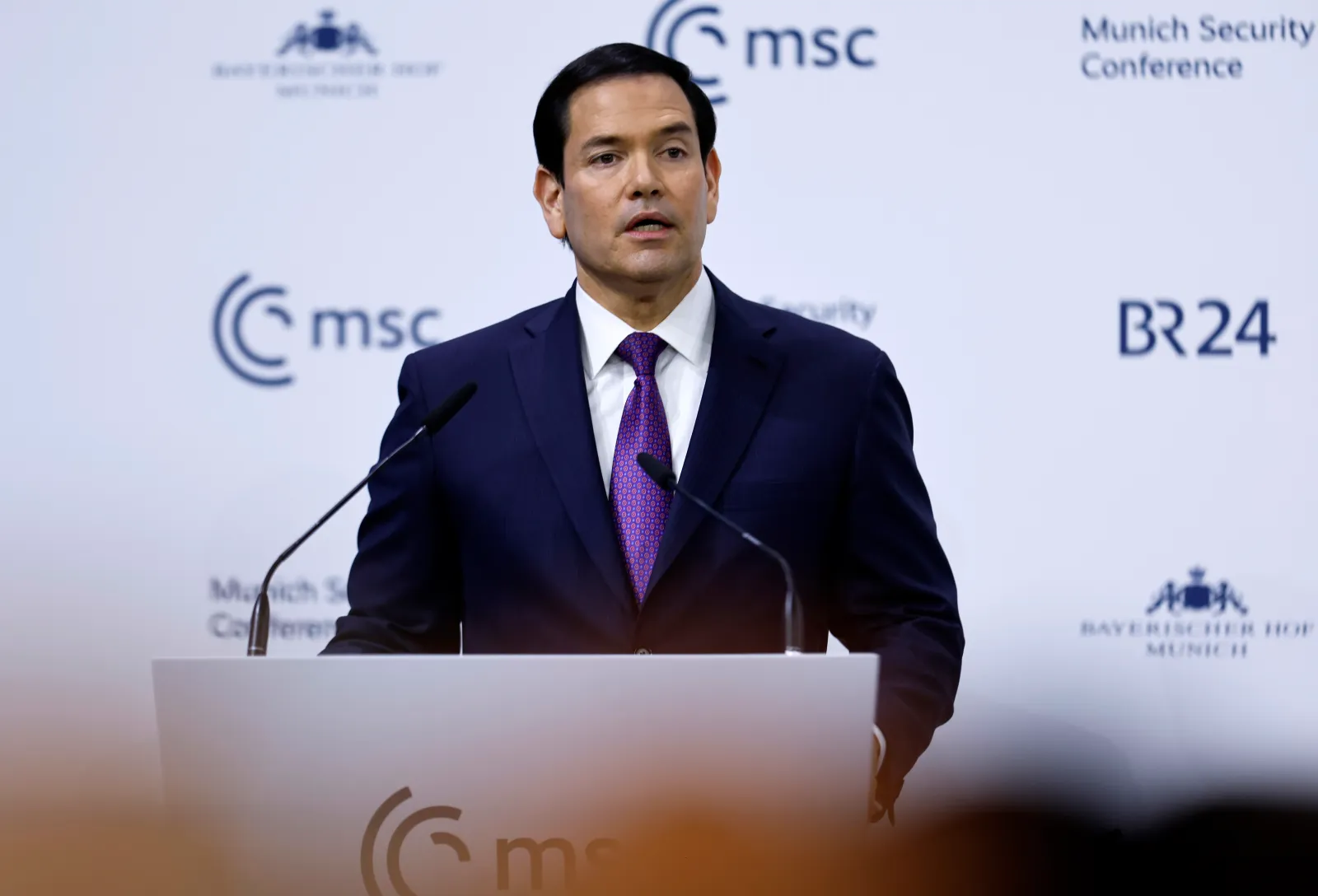
U.S. Secretary of State Marco Rubio said it has been "very difficult" for "real deals" to come to fruition with Tehran.
"It’s going to be hard. It’s been very difficult for anyone to do real deals with Iran, because we’re dealing with radical Shia clerics who are making theological decisions, not geopolitical ones,” Rubio said Monday.
Why It Matters
Rubio's comments were made a day before the highly anticipated talks between the United States and Iran, scheduled to take place in Geneva.
Read More on News
These talks are set to be mediated by Oman and come at a time when President Donald Trump has been making increasing threats and pressure on Tehran to take a deal.
A second U.S. aircraft carrier, USS Gerald R. Ford, is on its way from the Caribbean to the Middle East and will join USS Abraham Lincoln in the area. Trump was asked about it last week, and he said it was needed "in case we don't make a deal."

...
What To Know
Tensions between Iran and the United States have reached new heights ever since the deadly crackdown on protesters demanding freedom.
Trump escalated the rhetoric against Tehran by saying last week that the "best thing that could happen" was a change of government in Iran.
Iran's deputy foreign minister, Majid Takht-Ravanchi, told the BBC this past weekend that they are willing to compromise by offering to dilute their 60 percent-enriched uranium.
"We are ready to discuss this and other issues related to our programme if they are ready to talk about sanctions," Tahkt-Ravanchi said.
But despite Iran's alleged willingness to compromise, its Revolutionary Guards are conducting military drills in the Strait of Hormuz, leading to the disruption of oil and gas routes.
What People Are Saying
Israeli Prime Minister Benjamin Netanyahu met with Trump last week at the White House.
Netanyahu said, "There shall be no enrichment capability - not stopping the enrichment process, but dismantling the equipment and the infrastructure that allows you to enrich in the first place."
According to CBS News, Trump told Netanyahu that he would support Israeli strikes on Iran's ballistic missile program.
For context, Iran has launched such missiles against Israel on multiple occasions. In fact, last June, they launched hundreds of them when Israel struck Iranian nuclear and military sites.
What Happens Next
The International Atomic Energy Agency (IAEA) has sought clarity on the fate of 400 kg of 60 percent enriched uranium that was last inspected before the June strikes conducted by Israel and the United States. They're also seeking access to sites in Natanz, Fordow, and Isfahan.
Whether a deal actually happens remains to be seen. But the U.S. says they're ready to accomplish one.
“I think that there’s an opportunity here to diplomatically reach an agreement that addresses the things we’re concerned about," Rubio said. "We’ll be very open and welcoming to that. But I don’t want to overstate it either."
View 0 Comments
Submit Correction
View Editorial & AI Guidelines