...

By Brendan Cole
Senior Reporter
0
Share
Newsweek is a Trust Project member
See more of our trusted coverage when you search.Prefer Newsweek on Googleto see more of our trusted coverage when you search.
A growing split is emerging between the Kremlin and the Central Bank of the Russian Federation (CBR) over the latter's wartime economic policies, according to the Institute for the Study of War's (ISW) Sunday assessment.
Newsweek has contacted the CBR and the Kremlin via email for comment.
Why It Matters
The Kremlin wants to portray the Russian economy as resilient despite Western sanctions caused by Putin's full-scale invasion of Ukraine that began in February 2022.
Read More on World
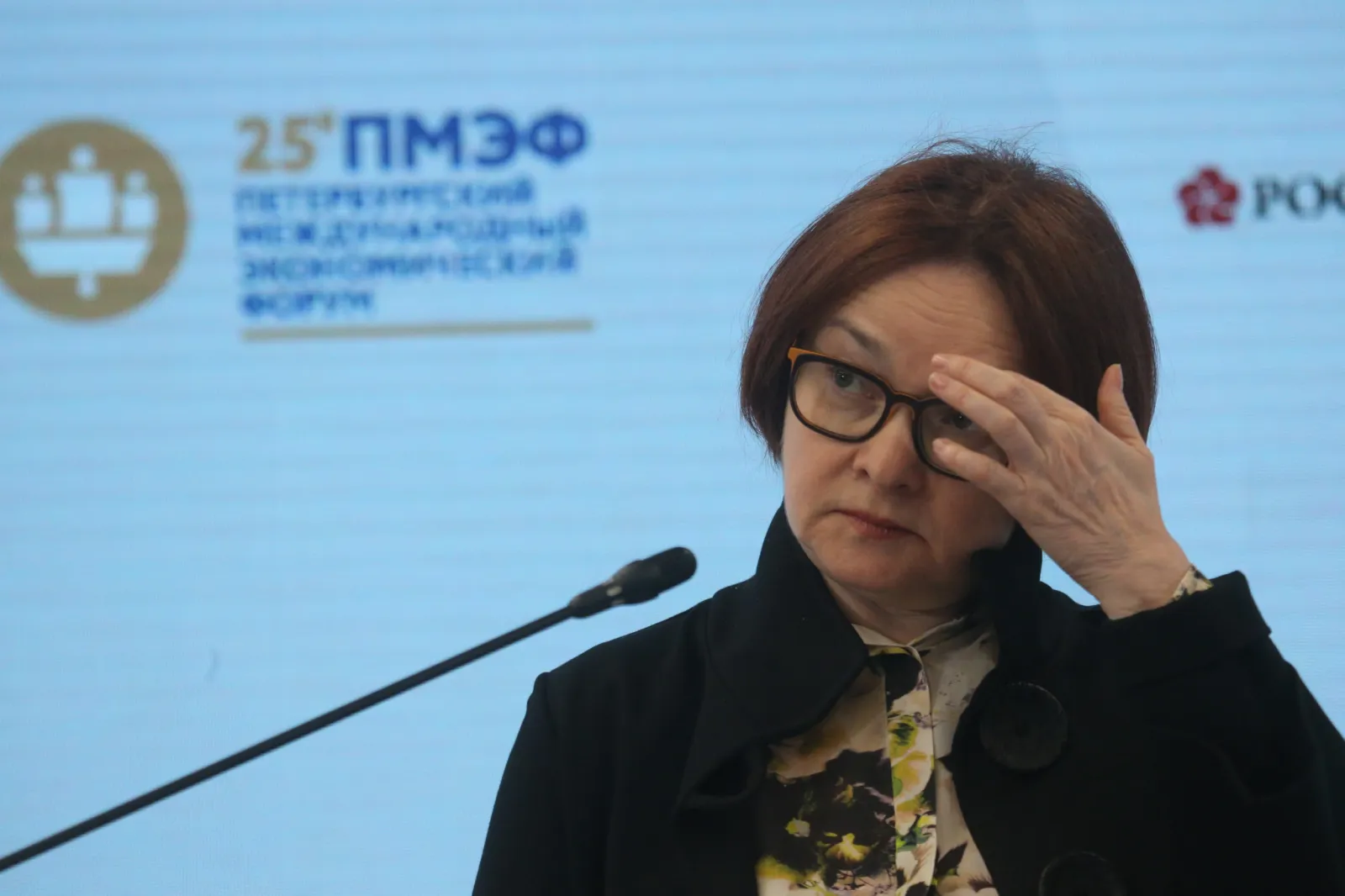
Business leaders in Russia are unhappy at the record high key interest rate of 21 percent imposed by the CBR, which is headed by Elvira Nabiullina, who is widely regarded as the key figure maintaining stability in Russia's sanctions-hit economy.
Russian President Vladimir Putin is trying to shift blame onto the CBR and Nabiullina in particular to deflect business community anger, according to the ISW, a U.S.-based think tank, citing a prominent Telegram channel that reports on Kremlin insider news.
The CBR now faces an audit that is designed to exert pressure on Nabiullina as tension grows between her and the Kremlin over her stewardship of the economy.
What To Know
The CBR kept its key interest rate on hold at 21 percent on Friday in a move that had been predicted by analysts.
However, Putin had earlier urged his economic officials not to freeze the Russian economy with its tight monetary policy that is aimed to lower the official inflation rate which at 10.1 percent is more than double its 4-percent goal.
As complaints mount from business leaders, the Russian Federation Council Accounts Chamber has started an audit of how the bank's monetary policy between 2022 and 2024 affected inflation, budget expenditures, and investment, according to Telegram channel The Kremlin Whisperer, cited by the ISW.
The fact an audit is of an area traditionally outside its competence indicates the presence of more serious reasons, the Telegram post said.
It added that this audit "was actually an attack" on Nabiullina, and its results may affect the country's future economic strategy and that Russian business lobbyists are pushing for interest rate reductions.
High military spending and a shortage of workers fueled by losses in the ongoing war with Ukraine spiked the actual inflation rate to a far higher 25 percent than official figures show, creating a case for the CBR to raise the key rate even further last week, the ISW said.
However, Nabiullina likely has not been able to exercise fully independent monetary policy, the think tank said, noting that Putin is trying to shift blame and business community anger for the high key rate onto Nabiullina.
In a sign of the key interest rate's impact, Russia's Center for Macroeconomic Analysis and Short-Term Forecasting (CMASF) said in January that the country faced a huge rise in corporate bankruptcies, with one in five manufacturing enterprises having to pay two-thirds of pretax profits to service debt.
Boris Grozovski, an expert on the Russian economy, told Newsweek the high key interest rate puts Russian companies in a very difficult position because rising costs, higher energy and logistics costs, their net profits are decreasing.
Companies have to service their corporate debt while their profits have fallen sharply in all industries such as gas, and one industry, in particular, coal, facing the most difficult situation, he added.
...
What People are Saying
The Institute for the Study of War (ISW), citing The Kremlin Whisperer: "The Accounts Chamber began an audit of the Central Bank, questioning the effectiveness of monetary policy...The audit was actually an attack on the position of the head of the Central Bank Elvira Nabiullina, and its results may affect the country's further economic strategy."
The Central Bank of the Russian Federation (CBR) in a statement on Friday: "Current inflationary pressures have decreased but remain high, especially underlying ones."
Boris Grozovski, Russian economics expert at the Wilson Center, told Newsweek: "The high key rate of the CBR puts Russian companies in a very difficult position. Due to rising costs, higher energy tariffs, higher gasoline costs, higher wages, higher transportation and logistics costs—their net profits are decreasing."
What Happens Next?
An audit on the CBR may be a Kremlin effort to prevent further interest rate hikes beyond 21 percent and manage the frustrations of the Russian business community.
However, this manipulation of the CBR's decisions will probably hamper the Russian government's ability to enact sound wartime monetary policies, the ISW said.
Russian businesses could continue to feel the pinch, especially if reports of a looming raft of corporate bankruptcies eventuate.
View 0 Comments
Submit Correction
View Editorial & AI Guidelines