...

By Barney Henderson
Content Director
0
Share
Newsweek is a Trust Project member
See more of our trusted coverage when you search.Prefer Newsweek on Googleto see more of our trusted coverage when you search.
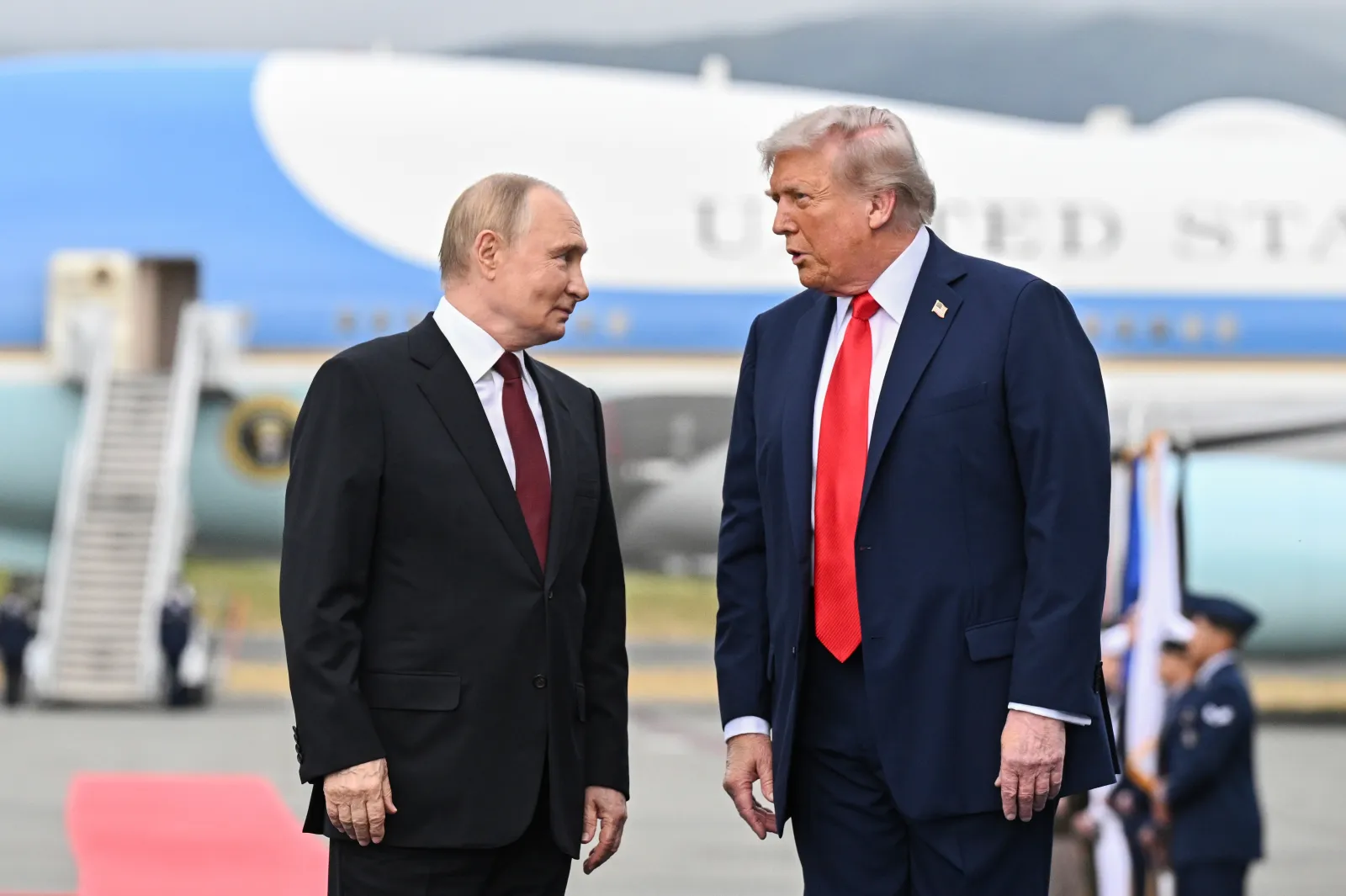
President Donald Trump last week announced he had negotiated a weeklong ceasefire between Russia and Ukraine, highlighting his personal relationship with President Vladimir Putin.
Trump said last Thursday that he had persuaded his Russian counterpart to halt attacks on Ukrainian cities and energy infrastructure during a brutal cold snap.
The problem for Trump is that there has been no meaningful pause in the fighting—at least not from the Russian side.
Read More on Analysis
Ukraine’s ambassador to the U.S., Olga Stefanishyna, has formally submitted detailed evidence of post-truce bombardment to the State Department.
It means Moscow's missiles have hit not only Ukrainian targets, but Trump's proud claims of a humanitarian pause in the fighting.
In doing so, Putin has served up another TACO (Trump Always Chickens Out) moment to his supposed friend: What does it mean for the peace negotiations to end the war?
Trump's 'energy truce' never clearly defined
Trump’s "energy truce" with Russia was meant to showcase his trademark dealmaking flair. Instead it has now put him in a very awkward position.
"I personally asked President Putin not to fire on Kyiv and the cities and towns for a week during this…extraordinary cold," Trump said during a Cabinet meeting at the White House at the end of last week. Putin has "agreed to that," he said.
However, there was no clarity from the White House about the scope and timing of any limited pause. The claim of a Russia-agreed ceasefire has, rather, highlighted the ambiguity of Trump's approach.
Russian position murky
While Trump suggested Putin had agreed to stop strikes outright for a week, the Kremlin later quietly framed the arrangement as limited and short-lived, ending by February 1.
Kremlin spokesman Dmitry Peskov said Friday that Trump had made a "personal request" to Putin to halt strikes on Kyiv until February 1, describing the move as an effort to "create favorable conditions for negotiations."
The reference to February 1 immediately raised questions, given that the date was just two days away. It also appeared at odds with weather forecasts showing the coldest temperatures of the winter were forecast to arrive over the weekend—a timing that made the logic of such a narrowly defined pause hard to understand.
Throughout the war, Russia has repeatedly targeted Ukraine’s energy system in what Ukrainian officials describe as an effort to "weaponize winter," depriving civilians of heat, electricity, and running water during freezing conditions.
Pressed on whether Moscow had agreed to Trump’s proposal, Peskov replied, "Yes, of course." He declined, however, to clarify whether the arrangement applied only to energy infrastructure or to all aerial strikes, or to specify when the pause was meant to begin and end.
Moscow has denied violating any agreement, arguing it never committed to a weeklong truce in the first place. It is a familiar Kremlin tactic: Offer just enough cooperation to ease pressure, then resume operations while insisting the West misunderstood the deal.
Ukraine out in the cold
Since the brief energy truce broke down, Russian forces have escalated attacks on Ukraine’s critical infrastructure, particularly its energy grid.
Overnight on Monday into Tuesday this week, Russia launched around 70 missiles and 450 drones targeting power grids in Kyiv, Kharkiv, Dnipro and other regions, President Volodymyr Zelensky said.
"Taking advantage of the coldest days of winter to terrorize people is more important to Russia than diplomacy," he wrote on X.
Ukrainian Foreign Minister Andrii Sybiha wrote on X: "Putin waited for the temperatures to drop and stockpiled drones and missiles to continue his genocidal attacks against the Ukrainian people.
"Neither anticipated diplomatic efforts in Abu Dhabi this week nor his promises to the United States kept him from continuing terror against ordinary people in the harshest winter."
What the Right is saying
On the Right, reactions to Trump’s Ukraine peace push have been sharply divided.
Trump insisted last night that Putin "kept his word" on the one-week pause in attacks.
He also claimed the ceasefire had actually been from Sunday (February 25) to Sunday (February 1): "It [the agreement] was on Sunday, and he [Putin] went from Sunday to Sunday.
"It's a lot, you know, one week, we'll take anything, because it's really, really cold over there."
Senate Majority Leader John Thune last year said: "(We) stand ready to provide President Trump with any tools he needs to get Russia to finally come to the table in a real way."
However, some congressional Republicans have criticized Trump's handling of a proposed Ukraine peace plan they say favors Russia.
Senator Roger Wicker, Republican chairman of the Senate Armed Services Committee, said in November: "This so-called 'peace plan' has real problems, and I am highly skeptical it will achieve peace. Ukraine should not be forced to give up its lands to one of the world’s most flagrant war criminals in Vladimir Putin."
What the Left is saying
UK Prime Minister Sir Keir Starmer described the Russian attacks on energy infrastructure this week as "barbaric" and "particularly depraved."
Progressive and Democratic leaders have slammed Trump’s Ukraine peace plan as ill-conceived and dangerously one-sided.
Senate Democratic Leader Chuck Schumer said: "Vladimir Putin is a thug and a butcher. And Trump’s so-called 'peace plan' gives this thug and butcher just about everything that he wants. There’s only one word to describe this plan: capitulation."
What it means for Russia-Ukraine peace talks
Officials have cast recent contacts between Russian and Ukrainian delegations as constructive, but after more than a year of diplomatic effort the Trump administration has yet to secure a breakthrough on the war’s core disputes. Who keeps the Ukrainian land that Russia’s army has occupied, and a comprehensive settlement appears distant. Negotiators from Moscow and Kyiv are set to meet again this week in Abu Dhabi, with talks scheduled for Wednesday and Thursday.
A ceasefire is often the first, most fragile step in any peace plan, creating a space for diplomacy and humanitarian relief: in that respect, Trump's "energy truce" has failed.
View 0 Comments
Submit Correction
View Editorial & AI Guidelines