...

By Ryan Chan
China News Reporter
0
Share
Newsweek is a Trust Project member
See more of our trusted coverage when you search.Prefer Newsweek on Googleto see more of our trusted coverage when you search.
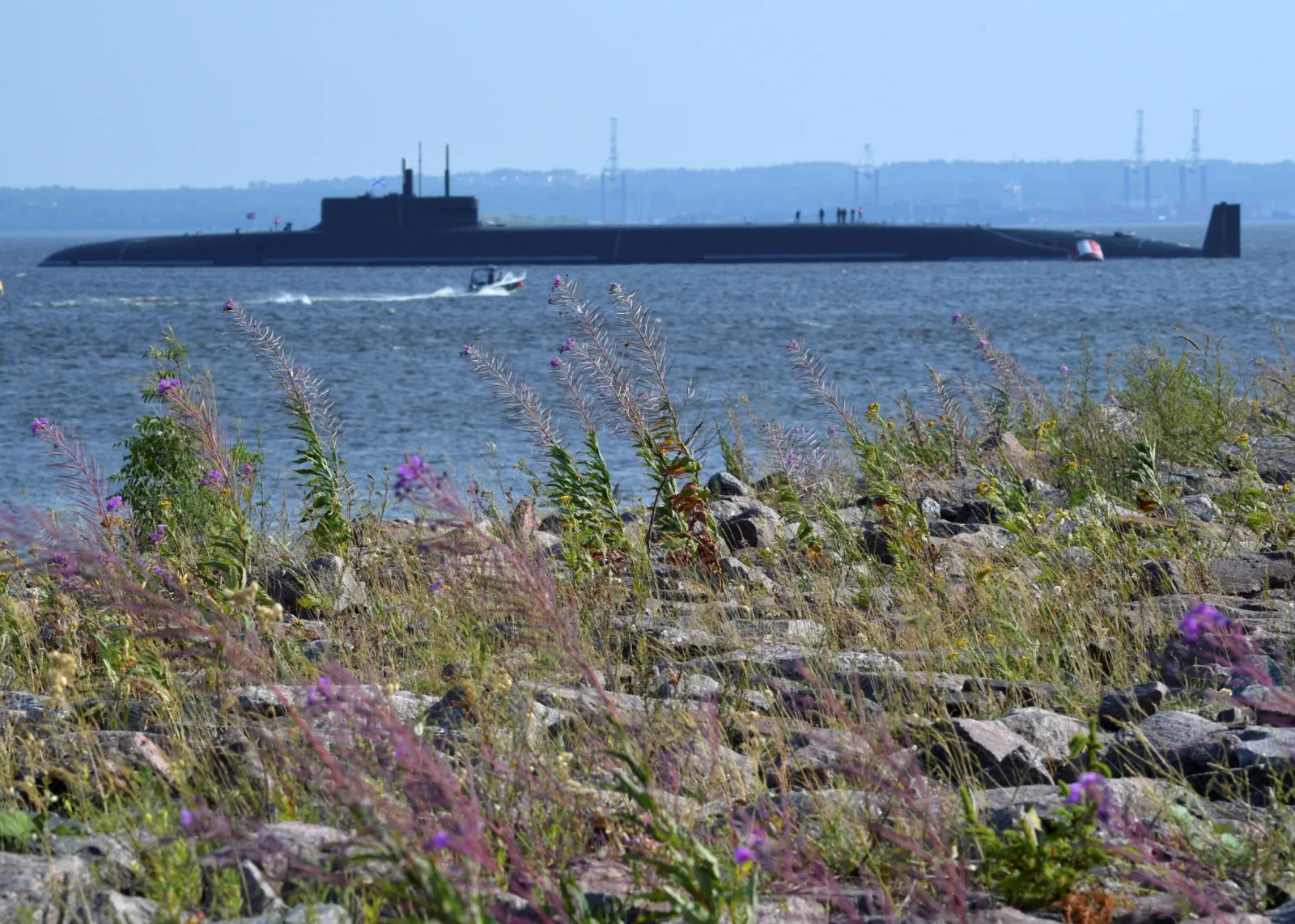
A Russian submarine capable of launching nuclear missiles was spotted near Japan—a key United States ally—as Moscow continues to flex its military power in the Pacific.
Newsweek has emailed both the Russian defense and foreign ministries for comment.
Why It Matters
Russia operates a fleet of ballistic missile submarines as part of its strategic nuclear forces, including three Borei-class and five Borei-A-class vessels, the defense outlet Naval News reported. Each submarine carries 16 missiles, and each missile can be armed with six nuclear warheads, according to the Federation of American Scientists.
Read More on World
...
During a July meeting on the development strategy for the Russian submarine forces, President Vladimir Putin said submarines play a key role in ensuring the country's sovereignty and security, protecting its interests and maintaining strategic parity.
While the Russian military continues its war against Ukraine, it remains active in the Far East and the Indo-Pacific, which Japan described as "a strong security concern" in a defense white paper. The Russian Pacific Fleet recently completed deployments with a ballistic missile submarine and a conventionally armed missile submarine.
What To Know
Japan's Defense Ministry reported that three Russian naval vessels passed through the Soya Strait—also called the La Pérouse Strait in Russia—on Wednesday as they sailed from the Sea of Okhotsk to the Sea of Japan, called the East Sea in South Korea.
The Russian flotilla was tracked transiting 24 miles northeast of Cape Soya on Japan's main island of Hokkaido. The United Nations Convention on the Law of the Sea states that a state can claim territorial seas extending up to 13.8 miles from its coastline.
According to the report, one of the Russian vessels was a Borei-class ballistic missile submarine powered by nuclear propulsion, marking the first time the Japan Maritime Self-Defense Force has spotted this type of Russian submarine near Japanese territory.
U.S. Naval Institute News reported that the Russian Pacific Fleet operates five Borei- and Borei-A-class submarines. It remains unclear which one was spotted by Japan.
The Russian submarine was accompanied by the cruiser Varyag—identified by its hull number—and a rescue tug. The Varyag serves as the Russian Pacific Fleet's flagship.
Japan's Defense Ministry also reported that three Chinese ships—the destroyers CNS Huainan and CNS Kaifeng and the replenishment ship CNS Dongpinghu, identified by hull numbers—passed eastward through the Soya Strait between Monday and Tuesday.
What People Are Saying
Japan's defense white paper 2025 commented: "The Russian military is continuing active military activities in the vicinity of Japan and its surrounding areas, showing its tendency to deploy the latest military equipment in the Far East. Russia's military activities in the Indo-Pacific region, including Japan, coupled with its strategic partnership with China, are posing a strong security concern."
Russian President Vladimir Putin said at a meeting on the development strategy for the Russian submarine forces in July: "I will repeat what I have said multiple times: We must have a modern well-equipped fleet capable of adequately responding to current and future threats and risks. This is why improving the Navy's capabilities, including its submarine forces, is among our top priorities."
What Happens Next
Russia is likely to continue conducting naval activities around Japan. It remains to be seen how Japan, with help from the U.S., will further strengthen its defense posture.
View 0 Comments
Submit Correction
View Editorial & AI Guidelines