...


By Toby Meyjes and Shane Croucher
0
Share
Newsweek is a Trust Project member
See more of our trusted coverage when you search.Prefer Newsweek on Googleto see more of our trusted coverage when you search.
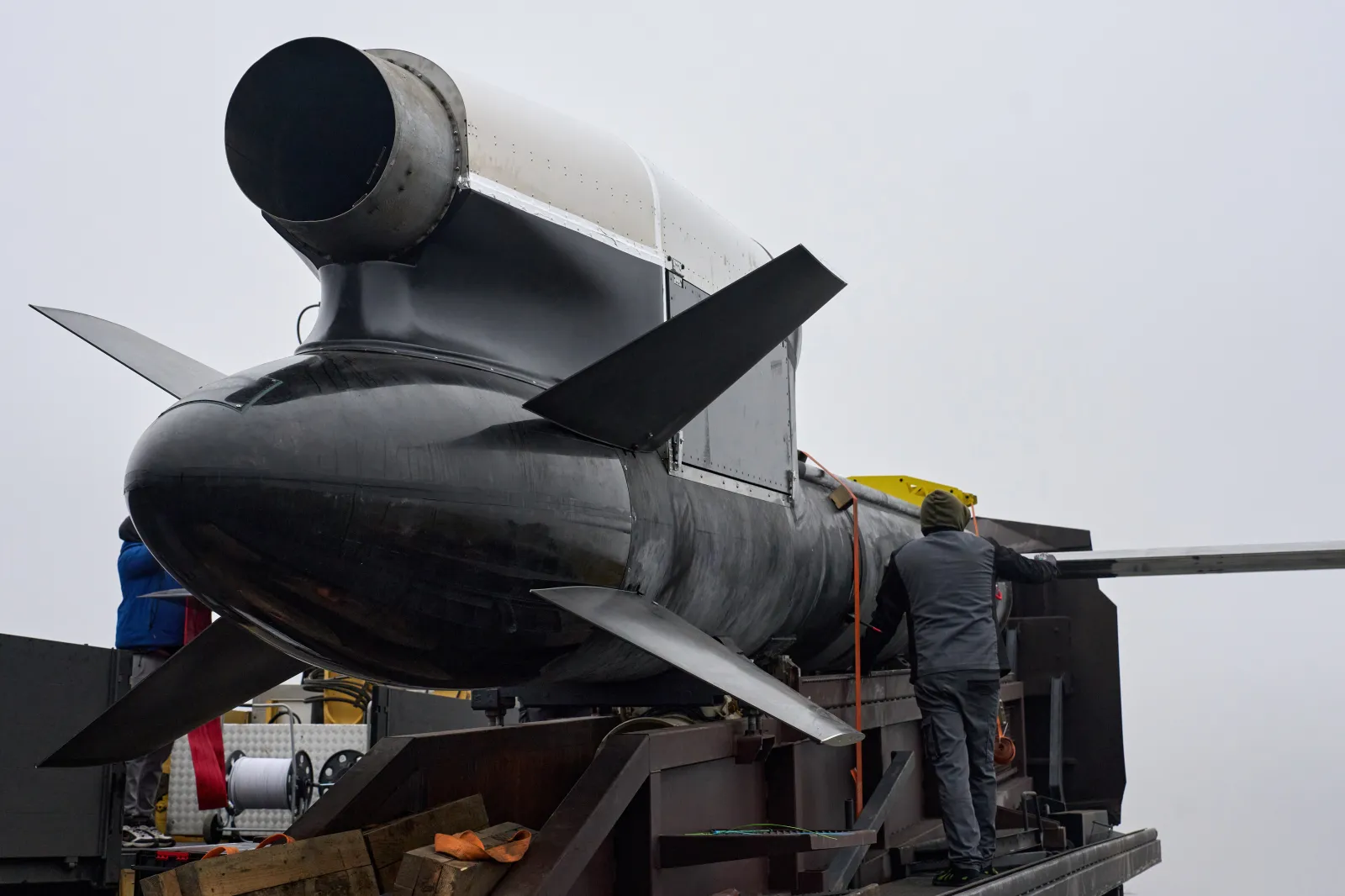
The General Staff of the Ukrainian Armed Forces claimed they had damaged infrastructure at the Kapustin Yar missile test site in Russia during a series of strikes that included the use of its domestically-made long-range FP-5 missile, known as the "Flamingo".
In a statement on social media, the General Staff said the "series of successful strikes on a complex of hangar-type buildings" took place in January 2026.
It said the hangars were used for "pre-launch preparation of medium-range intercontinental ballistic missiles".
Read More on World
...
Newsweek has contacted the Russian government's press service for comment.
Why It Matters
According to The Institute for the Study of War, a nonprofit research group and think tank, Ukraine’s Security Service claimed Russia used Kapustin Yar as a launch pad for its Oreshnik ballistic missile launch in January.
Russia's Defense Ministry said at the time it used the new hypersonic, nuclear-capable weapon, in the "massive strike" on Ukraine to avenge an alleged attempt to strike Russian President Vladimir Putin's state residence. The U.S. has said it does not believe Ukraine attempted to strike Putin's residence, and Kyiv has called the Kremlin's claim a lie.
The Oreshnik derives from Russia's previous RS-26 Rubezh system and is capable of hitting hypersonic speeds of Mach 10.
What To Know
In a Telegram post on February 5, the General staff said, originally in Ukrainian: "According to available information, a number of buildings at the test site sustained damage of varying severity; one of the hangars was significantly damaged, and part of the personnel was evacuated from the area."
Ukrainian President Volodymyr Zelensky said last August that Ukraine planned to mass produce the Flamingo FP-5 cruise missile in late December, or early January and February.
The missile, which was developed inside Ukraine by Fire Point, has an estimated range of about 1,860 miles, an approximate four-hour flight time and can reach a maximum speed in the region of 560mph. According to the Associate Press, it earned its nickname after a factory error saw its first iteration turn out pink.
Fire Point's head of production, Iryna Terekh, told the news agency it hoped to increase output from one to seven a day by October last year. According to the Kyiv Independent, evidence of successful strikes is limited.
What People Are Saying
General Staff of the Armed Forces of Ukraine, via Telegram: "During January 2026, the Ukraine's Defense Forces carried out a series of successful strikes on a complex of hangar-type buildings, where pre-launch preparation of intercontinental and medium-range ballistic missiles takes place, at the Kapustin Yar test site in the Astrakhan region of the Russian Federation, using long-range strike weapons of Ukrainian production, in particular the FP-5 Flamingo.
"According to available information, a number of buildings at the test site sustained damage of varying severity; one of the hangars was significantly damaged, and part of the personnel was evacuated from the area."
What Happens Next
Russia is yet to comment on reports of the attack or the damage suffered. Meanwhile, trilateral talks continue in Abu Dhabi with U.S. Special Envoy Steve Witkoff announcing on Thursday that Russia and Ukraine had agreed to make their first exchange of prisoners in five months.
In a polarized era, the center is dismissed as bland. At Newsweek, ours is different: The Courageous Center—it's not "both sides," it's sharp, challenging and alive with ideas. We follow facts, not factions. If that sounds like the kind of journalism you want to see thrive, we need you.
When you become a Newsweek Member, you support a mission to keep the center strong and vibrant. Members enjoy: Ad-free browsing, exclusive content and editor conversations. Help keep the center courageous. Join today.


View 0 Comments
Submit Correction
View Editorial & AI Guidelines