...


By Shane Croucher and John Feng
0
Share
Newsweek is a Trust Project member
See more of our trusted coverage when you search.Prefer Newsweek on Googleto see more of our trusted coverage when you search.
The Kremlin said its "main goal" in Russia's war with Ukraine is the "safety" of people in the eastern Donbas region, on the fourth anniversary of the full-scale invasion.
Dispute over control of Donbas in Ukraine, an industrial heartland that comprises the Donetsk and Luhansk oblasts, is the biggest issue in peace talks between the two sides.
- These Couples Hold On To Love in Ukraine as Russian Drones Close In
- Analysis: Why No One Is Winning the Russia-Ukraine War
Read More on World
Ukrainian forces still control around a fifth of Donetsk, including the two key fortress cities of Slovyansk and Kramatorsk. Kyiv rejects Russian demands that it cede total control of the Donbas on moral and constitutional grounds.
One of Russia's claimed motives for its full-scale invasion of Ukraine, launched on February 24, 2022, is to protect ethnic Russians who it says were facing persecution in the country—an accusation Kyiv denies.
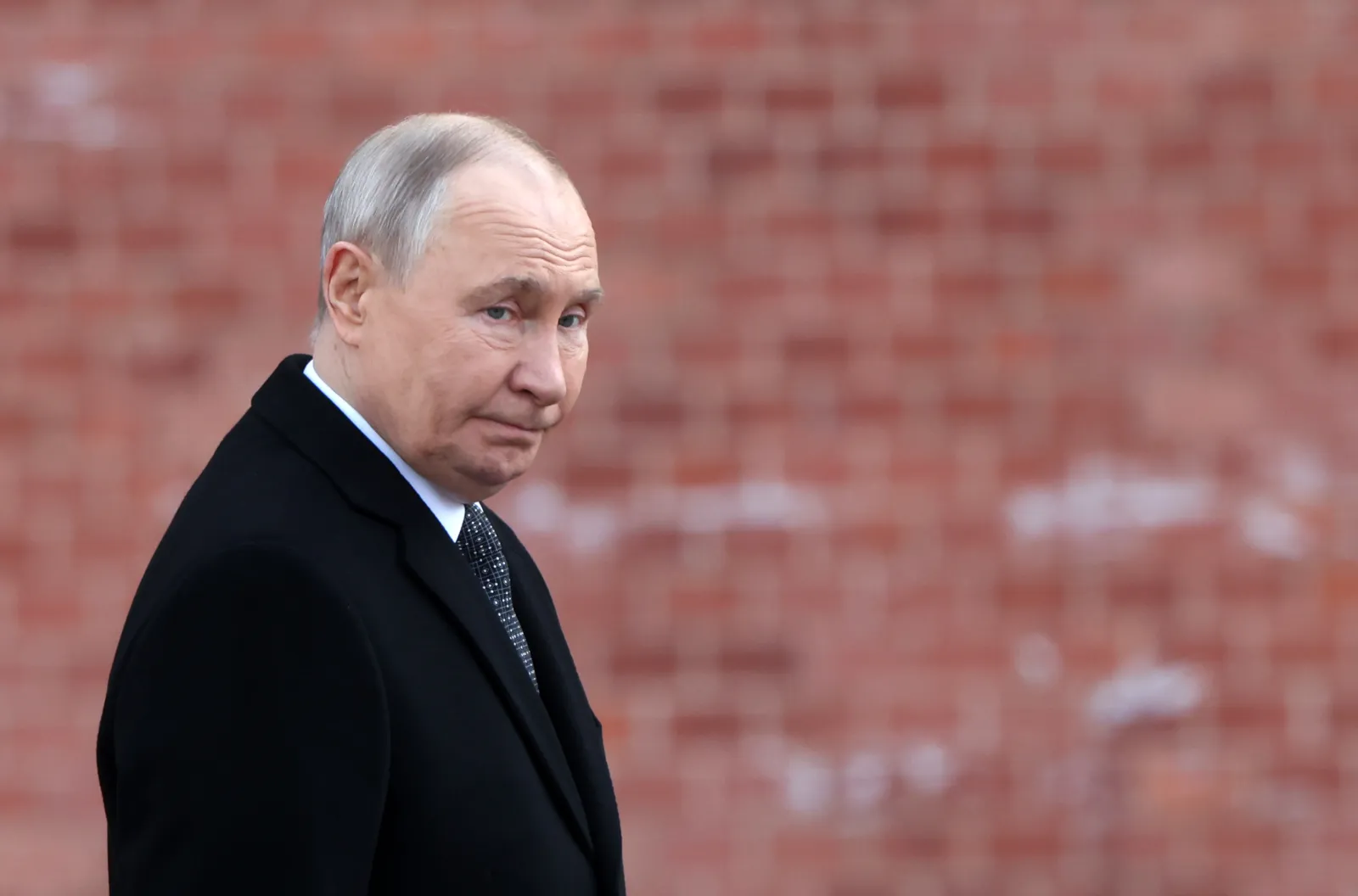
"The main goal is to ensure the safety of people who lived in eastern Ukraine and who were truly in mortal danger," Dmitry Peskov, spokesman for Russia's President Vladimir Putin, said of the aims of what the Kremlin calls its "special military operation" in Ukraine.
"That is the main thing," Peskov said, originally in Russian, state news agency TASS reported.
...
The Center for Strategic and International Studies think tank estimates that Russia has seen at least 325,000 of its troops die over the course of the war, with around 900,000 more wounded—a huge human cost to occupy less than a fifth of all Ukraine.
The Kremlin had in the early days of the war tried—and failed—to conquer Kyiv so it could install a new Russia-allied regime.
Russia has since been ground to a near stalemate on the battlefield as Ukrainian forces mounted a fierce defense, backed by Western weapons, intelligence, and training.
Peskov said that Russia's goals in the war "have not yet been fully achieved, which is why the special military operation is continuing."
However, he said some of the Kremlin's goals had been achieved so far, and that Russia would prefer to resolve the issues diplomatically.
Ukraine and its European partners accuse Russia of misleading the U.S., which is attempting to broker a war-ending deal between Kyiv and Moscow, about its desire for peace.
Ukraine War Map
Why Donbas Matters to Russia and Ukraine
The Donbas was a key economic engine for peacetime Ukraine, home to extensive coal mining, steel production, and other heavy industry, much of it disrupted or destroyed by Russia’s war.
Losing the Donbas by force would be a major blow to Ukraine’s national sovereignty and would entrench territorial gains made through military aggression.
For Russia, the Donbas holds both symbolic and strategic value. The region is largely Russian‑speaking, and the Kremlin claims its actions are aimed at defending the rights of people there—an accusation rejected by Kyiv and its Western allies.
Control of the Donbas would also strengthen Russia’s grip on southern Ukraine and reinforce the land corridor linking Russian‑occupied territory to Crimea, the Black Sea peninsula annexed by Moscow in 2014.
It would place much of eastern Ukraine under Russian influence and push the front line farther from Russia’s own border, which Ukrainian forces had crossed and seized settlements in a dramatic 2024 offensive push.
Securing the Donbas would also formalize Moscow’s control over the self‑proclaimed Donetsk and Luhansk "people’s republics," created by Russian‑backed separatists after the 2014 invasion.
The region has significant military importance for both sides.
For Russia, control would improve vital supply lines, provide defensive depth, and take advantage of terrain and rail networks suited to artillery‑heavy, mechanized warfare that has been a feature of the war in eastern Ukraine.
Parts of Donetsk oblast include elevated ground, offering strong positions for observation and fire control. Slovyansk and Kramatorsk, both heavily fortified and under Ukrainian control, are part of the elevated terrain in Donetsk.
For Ukraine, holding the Donbas prevents Russia from consolidating territory that could serve as a staging ground for further advances westward, shaping logistics, force posture, and future offensive options across the wider front.
Zelensky on Donbas: 'People Will Never Forgive This'
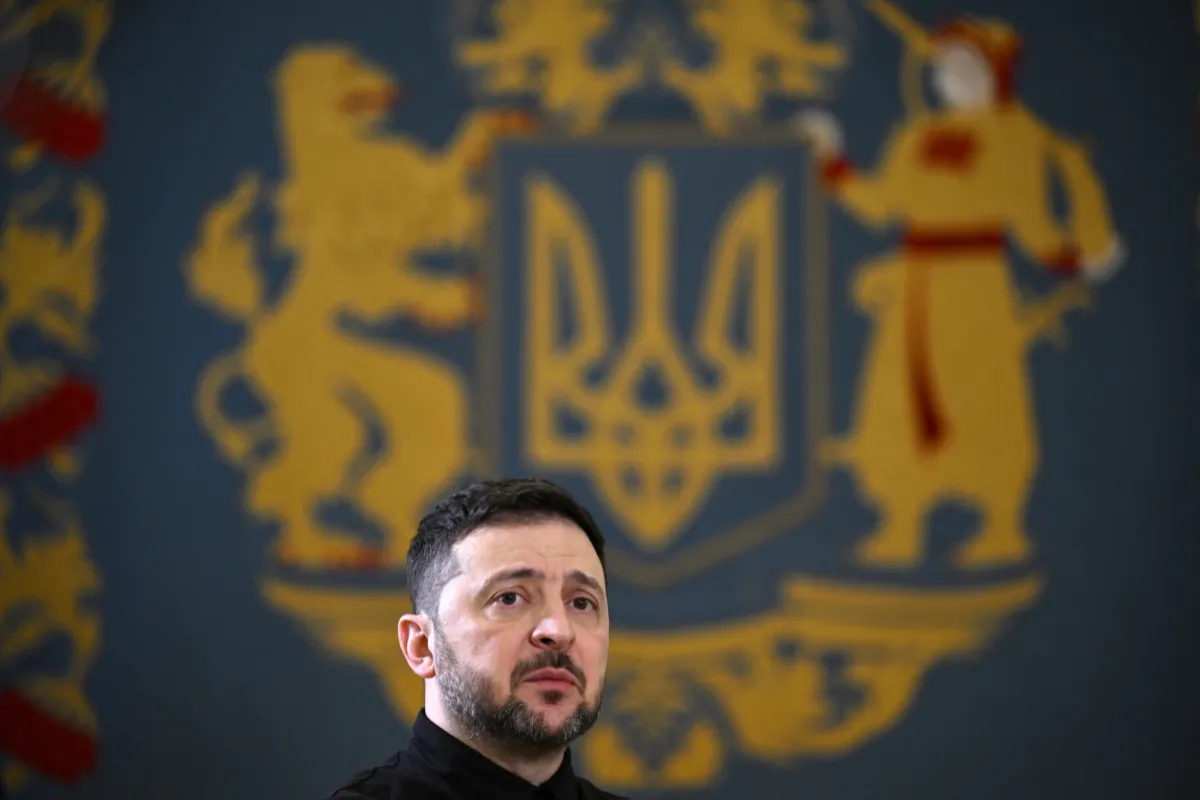
Ukrainian President Volodymyr Zelensky said last week that his citizens would not forgive him or the U.S. if Kyiv is made to hand over total control of Donbas to Russia.
"Emotionally, people will never forgive this. Never," Zelensky told Axios in an interview, adding: "This is part of our country, all these citizens, the flag, the land."
However, Zelensky said he is open to freezing the current front lines and a simultaneous withdrawal of Ukrainian and Russian troops from Donbas to secure an agreement, and believes this would be supported in a referendum.
...
Under its constitution, there must be a public vote before Ukrainian territory can be ceded.
But no votes can be held while the country is in a state of martial law, which was declared due to Russia's full-scale invasion.
Russia has rejected Ukrainian calls for a ceasefire, which could allow for a vote to take place, arguing that Kyiv would use the pause to regroup and rearm its forces.
Why Did Russia Invade Ukraine?
Russia first invaded Ukraine in 2014 in response to the Maidan Square protests in Kyiv that toppled the Kremlin-allied Yanukovych regime. The protests were part of a broader push in Ukraine to move Westwards, seeking membership of the European Union and the NATO defensive alliance.
Russian forces annexed Crimea and backed separatists in eastern Ukraine seeking to form breakaway republics after Maidan, claiming the protests were a Western-backed coup.
In 2022 came Russia's full-scale invasion of Ukraine, seeking to depose the Zelensky government as it pushed to fulfill its ambition of joining NATO, seen by Kyiv as the only real guarantee against Moscow's aggression.
The Kremlin viewed NATO membership for Ukraine as an intolerable security threat and has used the war to end Kyiv's hopes of joining the U.S.-led alliance.
In its justification for the war, the Kremlin has also accused Ukraine of trampling on the rights of ethnic Russians, downgrading their language and restricting the activities of the Orthodox church for its ties to Moscow.
But Ukraine accuses Russia of an imperial war of aggression and seeking to fold Kyiv under Moscow's control, eradicating its sovereignty and national identity in the process.
Updated, 2/24/26, 8:30 a.m. ET: This article was updated with more information.
In a polarized era, the center is dismissed as bland. At Newsweek, ours is different: The Courageous Center—it's not "both sides," it's sharp, challenging and alive with ideas. We follow facts, not factions. If that sounds like the kind of journalism you want to see thrive, we need you.
When you become a Newsweek Member, you support a mission to keep the center strong and vibrant. Members enjoy: Ad-free browsing, exclusive content and editor conversations. Help keep the center courageous. Join today.


View 0 Comments
Submit Correction
View Editorial & AI Guidelines