Getty Images

By Newsweek Editors
0
Share
Newsweek is a Trust Project member
See more of our trusted coverage when you search.Prefer Newsweek on Googleto see more of our trusted coverage when you search.
Spring is arriving, a season pregnant with hope and life. But in Ukraine, it has become a harbinger of death and destruction. As battlefield conditions improve, commanders in Moscow and Kyiv prepare for more months of brutal warfare.
The signs are that Russian forces are readying a new offensive in eastern Donetsk, where Ukraine still holds around a fifth of the territory that the Kremlin covets but has so far been unable to seize.
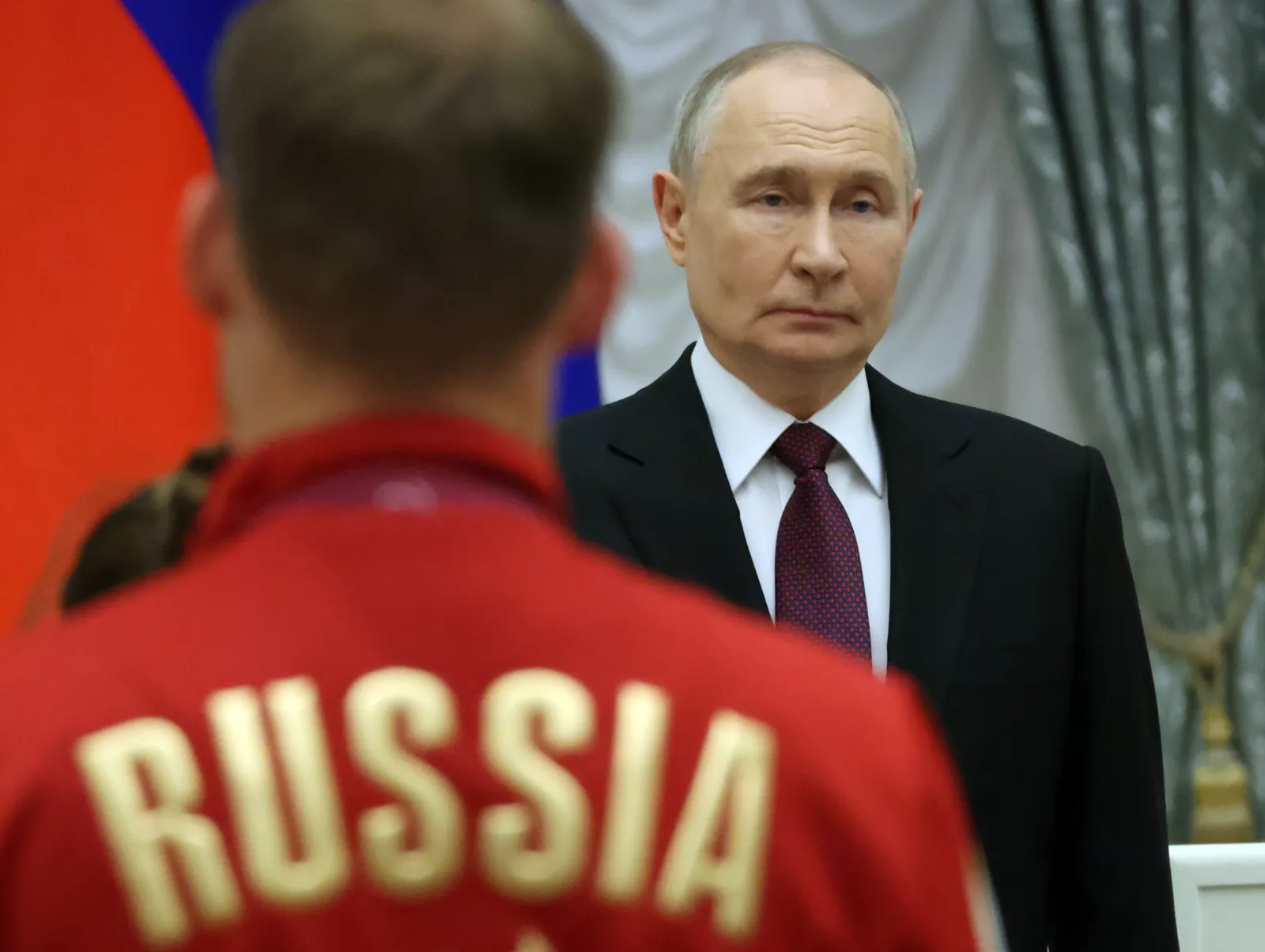
External factors are aligning in Moscow’s favor, creating the Kremlin’s most advantageous moment in years. Russian President Vladimir Putin looks poised to press his military advantage.
Read More on Analysis
This could be a now‑or‑never chance to shift the war's trajectory decisively for Putin, and produce an outcome that has eluded him for more than four years.
Washington’s War Distraction
Washington's once‑steadfast focus on Ukraine has been undercut by crisis elsewhere.
A U.S.‑led war against Iran, launched by President Donald Trump on February 28, is consuming American attention and resources.
The U.S. is increasingly drawn in, poised to police the Strait of Hormuz and perhaps even deploy boots on the ground.
High‑level Russia-Ukraine peace talks, once shepherded by U.S. diplomats, are now stalled indefinitely.
Military aid that might have bolstered Ukraine's defenses is being redirected, with U.S. air‑defense systems and munitions flowing to Gulf allies to counter Iranian missiles and drones, raising fears that little will be left for Ukraine.
The White House has already shown waning patience with Kyiv, openly criticizing President Volodymyr Zelensky and framing his unwillingness to compromise on territory as the primary blocker to peace.
Trump recently dismissed Ukraine's offer to help protect Gulf allies from Iranian drones, something it has years of direct experience with, saying Washington doesn't need Kyiv's assistance.
It’s all a departure from the engagement that helped Ukraine survive earlier phases of the war, and one the Kremlin is closely watching.
Oil Windfall Fills Moscow’s Coffers
The Iran war has also delivered Russia a desperately-needed economic boon that could prove pivotal.
Fears of supply disruptions—particularly threats to shipping through the Strait of Hormuz, as well as attacks on energy facilities across the Gulf—have pushed oil prices above $100 a barrel, their highest since 2022, and they may go higher still.
As a major exporter, Russia is reaping the rewards. Higher prices are swelling Moscow's war chest with billions in extra revenue as it juggles high interest rates and inflation with swelling bills from soldiers' pay and new munitions.
At the same time, sanctions enforcement has loosened. The U.S. has granted waivers allowing countries like India to keep buying Russian crude, and Trump has hinted at easing certain oil sanctions to stabilize markets.
Higher prices and laxer enforcement mean Moscow can sell more oil at greater profit, giving Putin a financial lifeline at least in the short-term.
For an economy strained by years of sanctions, the Iran conflict has become an unexpected cash infusion. Russia is emerging as a major financial beneficiary of the Iran war, strengthening Moscow’s hand in Ukraine.
Spring Changes the Battlefield
After a grinding winter, the seasonal shift is reshaping the battlefield once again.
As temperatures rise, muddy terrain is firming up, improving conditions for tanks and armored vehicles. It will enable more aggressive maneuvers in the weeks ahead.
The Institute for the Study of War says Russia has been massing reserves and intensifying artillery fire along the 1,200‑kilometer front, likely preparing a renewed spring offensive.
Eastern Donetsk, where parts remain under Ukrainian control, looks to be the central target as Moscow seeks to complete its conquest of the region.
Unlike early 2022, when poor logistics and mud blunted Russian advances, commanders now have experience and more limited aims. The warming weather could offer a window to push forward.
But Kyiv says Ukraine is exploiting the same conditions.
It claimed Ukrainian forces recently used improved terrain in Zaporizhzhia to roll back Russian positions, and liberated more territory in February 2026 than they lost, the first such reversal in months.
As the ground hardens, both sides expect fighting to intensify. For Putin’s generals, this spring is a critical chance to regain momentum.
Europe Struggles to Step Up
European leaders continue to voice support for Ukraine, but they've struggled to fill the gap left by Washington's distraction.
The EU has pledged €90 billion ($104 billion) in military and budgetary support over two years, yet internal bickering has exposed growing strains on unity. NATO allies have also balked at taking on new missions outside Europe.
Several European navies declined a U.S. request to patrol the Persian Gulf, prompting an angry rebuke from Trump, who again questioned American support for European security, including Ukraine.
The episode underscored a hard reality: Despite rearmament plans and tough rhetoric, Europe isn't yet ready to replace the U.S. role in Ukraine.
Military stocks and production remain insufficient, and critical gaps—from air defenses to fighter jets—persist. European intelligence and diplomatic clout also fall well short of Washington's unparalleled reach.
From Moscow's perspective, a distracted America and a struggling Europe create a strategic opening, one Putin may feel compelled to exploit before Western resolve hardens again.
Beijing's Continued Support
China's steady backing is another source of Russian confidence.
Despite Western fears, Beijing has so far refrained from moving against Taiwan, and U.S. intelligence suggests no invasion is imminent. With no immediate crisis to divert it, China has spent four years deepening economic and diplomatic ties with Moscow.
Sanctions haven't stopped Beijing from providing an economic lifeline by ramping up Russian oil purchases, supplying dual‑use technology, and expanding yuan‑denominated trade.
Chinese President Xi Jinping has met or spoken with Putin at least 19 times since 2022, signaling strong support. Beijing benefits from keeping the West bogged down in Europe, a point stressed by NATO's Secretary-General Mark Rutte.
With no Taiwan contingency to constrain it, China is free to bolster Russia—economically and potentially covertly militarily—helping Moscow withstand sanctions and prolong the war.
Shifting Political Winds in Washington
Time may also be working against Moscow politically. Trump's handling of the Iran war and reluctance to back Ukraine face a test in the November 2026 midterms.
Rising fuel prices and a costly new conflict have helped to swing polls toward the opposition.
Historically, presidents lose ground in midterms, and that pattern looks likely to repeat.
If Democrats regain Congress, they’re expected to push tougher support for Kyiv and scrutinize concessions to Moscow.
Bills to boost aid and tighten sanctions are already advancing. And looking further ahead, the 2028 election could also bring a return to a firmer pro‑Ukraine stance in the White House.
Putin knows America's distraction may be temporary and that his window is closing.
Ukraine’s Enduring Defensive Strength
Despite the pressure, Ukraine is far from spent. After four years of war, its military has adapted and hardened. Morale remains high, and leaders know their fight is existential.
Western training and equipment—tanks, precision rockets, improved air defenses—have strengthened Ukraine’s hand, even as shortages persist.
Crucially, Ukraine has built layered fortifications across the east. It has trench networks, anti‑tank obstacles, and drone‑guided kill zones that make Russian advances costly. Russian troops have suffered heavy losses for minimal gains.
In 2025, Moscow paid dearly for tiny advances, and recent offensives in Donetsk have cost thousands of casualties with little to show for them.
Ukraine has also struck deep behind enemy lines, hitting air bases, logistics hubs, and targets in occupied Crimea, including with domestically-developed weapons such as the long-range "Flamingo" FP-5 missile.
Any Russian bid for a knockout blow will still meet an experienced, determined defender, even if the broader context is more favorable to Moscow.
Putin’s Personal Gambit
For Putin, the war has always been personal. He's framed Ukraine as part of Russia's historic sphere, insisting in 2021 that Russians and Ukrainians are "one people."
By casting the invasion in civilizational terms, he’s tied his legacy to Ukraine's subjugation. At 73, with Russia facing long‑term strain, that gives the moment a now‑or‑never urgency.
Putin is betting Ukraine will collapse before he does. This spring offensive will perhaps be his best remaining chance.
If Russia can't break Ukraine’s resistance now, the question becomes stark for the Kremlin. When, if ever, can it?
Hey gang, Carlo Versano here. I hope you enjoyed this article. As Newsweek's Director of Politics and Culture and editor of the 1600 newsletter, I'm keen to hear what you think. Now, Newsweek is offering a new service to allow you to communicate directly with me in the form of a text message chat. You can sign up and get a direct line to me, as well as the reporters who work for me. You can shape our coverage.
As a Newsweek member, we're offering this service to you for free. You can sign up below, or read more about how it works here. Let's talk!
View 0 Comments
Submit Correction
View Editorial & AI Guidelines