10
Loading video...

By Matthew Robinson
News Editor
0
Share
Newsweek is a Trust Project member
See more of our trusted coverage when you search.Prefer Newsweek on Googleto see more of our trusted coverage when you search.
The United Kingdom has thwarted a Russian submarine operation targeting critical undersea cables in its waters, the country's defense minister has announced.
Why It Matters
The incident comes amid continuing concerns over the threat posed by Russia toward NATO allies, which include accusations that Moscow has been engaged in hybrid activities to test the alliance’s resolve, such as GPS jamming and flying drones into its airspace.
Read More on News
Undersea cables are critical for all digital communications, and underpin global banking systems and trade.
What To Know
British warships and aircraft identified a Russian attack submarine entering international waters in the Arctic a number of weeks ago, before tracking it around the clock, the British government said.
The submarine was determined to be a decoy aimed at distracting the U.K. from other Russian naval units conducting "nefarious activity over critical undersea infrastructure."
The UK and its allies then launched a campaign to ensure the Russian naval units knew they were being monitored, and the submarines have since retreated to Russia.
British Prime Minister Keir Starmer said: "I am determined to protect the British people from paying the price for [Russian President Vladimir] Putin's aggression in their household bills. That is why we will not shy away from taking action and exposing Russia's destabilizing activity that seeks to test our resolve."
...
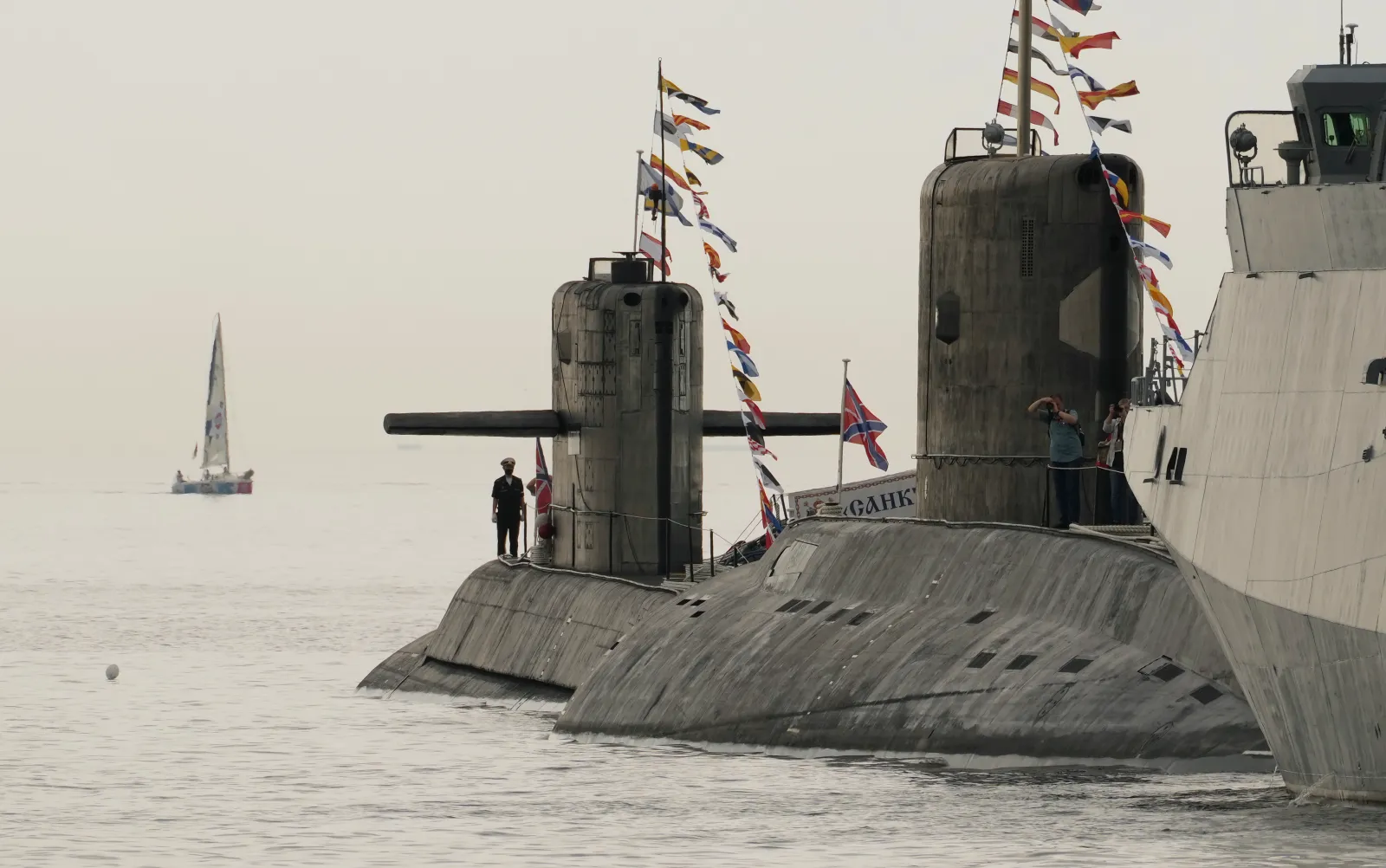
Britain's Defense Secretary John Healey said on Thursday that three Russian submarines were tracked for more than a month as part of the operation. The Russian submarines included an Akula-class nuclear-powered vessel and two deep-sea vessels from Moscow's Main Directorate of Deep Sea Research, also known as Gugi.
The Royal Navy deployed the Type 23 frigate HMS St Albans, a tanker named RFA Tidespring, and Merlin helicopters. Meanwhile, the Royal Air Force deployed a maritime reconnaissance RAF P8 aircraft to monitor the submarine 24/7, the government said.
The operation saw British ships cover thousands of miles, and the Royal Navy and RAF also deployed sonobuoys to track the submarines. Healey said that around 500 U.K. personnel were involved, along with other allied nations including Norway.
"A Royal Navy warship and Royal Air Force P-8 aircraft alongside allies ensured that the Russian submarines were monitored 24/7," Healey said.
"The Akula submarine subsequently retreated home, having been closely tracked throughout and we continued to monitor the two Gugi submarines in and around wider U.K. waters.
"Our armed forces left them in no doubt that they were being monitored, that their movements were not covert, as President Putin planned, and that their attempted secret operation had been exposed. Those Gugi submarines have now left U.K. waters and headed back north."
What People Are Saying
U.K. Prime Minister Keir Starmer said: "Our armed forces are among the best in the world, and the British public should be in no doubt that this government will do whatever it takes to defend our national and economic security, wherever in the world that is needed."
British Defense Secretary John Healey said: "I want to pay tribute to the U.K. personnel who spent many days tracking these Russian submarines in extremely challenging and treacherous conditions. While the eyes of many—understandably—were on the Middle East, our British Armed Forces were simultaneously responding to rising Russian threats north of the U.K.
"As we act to defend our interests and allies in the Middle East, we are tackling increasing threats to NATO in the High North, maintaining strong support for Ukraine and protecting our U.K. homeland.
"To Putin, I say this: we see you, we see your activity over our underwater infrastructure. You should know that any attempt to damage it will not be tolerated and would have serious consequences."
View 0 Comments
Submit Correction
View Editorial & AI Guidelines