10
Loading video...

By Alice Gibbs
Senior Reporter
0
Share
Newsweek is a Trust Project member
See more of our trusted coverage when you search.Prefer Newsweek on Googleto see more of our trusted coverage when you search.
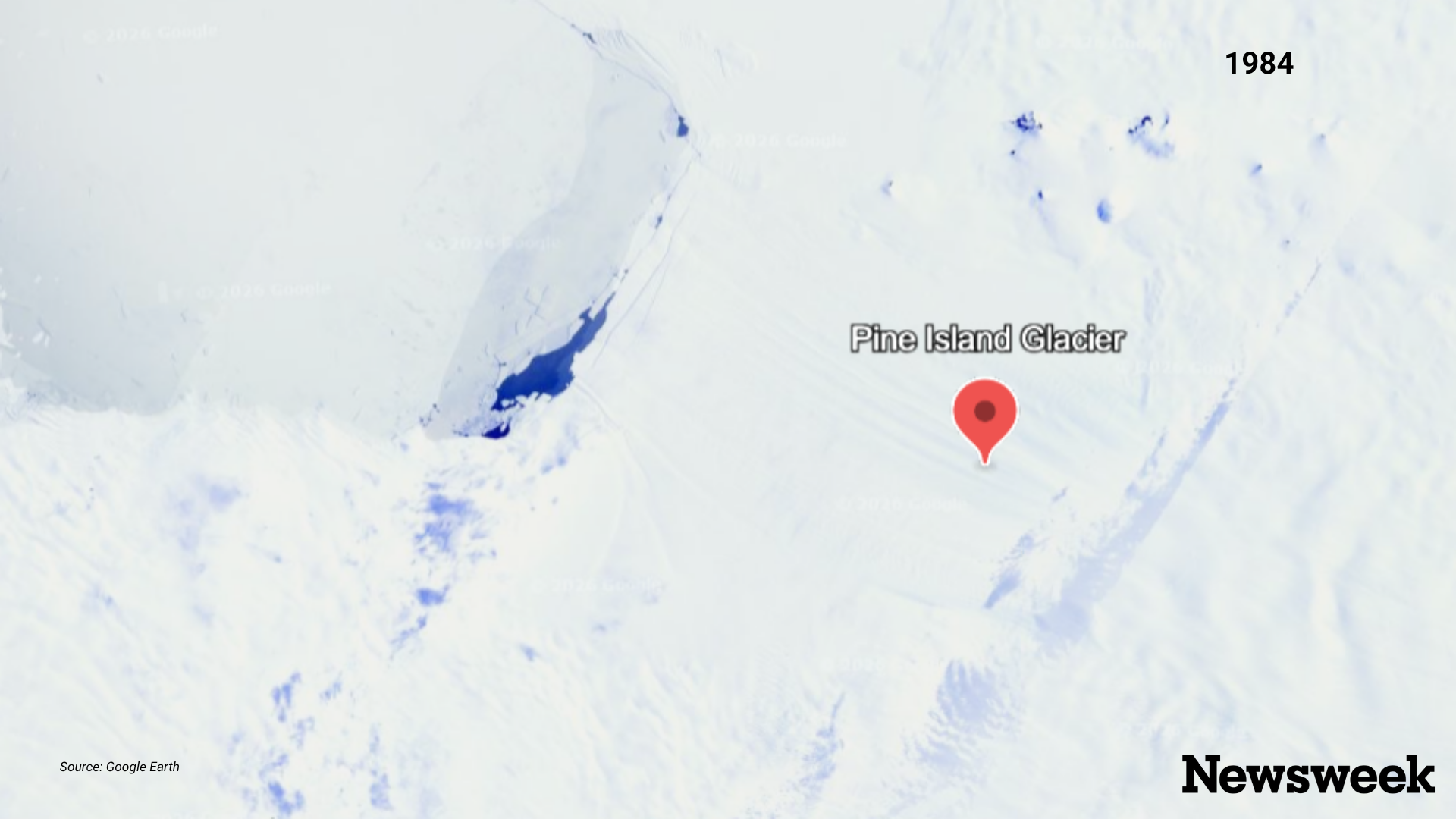
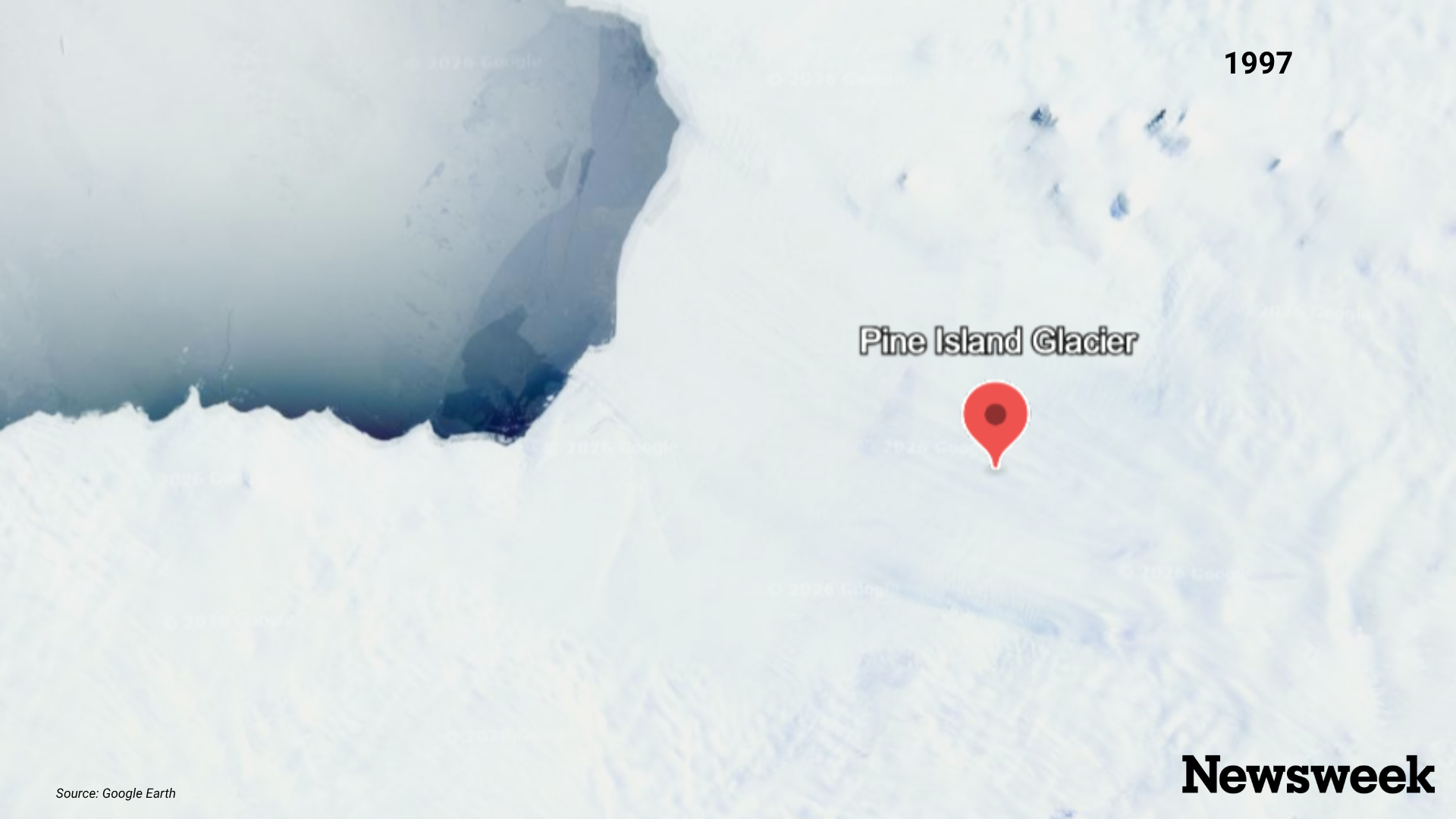
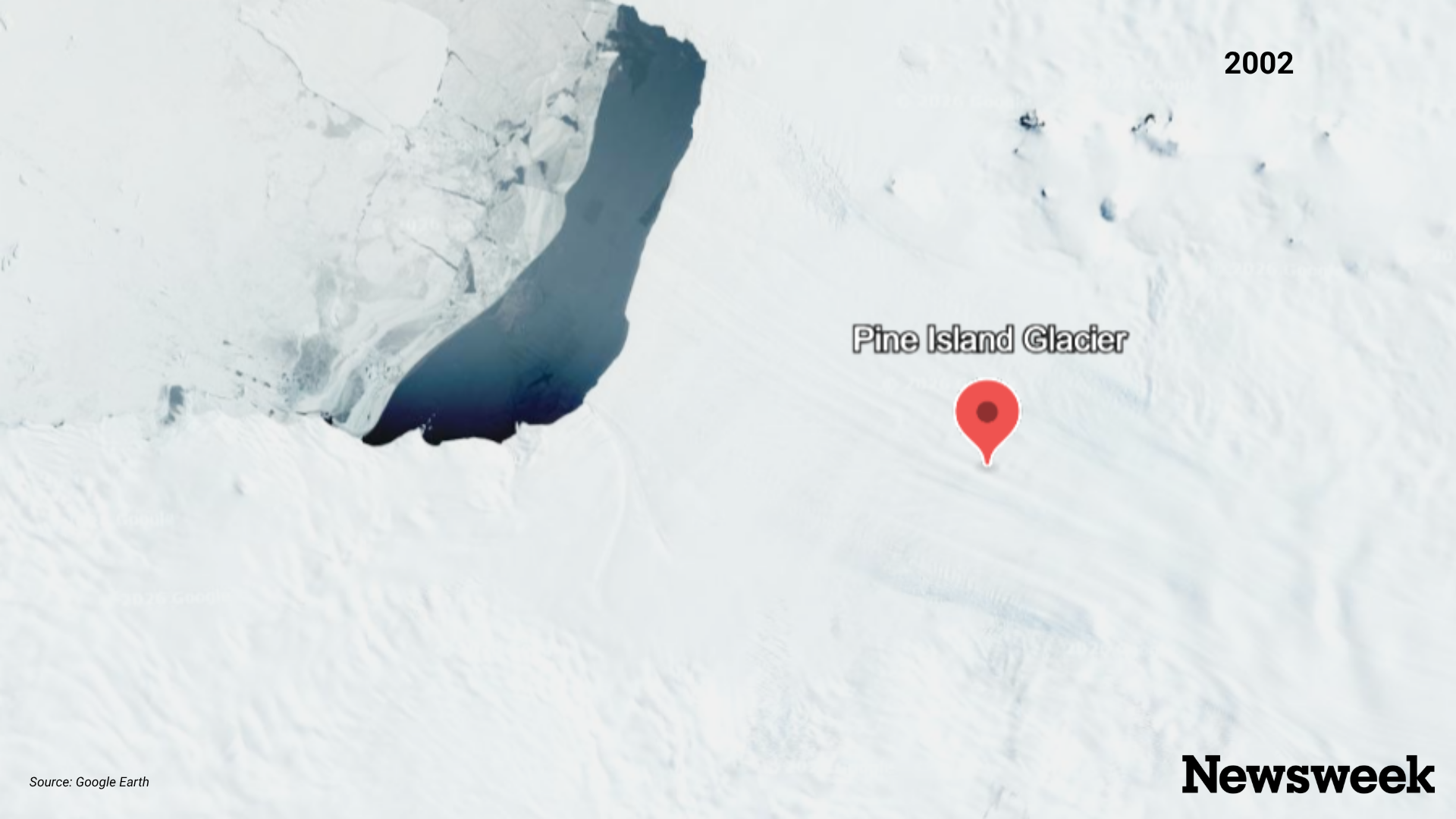
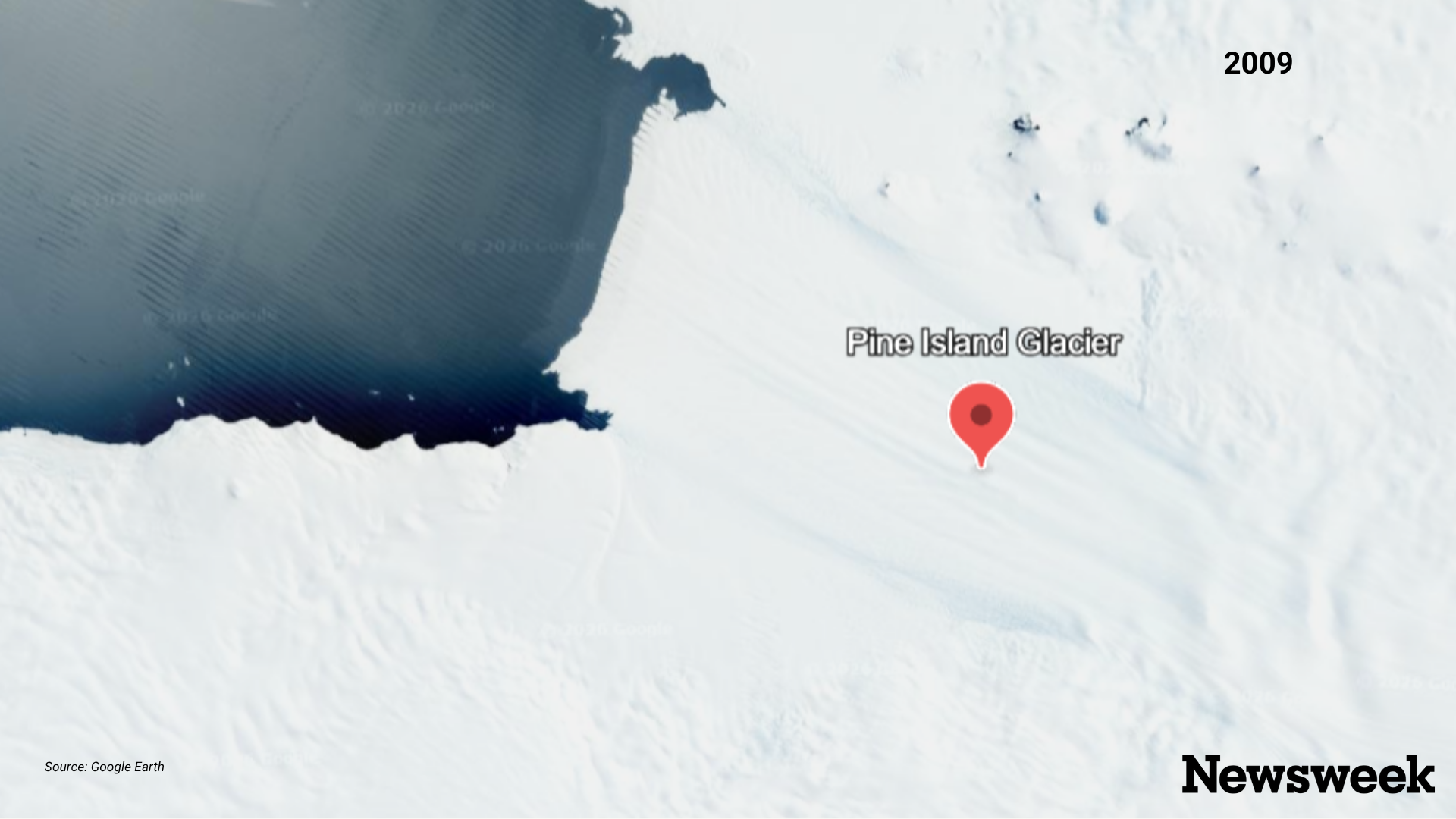
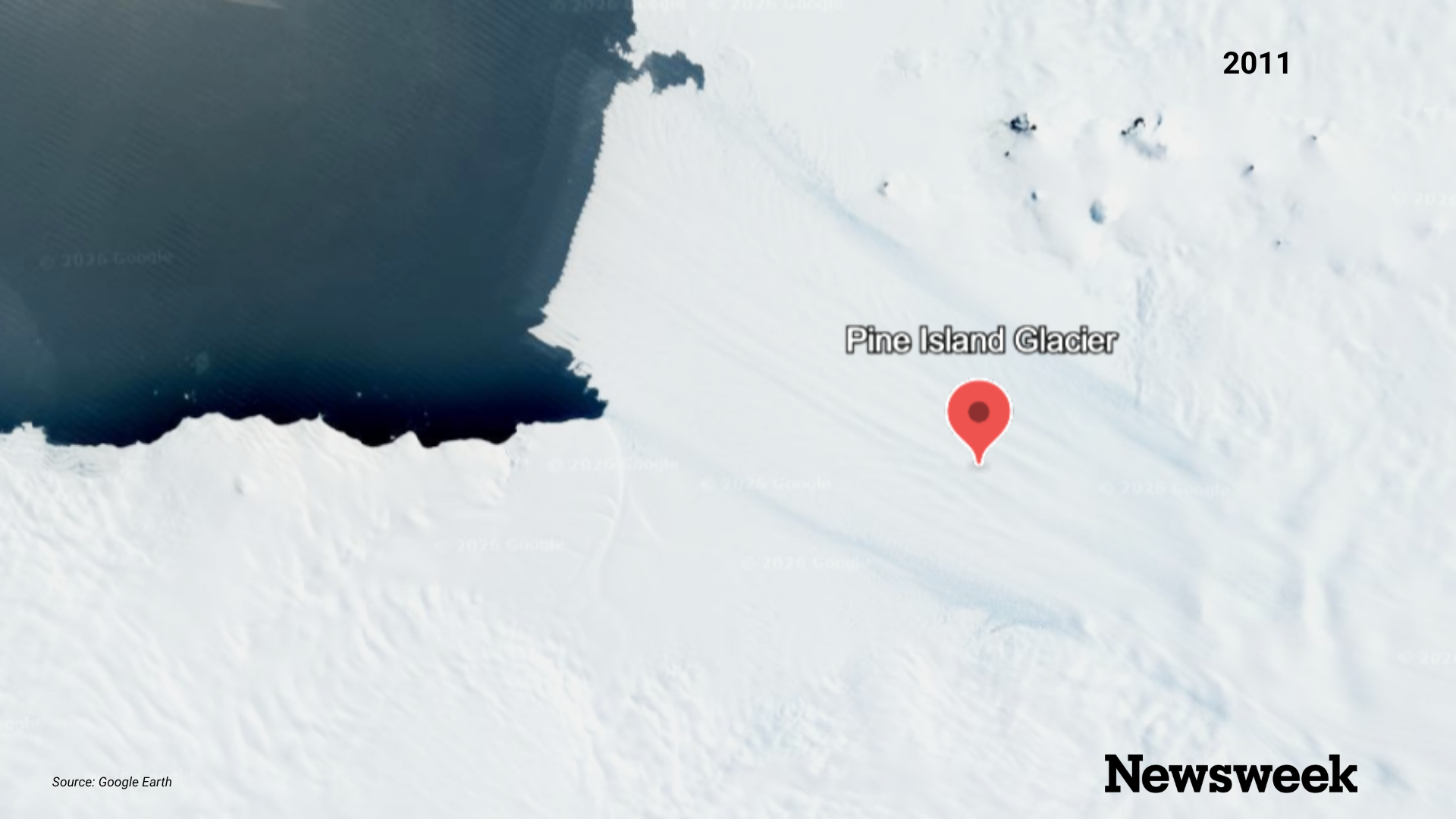
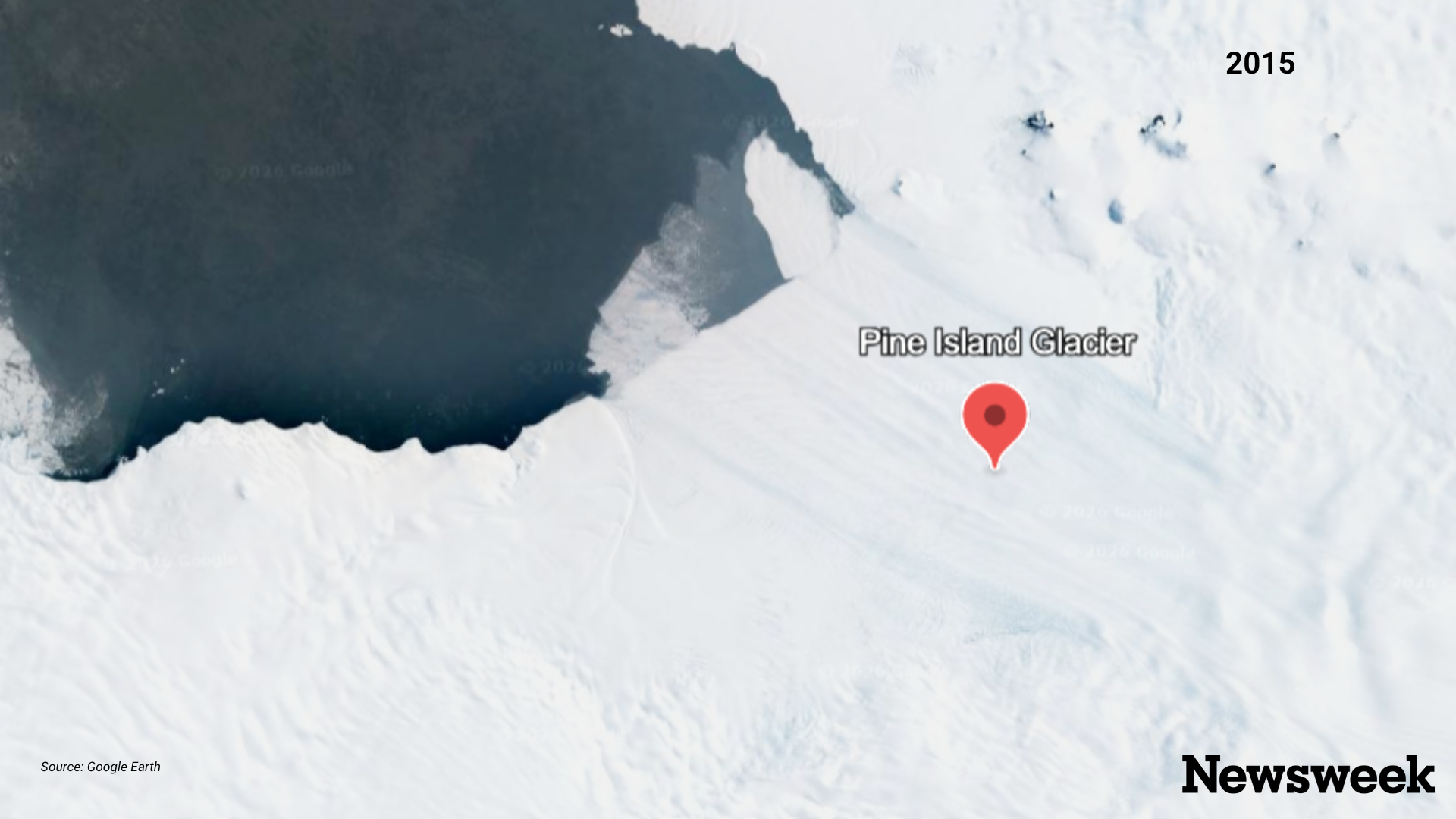
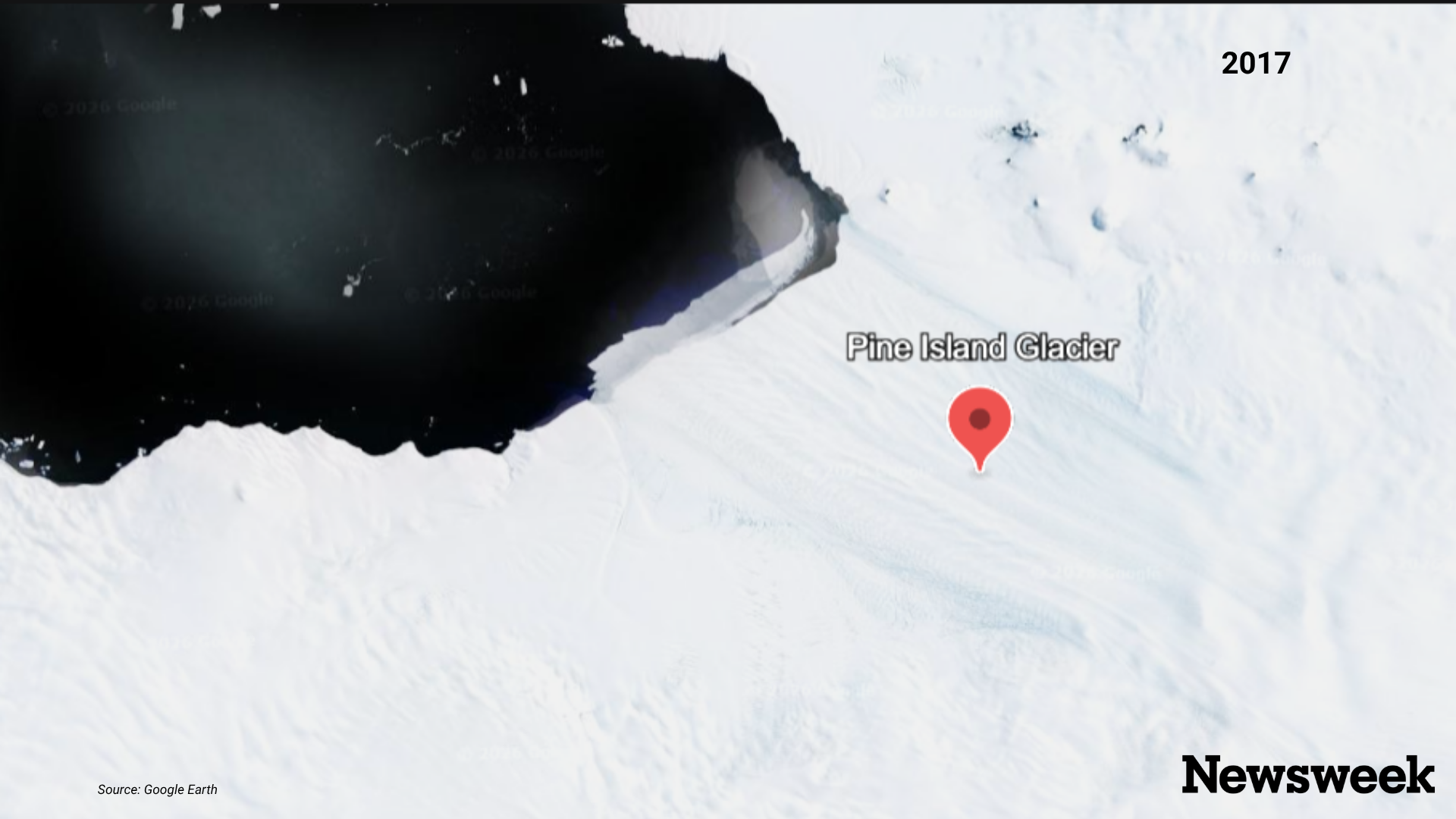
A new study has directly quantified the role of human-driven climate change in the retreat of Pine Island Glacier, with satellite imagery providing a stark visual record of how the glacier has changed in recent decades.
Human activity has significantly accelerated the retreat of one of Antarctica’s most important glaciers, according to a new peer‑reviewed study—a finding that aligns with satellite imagery showing increasingly pronounced ice loss in recent years.
Researchers from King’s College London and the British Antarctic Survey found greenhouse gas emissions increased total retreat by about 18–20 percent since the 1940s, pushing it several miles further inland than it would have moved naturally.
Read More
Map Shows 6 US Reservoirs at Their Lowest May Levels in 30 Years5 min read

What Other US Reflecting Pools Reveal About Lincoln Memorial’s Problems6 min read

Five U.S. Cities Seeing Fastest Summer Warming on Record6 min read

The findings, published June 29 in The Cryosphere, mark one of the clearest attributions of a major Antarctic glacier’s retreat to human-driven climate change.
...
Visible Change Marks Ongoing Concern
Satellite imagery from NASA and the European Space Agency has for decades documented the glacier’s physical retreat. This study goes further, using modeling to explain the underlying cause—quantifying how much of that observed ice loss is linked to human-driven climate change.
Pine Island Glacier is one of the fastest-changing glaciers in Antarctica, with satellite observations—particularly from the European Space Agency—showing dramatic shifts in both its speed and structure over recent decades. Since the early 1990s, its flow has accelerated to more than 10 meters per day, while its floating ice front—around 500 meters thick—has undergone repeated calving events that have rapidly reshaped its edge.
It is already a significant contributor to global sea level rise, and the region it sits in contains enough vulnerable ice to raise sea levels substantially if destabilized.
More than a third of ice loss from this part of Antarctica has been tied to Pine Island Glacier alone, underscoring its importance in global climate projections.
...
What the Study Found
The newly released study reconstructs Pine Island Glacier’s behavior over the industrial era, comparing scenarios with and without human-driven warming.
Pinning down the role of climate change in Antarctica has long been difficult. Satellite records only go back a few decades, and the glacier is heavily influenced by the ocean, where small temperature changes can drive large swings in retreat. That makes it hard to separate natural variability from human impact.
To get around this, the researchers used an advanced modeling approach that combines real-world observations of ice loss with simulations of glacier behavior. This allowed them to reconstruct how the glacier evolved and run parallel scenarios—including a world "without human-driven global warming”—to isolate how much additional retreat was caused by warming linked to greenhouse gas emissions.
The study concludes that while retreat began in the 1940s—likely due to natural variability—human-driven ocean warming since the 1960s has significantly intensified it. By 2015, the glacier had retreated around 2.4 miles farther inland than it would have without human influence.
“Our results show that climate change made the retreat of the Pine Island Glacier substantially worse,” lead author Alex Bradley said in a statement.
...
Newsweek reached out to Alex Bradley via email for comment.
The researchers add that it is unlikely the scale of 20th‑century retreat would have occurred without human influence, even accounting for natural variability.
What Happens Now
The study suggests the glacier could temporarily slow its retreat later this century as it reaches a ridge beneath the ice.
But that stabilization would likely be short-lived if warming continues, with human-driven climate change again becoming the dominant driver of retreat in the longer term.
“Ice sheets respond slowly,” Bradley said. “The impacts of today’s emissions will continue to shape Antarctic ice loss for centuries.”

...
Attributing changes in Antarctica to human activity has long been difficult due to complex ocean and ice interactions.
This study provides one of the clearest links yet—showing that human influence is not just contributing to ice loss, but measurably shaping its trajectory.
Combined with satellite imagery showing accelerating retreat in recent years, the findings sharpen warnings that Antarctic ice loss could play an increasingly central role in future sea level rise.
Contact Newsweek editors on this story: Rebecca Flood and Emma Lee-Sang.
View 0 Comments
Submit Correction
View Editorial & AI Guidelines