10
Loading video...

By Melissa Fleur Afshar
Reporter
0
Share
Newsweek is a Trust Project member
See more of our trusted coverage when you search.Prefer Newsweek on Googleto see more of our trusted coverage when you search.
Scientists have identified changes in white blood cells that appear to predict how patients with melanoma, the deadliest form of skin cancer, will respond to treatment—a discovery researchers say could eventually help doctors decide who is likely to benefit from immunotherapy.
The findings come from a study of just 24 patients, a small sample size that researchers say means the results are an early step rather than an immediate breakthrough.
Blood Cells Offer Clues
Lucy Booth, a PhD student at King's College London (KCL) and the study's lead author, said the findings point to a promising new avenue for research into melanoma treatment.
Read More on Health
"B cells have emerged as critical contributors to survival and treatment outcomes in melanoma," she said in a statement. "In-depth studies of these cells may provide important insights to help address the current clinical challenges in melanoma treatment. Studying immune cells from patient blood samples allows for a much less invasive method than biopsies.”
She told Newsweek: "For the first time, we have characterized B and T cells together from the blood of patients with melanoma and we found distinct immune features present in patients, indicating potential future biomarkers of disease."
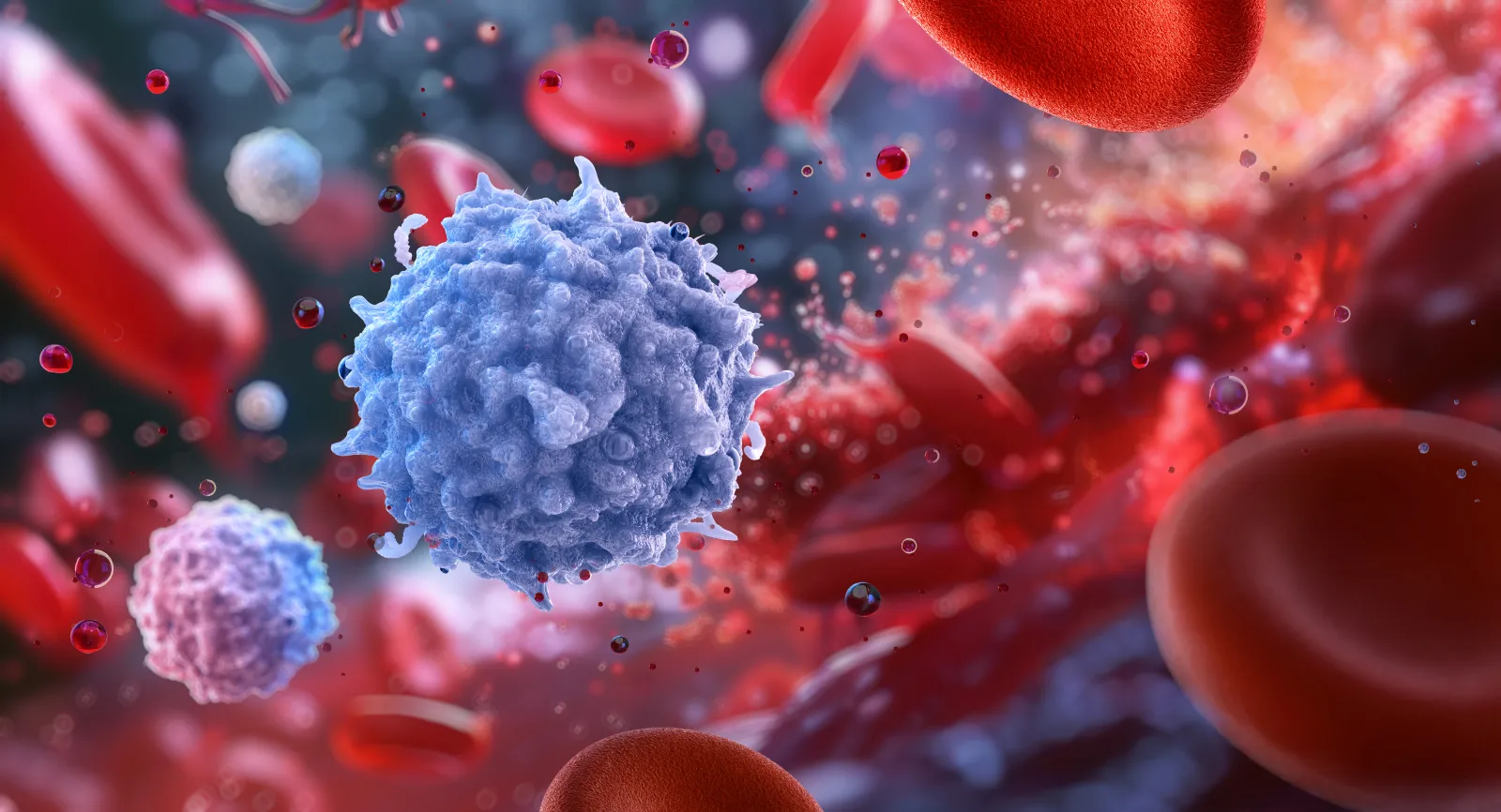
...
Melanoma is the fifth most common cancer in the U.K., where the study was conducted. Meanwhile, in the U.S., about 112,000 new cases are expected to be diagnosed this year, according to the American Cancer Society.
It is highly treatable when caught early, but it remains one of the deadliest skin cancers once it advances. Standard treatments include surgery, targeted drugs and immunotherapy, which works by training the body's own immune system to identify and destroy cancer cells.
Immunotherapy has transformed outcomes for many patients with advanced melanoma. But nearly half of patients do not benefit from it, and some experience serious side effects. Until now, doctors have had no reliable way to predict in advance who will respond well to the treatment and who is at risk of harm.
What the Study Found
Researchers at KCL, working with colleagues at Queen Mary University of London, examined two major types of white blood cells: B cells, which produce antibodies, and T cells, which help destroy cancer cells directly. The team found coordinated changes in these immune cells during treatment that lined up with how well patients ultimately fared.
Patients whose B and T cells showed renewed activation and expansion within the first six weeks of immunotherapy tended to have better outcomes, including improved survival. By contrast, patients whose B cells remained immature or poorly functioning throughout treatment tended to have worse outcomes. Patients whose immune cells showed a weaker capacity to trigger anti-cancer responses before treatment even began also had poorer survival rates afterward. Certain T cell subtypes were linked to treatment side effects.
The researchers also found substantial differences in immune cell levels between patients, which may help explain why people respond so differently to the same treatment.
The team had analyzed blood samples from 24 patients with stage 2 to 4 melanoma, alongside samples from 25 healthy volunteers, at multiple points before and during treatment. Using a technology called mass cytometry, which allows scientists to analyze many characteristics of individual immune cells simultaneously, researchers were able to detect rare cell populations and track how they evolved over time.
It marked the first time circulating B cells and T cells were studied together in this level of detail in melanoma patients' blood.
"This work aims to support the integration of blood immune profiling into clinical settings to guide surveillance and early intervention of patients with melanoma," Booth added.
Reference
Booth, L., Karagiannis, S. N., et al. (2026). Circulating B cell and T cell activation states predict clinical outcomes in melanoma and reveal dynamic immune reinvigoration with checkpoint inhibitor immunotherapy. Journal for Immunotherapy of Cancer. https://doi.org/10.1136/jitc-2026-015585.
Contact Newsweek editors on this story: Sirena Bergman and Cristina Diciu.
View 0 Comments
Submit Correction
View Editorial & AI Guidelines