...

By Melissa Fleur Afshar
Reporter
0
Share
Newsweek is a Trust Project member
See more of our trusted coverage when you search.Prefer Newsweek on Googleto see more of our trusted coverage when you search.
Scientists have unraveled a 40‑year‑old mystery at the heart of sleeping sickness, uncovering how a deadly parasite behind the life-threatening disease repeatedly slips past the human immune system and survives long enough to cause serious illness.
The discovery reveals how the parasite fine‑tunes a protective protein “cloak” that allows it to evade immune detection while circulating in the bloodstream.
By identifying a previously unknown protein that precisely controls this process and keeps it under wraps, researchers say they have uncovered a major vulnerability in the parasite’s life cycle—one that could eventually lead to new treatments for a disease that remains fatal if left untreated.
Read More on Science
...
What Is Sleeping Sickness?
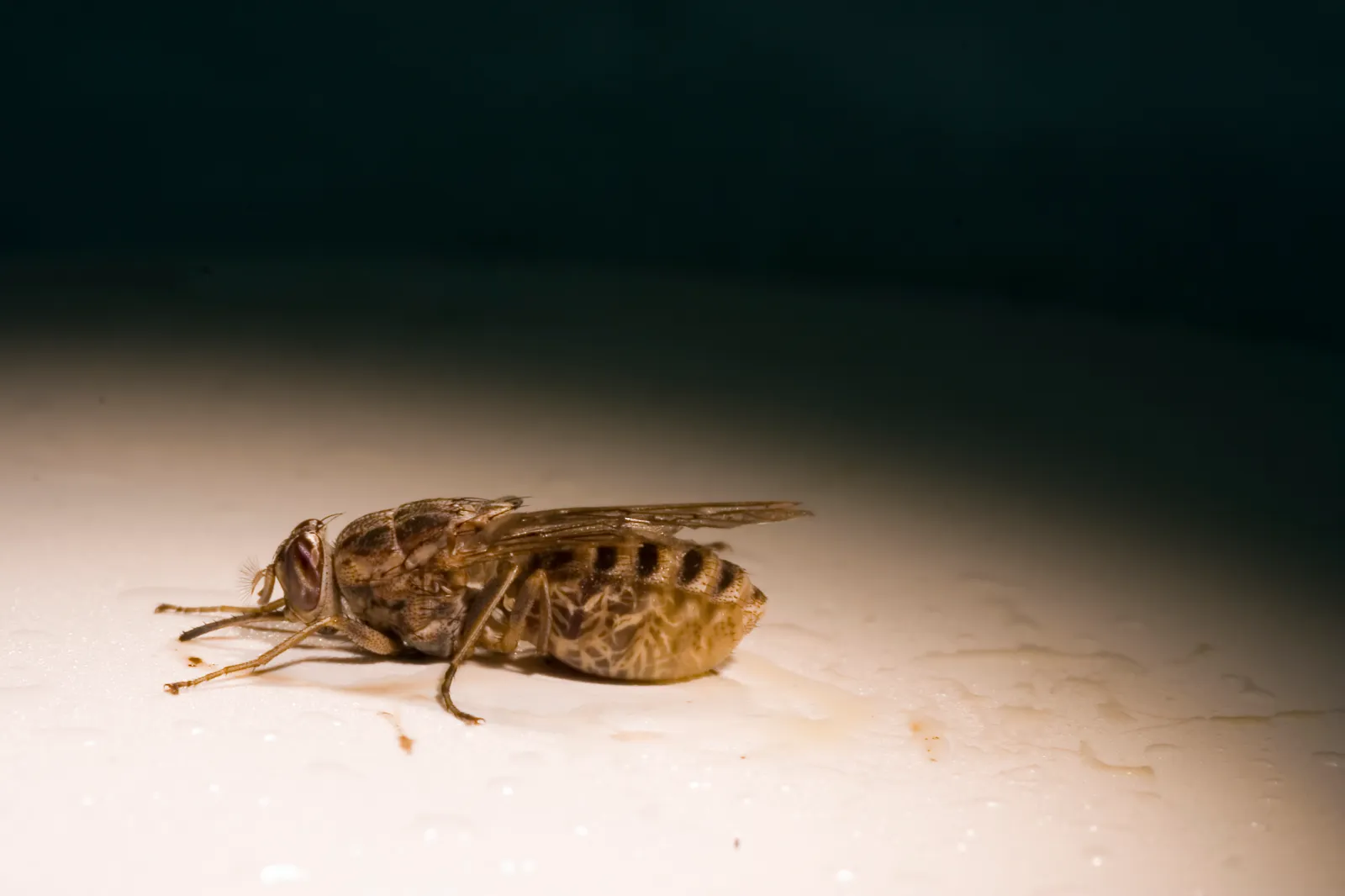
Sleeping sickness, also known as human African trypanosomiasis (HAT), is caused by parasites transmitted through the bite of the tsetse fly in sub‑Saharan Africa. If untreated, the disease can be deadly.
There are two types of sleeping sickness, each named after the region of Africa where it was historically found; both progress through two distinct stages.
In the first stage, people typically experience mild, flu‑like symptoms. In the second stage, the parasites invade the brain and central nervous system, causing severe neurological problems including confusion, dramatic disruptions to sleep patterns and, in advanced cases, coma.
In the West African form of the disease, symptoms can take much longer to appear, making diagnosis and treatment more challenging.
How the Discovery Changes Everything
To survive in the human bloodstream, the parasite relies on an elaborate defense system. It coats itself in a dense layer of proteins called variant surface glycoproteins, or VSGs, which form a molecular “cloak” that shields it from the immune system. While scientists have long understood the importance of this cloak, one aspect of its biology has remained deeply puzzling.
The genetic instructions that produce the cloak also contain several “helper genes” that are essential for the parasite’s survival and ability to evade immunity. Logic suggested that when these instructions were followed, the parasite should produce similar amounts of each protein. Instead, it churns out vast quantities of cloak proteins while producing only tiny amounts of the helper proteins—a contradiction that has baffled researchers for decades.
The team, from England's University of York, have now shown that the parasite achieves this imbalance through destruction rather than simple control of production. The newly identified protein, known as ESB2, acts as a highly precise molecular shredder. As genetic instructions are being produced inside the parasite’s protein factory, ESB2 selectively destroys the sections that would generate excess helper proteins, while leaving the cloak instructions untouched.
The unwanted genetic material vanishes without a trace, which is what kept tripping scientists up for decades.
This real‑time redaction allows the parasite to express exactly what it needs to remain hidden from the host’s immune system, producing a mountain of cloak proteins while tightly limiting everything else. The finding provides a long‑sought explanation for a bizarre quirk in the parasite’s biology that has confounded scientists for 40 years.
“We’ve discovered that the parasite’s secret to staying invisible isn’t just what it prints, but what it chooses to redact. By placing a 'molecular shredder' directly inside its 'protein factory,' the parasite can edit its genetic manual in real-time," the study's senior author, Dr. Joana Faria, said in a statement. “This suggests a fundamental shift in how we view infection: survival for many organisms may depend less on how they issue genetic instructions and more on how they destroy them at the source.
“This discovery is a real full-circle moment for me. The mystery of how this parasite manages the asymmetric expression of its genetic manual has been a cold case in the back of my mind since my days as a postdoc. To finally solve it now, as the first major output of my own lab here at York, is incredibly rewarding."
By understanding how the parasite controls its genetic messages with such surgical precision, researchers say they can now begin identifying new weak points that could be targeted by drugs. The discovery opens the door to future treatments for sleeping sickness, a disease that continues to have a devastating impact.
Do you have a tip on a science story that Newsweek should be covering? Do you have a question about the sleeping sickness? Let us know via science@newsweek.com.
Reference
Lansink, L. I. M., Aye, H. M., Walther, L., Longmore, S., Jones, M., Dowle, A., Reis-Cunha, J. L., & Faria, J. R. C. (2026). Specialized RNA decay fine-tunes monogenic antigen expression in Trypanosoma brucei. Nature Microbiology. https://doi.org/10.1038/s41564-026-02289-4
View 0 Comments
Submit Correction
View Editorial & AI Guidelines