10
Loading video...

By Hannah Parry
Associate News Editor
0
Share
Newsweek is a Trust Project member
See more of our trusted coverage when you search.Prefer Newsweek on Googleto see more of our trusted coverage when you search.
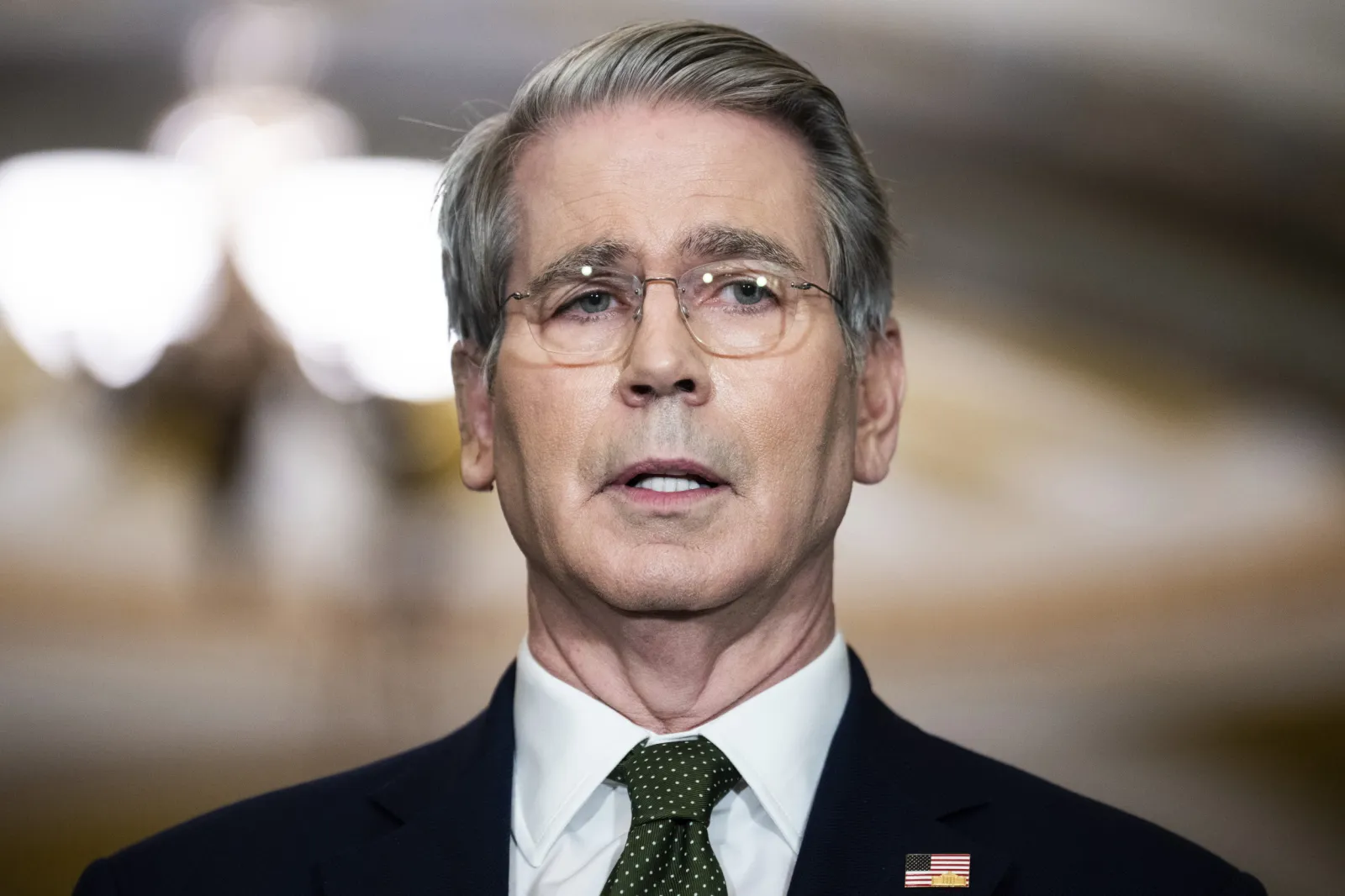
Treasury Secretary Scott Bessent revealed on Friday how the Trump administration applied pressure on Beijing as part of its negotiations to secure a U.S.-China trade deal.
"In dealing with the world's second largest economy, we approached each other with mutual respect," Bessent, who has been engaged in the talks with China, told Fox Business Network's Mornings With Maria.
Why It Matters
President Donald Trump triggered a trade war with China after he announced a new round of "reciprocal" tariffs on the nation as part of his "Liberation Day" announcement.
Read More on Politics
The trade war rapidly escalated, with the U.S. imposing a 145 percent tariff on Chinese goods, and China responding with a 125 percent duty tariff on American exports, at its peak, sending the global markets into a panic. China also restricted its exports of rare earth elements and related magnets to the U.S., which play a vital role in American advanced manufacturing and defense industries.
Since then, the U.S. has focused on securing a deal with Beijing and on Thursday, Trump announced that he had signed a trade deal with China the day prior.
What To Know
The treasury secretary said Friday that Trump had "set the table with a very important phone call" with Chinese President Xi Jinping which had led to the U.S. securing the deal.
American negotiators' focus had been on bringing tariffs down, and ensuring "rare earth magnets [were] starting to flow back to the U.S."
"They form the core of a lot of our industrial base. They were not flowing as fast as previously agreed," he said.
An earlier trade agreement, negotiated between Chinese and American officials in Geneva in May, had stalled over U.S. concerns that China was dragging its feet at renewing rare earth exports.
Bessent said the U.S. then used its own countermeasures to try and pressure China back to the negotiating table.
"We had put countermeasures versus the Chinese in place. We had held back some, vital supplies for them," he said, without detailing what those supplies were. "So, what we're seeing here is a de-escalation under President Trump's leadership."
The tension was broken by a call between Trump and Xi, who Bessent described as having a "very good relationship."
"Then our teams met in London and ironed this out," he added.
"I'm confident now that, as agreed, the magnets will flow," he said.
A spokesperson for the Chinese Ministry of Commerce confirmed on Friday that leaders of both countries had approved the details of the agreement.
...
What People Are Saying
President Donald Trump said at the White House on Thursday, "We just signed with China yesterday.... we're starting to open up China."
A spokesperson for China's commerce ministry told Newsweek: "It is hoped that the U.S. and China will move toward each other, continue to utilize the bilateral economic and trade consultation mechanisms in accordance with the important consensus and expectations set during the June 5 call between the two heads of state, continuously enhance mutual understanding, reduce misperceptions, strengthen cooperation, and jointly promote the healthy, stable, and sustainable development of China-U.S. economic and trade relations."
Commerce Secretary Howard Lutnick told Bloomberg on Thursday: "We'll announce some deals, but basically the deals we're going to announce are the ones that are sort of the head of the class, the structural spot in the line, and then all the other countries will fit behind those categories."
What Happens Next
China and the U.S. are expected to hammer out the deal in greater detail in the coming weeks, including potential export restrictions on certain tech.
The U.S. is also expected to announce several new trade deals with other countries as Trump's "90 deals in 90 days" July 9 deadline rapidly approaches. So far, only two deals have been announced; with the United Kingdom and China.
View 0 Comments
Submit Correction
View Editorial & AI Guidelines