
By Aristos Georgiou
Science and Health Reporter
0
Share
Newsweek is a Trust Project member
See more of our trusted coverage when you search.Prefer Newsweek on Googleto see more of our trusted coverage when you search.
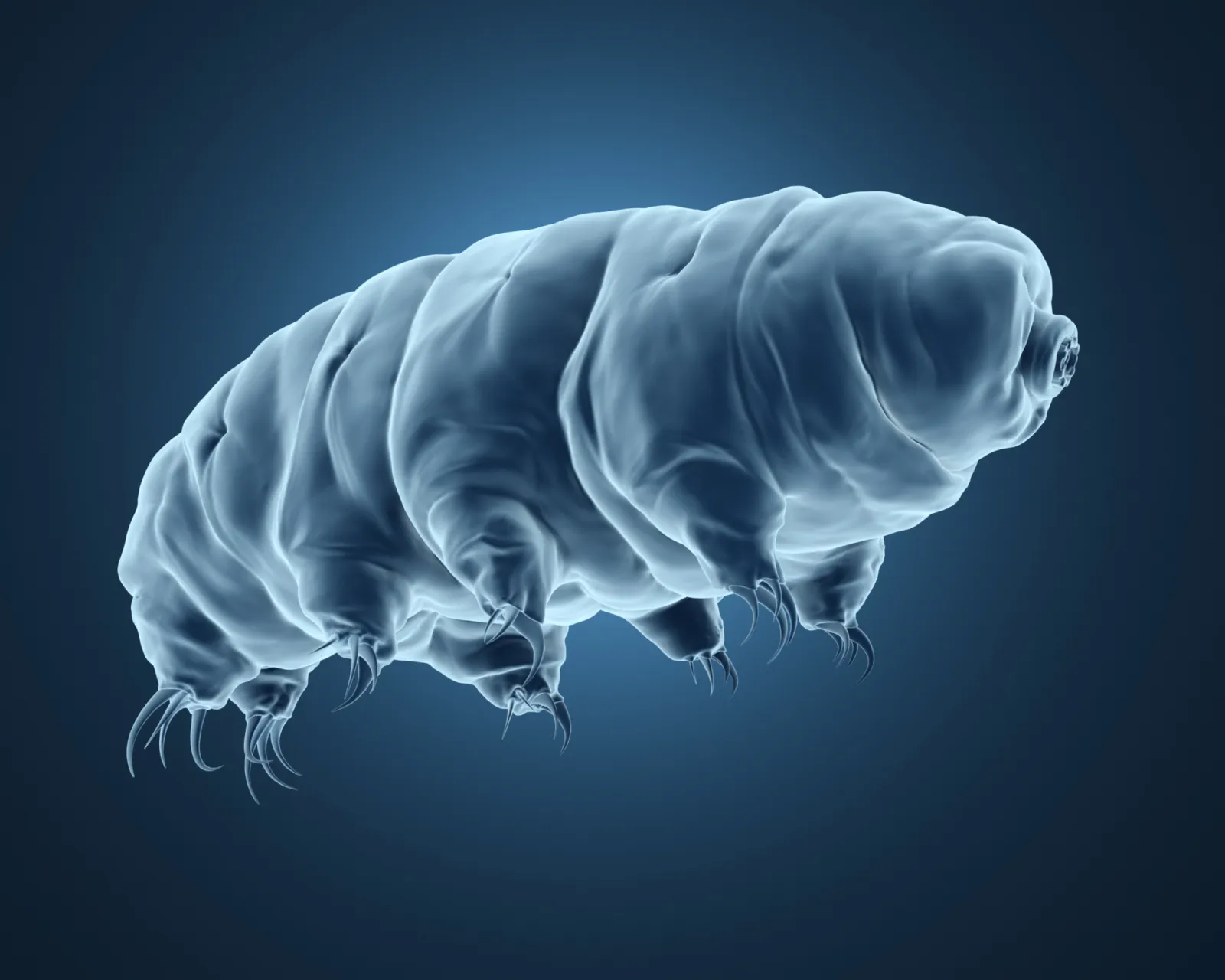
Scientists have cast new light on the extreme survival abilities of the tiny tardigrade—one of the most resilient animals on the planet.
A team from the University of California San Diego revealed the workings of a protein found in the creatures—also known as "water bears" or "moss piglets"—which helps to protect them against extreme conditions, according to a study published in the journal eLife.
Measuring between just 0.1 and 1 millimeter in size, the microscopic tardigrades are found in a wide range of water environments around the world, including the deep sea and the Arctic.
Read More
DARPA Thinks Tardigrades Could Help Scientists ‘Freeze’ Injured Soldiers in Time6 min read

Scientists Worried By Thousands of Tardigrades Crash-Landing on the Moon: ‘We Have No Idea What Can Happen’5 min read

New Tardigrade Discovered: Mystery Eight-Legged Micro-Animal Found Lurking in Parking Lot3 min read

Due to their incredible toughness they are considered extremophiles—organisms that thrive in extreme environments.
In fact, tardigrades have been documented surviving in everything from dangerously high radiation to extremely low temperatures. Experiments have even shown that they can survive exposure to toxic chemicals and even outer space.
For the latest study, the UC San Diego team wanted to investigate some of the biological mechanisms behind the incredible survival abilities of the tardigrade.
Other scientists had previously identified a protein which is found only in tardigrades—called Dsup (Damage suppression protein)—and is known to protect them against harmful X-rays. However, it was unclear exactly how the protein provided protection from this form of radiation.
...
To try and address this gap in our knowledge, the UC San Diego researchers used biochemical analysis, revealing that Dsup binds to chromatin—a substance consisting of DNA and protein which is found within the chromosomes inside cells.
The scientists found that when Dsup binds to chromatin it creates a "protective cloud" which shields cells from the damaging effects of highly reactive molecules known as hydroxyl radicals. These molecules can be produced by exposure to X-rays.
"We now have a molecular explanation for how Dsup protects cells from X-ray irradiation," Kadonaga said. "We see that it has two parts, one piece that binds to chromatin and the rest of it forming a kind of cloud that protects the DNA from hydroxyl radicals."
Not only do the findings improve our understanding of tardigrade biology, they could also help scientists to develop animal cells that live longer under extreme conditions, the UC San Diego team said.
"In theory, it seems possible that optimized versions of Dsup could be designed for the protection of DNA in many different types of cells," Kadonaga said. "Dsup might thus be used in a range of applications, such as cell-based therapies and diagnostic kits in which increased cell survival is beneficial."
View 0 Comments
Submit Correction
View Editorial & AI Guidelines