...

By Amir Daftari
News Reporter
0
Share
Newsweek is a Trust Project member
See more of our trusted coverage when you search.Prefer Newsweek on Googleto see more of our trusted coverage when you search.
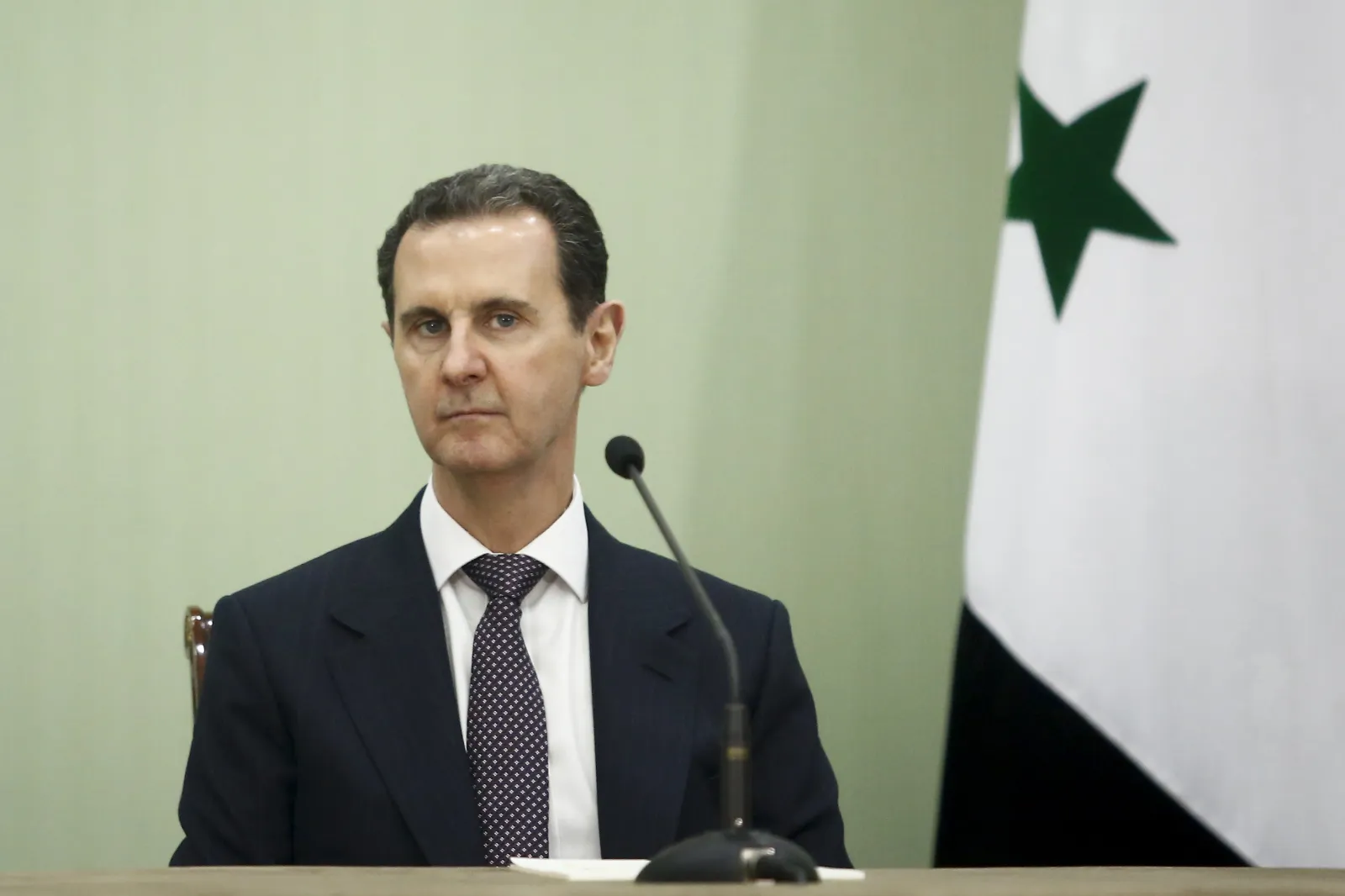
Former Syrian President Bashar al-Assad is living in near-isolation in Russia, sidelined by President Vladimir Putin, one year after fleeing Syria following the collapse of his rule, according to a detailed report by The Guardian.
Once one of the Middle East’s longest-serving leaders, Assad is studying Russian and attempting to revive his career as an ophthalmologist while gradually building a private life in Moscow, largely removed from politics and the public eye.
Newsweek has contacted the Kremlin for comment via email.
Read More on World
Why It Matters
Assad’s exile underscores the dramatic fall of a leader who ruled Syria for decades and survived years of civil war with decisive Russian backing. His current circumstances highlight how quickly political relevance can vanish once power is lost, even for figures once seen as indispensable to regional strategy.
The report also offers insight into how Russia manages former allies who are no longer politically useful. While Moscow guarantees Assad’s safety and financial security, it imposes strict limits on his movement, communications, and ability to engage in public or political activity.
...
What to Know
A closer look at Assad’s life in Russia reveals how dramatically his daily routine and responsibilities have changed since leaving Syria:
Location and Lifestyle
Assad and his immediate family are primarily based in Moscow, with occasional stays in the United Arab Emirates. They are believed to live in Rublyovka, an elite gated district west of the capital that houses senior political figures and wealthy businessmen. Despite their financial security, the family lives in near-total isolation under Russian supervision. “It’s a very quiet life. He has very little, if any, contact with the outside world,” a family friend told The Guardian.
Resuming Ophthalmology and Studying Russian
Assad has resumed practicing ophthalmology, the profession he trained in before entering politics, and is also studying Russian. “He is learning Russian and refreshing his knowledge in ophthalmology. It is a field he loves. Clearly, he does not need the money. Even before the war in Syria, he regularly practiced ophthalmology in Damascus,” a source said. Observers suggest Moscow’s wealthy elite could eventually become his patients.
Political Status and Supervision
Sources close to the Kremlin told The Guardian that Assad is no longer politically relevant in Russia. “Putin has little patience for leaders who lose their grip on power, and Assad is no longer seen as a figure of influence or even an interesting guest to invite to dinner,” another source said. He has minimal contact with former regime officials and remains in touch with only a handful of palace aides.

...
Family Fallout and Challenges
Assad’s sudden departure from Syria reportedly angered his inner circle and extended family. A friend of Maher al-Assad, Bashar’s brother, said: “Maher had been calling Bashar for days, but he wouldn’t pick up. He stayed in the palace until the last second… It was Maher, not Bashar, who helped others escape. Bashar only cared about himself.” Some extended family members also struggled to leave Syria, initially denied entry to Russia’s Khmeimim airbase and later allowed to leave only after intervention by a senior Russian official.
Family in Exile
After arriving in Moscow, the family rallied around Assad's wife, Asma al-Assad, as she underwent treatment for leukemia, which later stabilized under experimental care overseen by Russian security services.
Despite efforts to return to public life, Assad remains barred from political and media activity. Russia’s ambassador to Iraq, Elbrus Kutrashev, confirmed: “Al-Assad may live here but cannot engage in political activities… He has no right to engage in any media or political activity.”
What Happens Next
In Russia, Assad now focuses on his family and rebuilding a private life. His children are adjusting to life in Moscow, with his daughter Zein al-Assad, 22, recently graduating from Russia's elite MGIMO university, while his son Hafez al-Assad maintains a low public profile, having largely withdrawn from social media. Observers suggest Assad’s future will likely remain confined to personal pursuits, with little chance of regaining influence in Syria or engaging in regional politics anytime soon.
View 0 Comments
Submit Correction
View Editorial & AI Guidelines