10
Loading video...

By Jessica Fein
0
Share
Newsweek is a Trust Project member
See more of our trusted coverage when you search.Prefer Newsweek on Googleto see more of our trusted coverage when you search.
When I found out my mother, who had been dead for 12 years, was at the foot of my sister's bed, I was relieved but not particularly surprised.
My mother, Zelda, was everything you might think someone named Zelda would be. She had a big, bold personality. The temperature went up a few degrees when she entered the room. She was the exclamation point at the end of the alphabet — filled to the core with vim and vigor. Never mind the fact that, embarrassed by her name, she preferred to be called "Bonnie," she was Zelda through and through.
She'd always been larger than life, so far be it from her to let a little thing such as the fact that she was dead keep her from my sister when she was most needed.
Read More on My Turn
Three hours earlier, I'd entered my sister Rachel's room in the intensive care unit of Massachusetts General Hospital to the sounds of generic Muzak coming from the wall-mounted television. On the screen were images of rolling hills, deer frolicking in the forest, and waves crashing on the shore. I recognized it immediately as Channel 9: "The sights and sounds of relaxation."
The music had the exact opposite of its intended effect. My heart began to race; my palms got sweaty.
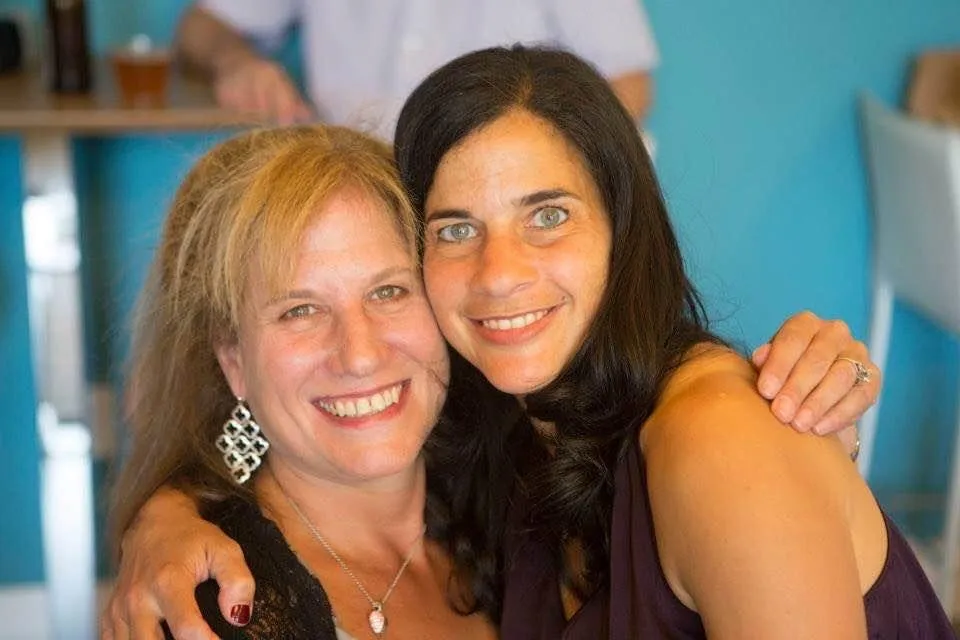
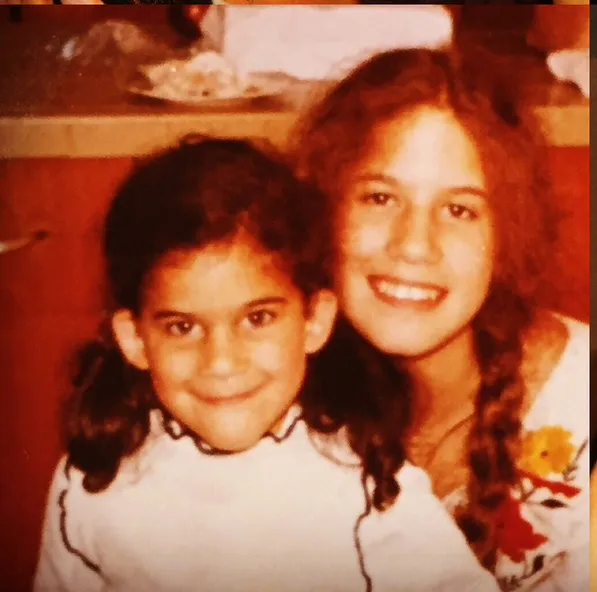
It's not that I have a particular aversion to Muzak. It was that I'd spent hours curating the perfect playlist for Rachel. A combination of her all-time favorites, her go-to pick-me-ups, and some particularly sappy if sweetly sentimental songs we'd grown up listening to. I'd even included a few songs that had once been part of "The Show," a musical revue Rachel had choreographed and directed for our other sister, Nomi, and me, some 40 years earlier.
Rachel had been in the ICU for five days at that point. It was a mere 624 days since she'd been diagnosed, in the course of a routine breast checkup, with stage 4 lung cancer — nearly two years. I knew, from the time I'd spent devouring every bit of relevant information on the internet, that two years was longer than the average life expectancy for someone with Rachel's diagnosis. But Rachel was relatively young and healthy (stage 4 cancer aside), and we'd convinced ourselves she would be the exception … part of the 8 or 12 or 20 percent (depending on which site I looked at) who beat the odds.
By then Rachel was heavily sedated. It was unlikely that she could even hear the music above the incessant beeping of the machines that were pumping her full of medication and fluid and nutrition, above the sound of her own labored breathing.
...
But I'd failed at finding the exotic cure I'd promised her we'd travel the world to discover. I'd failed to convince her to go to the hospital three weeks earlier, when she'd become too weak to go down the stairs in her house. I refused to fail at even this, a feeble attempt to create ambiance in the midst of the ICU chaos.
I turned off the TV and plugged in my phone, cuing up Earth, Wind & Fire's "September," as I had 70 or so times since we'd been in the ICU, and took my place in the chair next to her bed.
Rachel opened her eyes when I took her hand. "Jess," she whispered. "Call TJ." TJ was my sister's nickname for the medium we'd contacted after our father dropped dead on his way home from a dinner party shortly after his 80th birthday. I hadn't heard his name in years. But as soon as my sister said it, lying there in her hospital bed with stage 4 cancer, I knew just what to do. And there it was … something I could do for my sister. Never mind the fact that I hadn't the slightest idea how to reach TJ. She could have asked me to call George Clooney and I would have figured it out.
Once upon a time there were six of us: my two older sisters, Rachel and Nomi; my mother; my father; and my bonus parent, Frank, who'd married my mother when I was 7. And now, unimaginably, we were two. One by one the others had died. First Frank, from laryngeal cancer. Three months later, Nomi, at 30, dropped dead of a heart attack. Our mother went next, after a relatively short battle with breast cancer. And then, most recently, our father. So it was Rachel and me, and we'd decided together that she'd live until a cure was discovered, if for no other reason than surely, no god would take her from me, too.
I'm not sure why we were so certain that that was where god would draw the line. Never mind the Sudanese refugees or the starving Ethiopians or the mass shootings in our own country or the myriad ways people suffered and died all over the world every single day. We were firm in our belief that Rachel would be OK because, as she put it, "God would never do that to you, Jess."
Rachel wanted me to call TJ, and I would do it. Not only because she was maybe dying, but because she was my oldest sister, and I'd learned over the years that it was simply easier to do what she wanted than to push back.
And, as it turned out, contacting TJ didn't turn out to be that hard. I retreated to the ICU family waiting room and texted Marcy, my sister's college roommate, who'd been the one to put us in touch with TJ five years earlier. Marcy did the legwork, and within 30 minutes an unidentified New York number showed up on my phone screen.
His voice was ordinary; it could have been my dentist or my uncle or the guy from accounting. I'd heard his voice before, so I shouldn't have been surprised. But given the intense drama of the situation and the weight my sister was putting on whatever he was about to say, I thought he might sound a bit more like James Earl Jones.
"Your sister is surrounded by so many people," he said. "She should know she isn't alone. Your mother is at the foot of her bed watching over her. Your sister is really, really scared, and they want her to know they're right there with her. Your mother is holding onto the bedspread. She's there to protect her."
He went on for a few minutes, and I was torn between clinging tightly to every word and running back to Rachel to deliver his message.
...
When I got back to the room, the music was off. Where there had been one nurse before, there were now two nurses and a doctor squeezed into the tiny space. I could tell by their faces, by their hushed tones and intent study of the monitor showing my sister's vitals, that we were in trouble. I slipped through the huddled group and bent to Rachel's ear. "I spoke to TJ. He wants you to know Mom is here. She's right at the foot of your bed watching over you." My sister looked up at me and ever so gently, with barely perceptible pressure, squeezed my hand.
That was the last time Rachel held my hand. She died a few days later.
I tell myself that TJ's words brought her comfort, that she felt our mother there, larger than life as always. But what I know for sure is that TJ's words brought me comfort. Not only then, but every day since.
I've come to believe that grief is a lifelong companion. It's not something we "get over" or "move on from," but instead something we integrate and learn to live with. If believing that my mother's spirit or energy or something else I can't begin to understand was with my sister at the end helps me live with my grief, I'll take it. And if a butterfly landing on my hand, or the clock reading 11:11, or a whisper in my dreams makes me feel that the people I'm grieving are close to me, I don't need proof to welcome the sign.
I exist primarily in a world of logic and evidence — books, research, reliable sources. I like things that can be mapped out and backed up. But in this one realm of my life, I'm okay with accepting what can't be proven. Grief is such a slippery eel; maybe what we need is just something to hold on to.
If a cosmic wink eases the ache, it's real enough. And after all, if a person can be larger than life, maybe some things we believe can be, too.
Jessica Fein is the author of "Breath Taking: A Memoir of Family, Dreams, and Broken Genes" and is writing a new book about her quest to connect with the loved ones she's lost. Follow her journey on Instagram or at https://www.jessicafeinstories.com.
All views expressed in this article are the author's own.
Do you have a personal essay you want to share with Newsweek? Send your story to MyTurn@newsweek.com.
View 0 Comments
Submit Correction
View Editorial & AI Guidelines