...

By Hannah Millington
Health Reporter
0
Share
Newsweek is a Trust Project member
See more of our trusted coverage when you search.Prefer Newsweek on Googleto see more of our trusted coverage when you search.
A simple skin patch and COVID-like test could soon allow people to test for melanoma in the comfort of their home—helping catch the most dangerous type of skin cancer early without the need for a biopsy or blood draw.
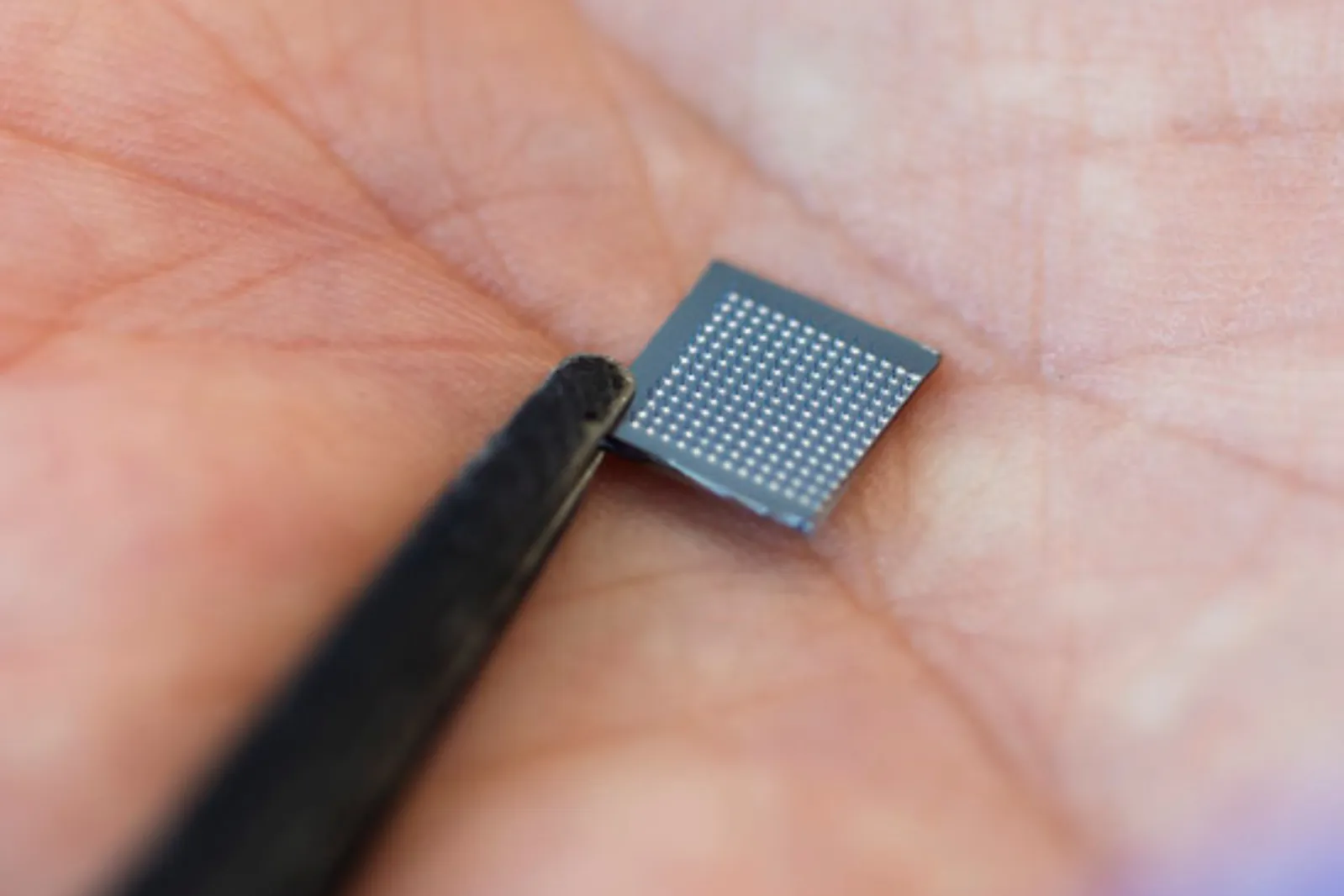
With funding from the National Institutes of Health, researchers from the University of Michigan (U-M) developed a silicone patch with star-shaped microneedles called the 'ExoPatch'.
The patch was found to distinguish melanoma from healthy skin in mice. After being used on the skin, it then goes through a quick process before the test strip provides the result—two lines for signs of melanoma and one line for a negative result.
Read More on Health
While the newly designed test is just a proof-of-concept at this stage, "the potential applications are huge," said study author and U-M chemical engineering professor Sunitha Nagrath in a statement.
"The star-shaped needles of the patch make puncture easier and less painful, but they are so small that they only go through the top-most layer of the skin, the epidermis, and do not draw blood," Nagrath explained.
...
Around 104,960 new melanomas will be diagnosed this year in the US, with about 8,430 people expected to die of the disease, according to American Cancer Society.
"Melanoma is the most dangerous type of skin cancer because it has a high potential to spread rapidly to other organs if not caught early. Unlike basal cell or squamous cell carcinomas, which tend to grow slowly and remain localized, melanoma can quickly invade lymph nodes and metastasize to the lungs, brain, or liver," Dr. Sophie Momen, consultant dermatologist at the Cadogan Clinic, told Newsweek.
"Once it spreads, treatment becomes significantly more complex and survival rates drop. Early detection remains our best defense. Dermatologists use full-body skin exams, dermoscopy (a magnified skin examination), and digital mole mapping to monitor suspicious lesions over time.
"Patients are encouraged to do monthly self-checks and seek immediate evaluation of any changing or new spots. In higher-risk individuals, such as those with many moles or a family history of melanoma, routine screenings are especially critical."
The new ExoPatch could change how we self-check in the future. Nagrath explained: "A fair-skinned person with moles must go to the doctor about every six months to send off a biopsy to see if they're malignant or benign. With this test, they could instead test at home, get the results right away and follow up with a dermatologist for a positive result."
The ExoPatch's microneedles are just 0.6 mm long and less than 100 nanometers wide at the tip. They are coated with a gel that picks up exosomes—tiny packages released from cells into the surrounding fluid in the outermost layer of skin.
It was recently discovered that exosomes contain DNA and RNA fragments that cells use to communicate with each other. Cancer cell exosomes can help tumors spread by preparing tissues to accept tumor cells before arrival. This is why detecting them can help identify the presence of cancer.
"This is the first patch designed to capture disease-specific exosomes from fluid under the skin," said Nagrath.
The gel that coats the ExoPatch contains a type of protein called Annexin V that attracts and sticks exosomes to the microneedles' surface. The patch is then removed and placed in an acid to dissolve the gel, which releases the exosomes into a solution.
After dipping a test strip into the solution, the reading will appear in the form of two lines if the sample contains melanoma exosomes or one for a negative test, similar to an at-home COVID test.

...
As a first step, the researchers tested the ExoPatch on a tissue sample of pig skin, which closely resembles human skin in terms of thickness and composition.
To see whether the patch could capture melanoma exosomes from skin tissue, the researchers tested tissue samples of mouse skin—half from healthy mice and half from mice injected with a fragment of a human melanoma tumor.
After just 15 minutes, they investigated the patch under a microscope. Confirming the exosomes adhered well to the microneedles and stuck to the ExoPatch, the researchers dissolved the gel and ran the sample through the test strips. The test successfully distinguished between melanoma and healthy tissues with a 3.5-fold darker line in cancerous samples.
The ExoPatch isolated 11.5 times more exosomal protein from melanoma tissue samples compared to healthy tissue, showing it can specifically target cancerous exosomes, according to the researchers.

...
"If the new study proves reliable, then this may be a helpful tool in diagnosis and early detection of melanoma," said Dr. Momen.
However, she remains cautious of such methods currently, recommending patients speak to their doctor about any mole or skin concerns as soon as possible.
"The reliability of these methods often depends on how and where the sample is taken from. I would worry this technique may lead to false reassurance of patients."
To move the emerging technology forward for patients, the researchers next plan to conduct a pilot study in humans followed by a series of clinical trials. Beyond melanoma, the ExoPatch gel coating could be adapted to detect exosmoses released by other cancers with a solid tumor like lung, breast, colon, prostate and brain cancer.
Do you have a tip on a health story that Newsweek should be covering? Do you have a question about skin cancer? Let us know via health@newsweek.com.
Reference
Smith, S. M., Kumari, A., Marvar, J. P., Onukwugha, N.-E., Kang, Y.-T., & Nagrath, S. (2025). Stellate silicon microneedles for rapid point-of-care melanoma exosome isolation and detection via a lateral flow assay. Biosensors and Bioelectronics, 285. https://doi.org/10.1016/j.bios.2025.117560
View 0 Comments
Submit Correction
View Editorial & AI Guidelines