
...

By Pandora Dewan
Senior Science Reporter
0
Share
Newsweek is a Trust Project member
See more of our trusted coverage when you search.Prefer Newsweek on Googleto see more of our trusted coverage when you search.
You might have the perfect skincare routine, spending hundreds of dollars on antiaging lotions and potions. But without changes to your lifestyle and environment, your skin may still be vulnerable to premature aging.
Skin aging is an inevitable part of growing older. Over time, our skin naturally becomes weaker, drier and less stretchy. However, our environment, habits and mental health can all contribute to the rate at which these changes occur.
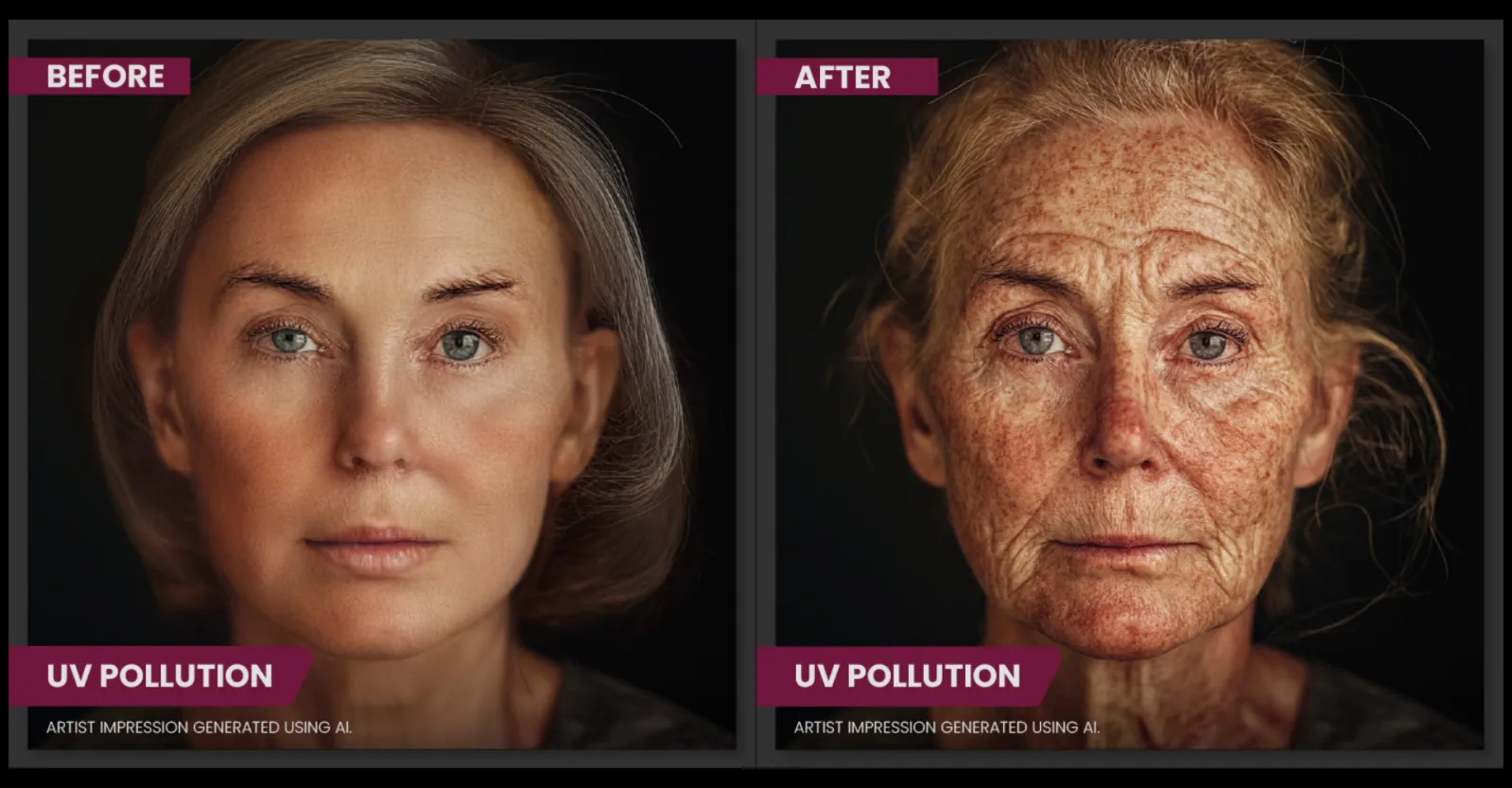
In a shocking series of computer-generated images, dermatologists at Harley Street Skin Clinic in the U.K. have simulated how five internal and external lifestyle factors can prematurely age our skin.
Read More on Health
1. Air pollution
...
Studies have increasingly shown a link between air pollution and inflammatory skin diseases, including psoriasis. Although the exact mechanisms behind these associations are still somewhat of a mystery, research to date points to disruption of the skin microbiome as being a major culprit.
The generation of highly reactive oxygen particles in the skin may also contribute to these effects. Together, these effects can damage the skin barrier, increasing acne and redness.
To avoid these effects, Skin Care Expert and cofounder at Harley Street Skin Clinic, Lesley Reynold, recommends gentle exfoliation to remove any buildup of these pollutants.
"Products could include physical exfoliants or chemicals such as AHAs and BHAs," Reynold said. "Alongside this, any products which help to strengthen the skin barrier can be beneficial, consider products containing ceramides, hyaluronic acid and niacinamide among others."
2. UV exposure
...
It's no secret that spending too much time in the sun can accelerate skin aging. UV exposure has been shown to increase inflammation and damage the outermost layers of the skin. This can result in sun spots, burns, and blistering, as well as increasing our risk of skin cancer.
UV exposure also causes the elastic collagen fibers in our skin to breakdown, resulting in wrinkles and sagging.
"SPF is perhaps the most important product when it comes to preventing damage to our skin," Reynolds said. "High SPF sunscreen contains minerals which reflect UV rays away from the skin. Alternatively, chemical sunscreens form a thin protective film that absorbs UV radiation before it penetrates the skin."
3. Smoking

...
Smoking tobacco has been associated with degradation of the elastic fibers in our skin, which again causes sagging and wrinkling. These wrinkles may be particularly prominent around the mouth, where the lips are repeatedly puckered around a cigarette.
Smoking has also been associated with poor wound healing and skin thinning, resulting in a duller appearance.
4. Water Hardness

...
Hard water—that is, water with high levels of calcium and other minerals dissolved inside it—is known to dry out the skin and strip it of its natural oils. It has been associated with an increased risk of eczema as well as signs of inflammation and acne scarring.
5. Stress

...
Chronic stress and anxiety have been associated with accelerated aging, largely as a result of increased inflammation in the body. Forehead wrinkles may also appear faster due to a constantly furrowed brow and worried expression.
So, what can you do to reduce your risk of premature skin aging?
"There are many measures that you can take to prevent any signs of premature aging," Reynolds said. "This includes basic things such as getting enough sleep, staying hydrated and eating well. But there are also certain skincare products and ingredients that can help."
These include the following:
- "Use an SPF every day—one of the most vital steps in a skincare routine is SPF. Around 80 percent of visible aging is caused by UV rays from the sun, so one of the best ways to prevent this from happening prematurely is to use an SPF daily, even if you aren't spending time in direct sunlight. By doing this, you'll be protecting your skin from the likes of hyperpigmentation and skin cancer.
- "Use antiaging skincare products and ingredients—there is a wide range of skincare ingredients that can help to protect your skin from premature aging. If you want to target fine lines and wrinkles, then retinol and vitamin C are great options. To protect your skin against harmful environmental factors, such as pollution, you should incorporate the likes of niacinamide and ceramides into your routine. Hyaluronic acid can help to keep the skin hydrated and plump, providing a glory and youthful appearance.
- "Gently cleanse your skin—one of the most basic yet essential steps to achieving youthful-looking skin is to cleanse daily. Whether you do this once or twice a day is dependent on your skin type. However, it's important to always cleanse gently otherwise you may irritate your skin, which can accelerate the aging process. This allows you to remove all traces of makeup, SPF and air pollution."
Do you have a tip on a health story that Newsweek should be covering? Do you have a question about skin? Let us know via science@newsweek.com.
References
Kim, R. W., Takeshita, J., & Abuabara, K. (2024). Air Pollution and Inflammatory Skin Disease—Can Clinicians Make Recommendations to Reduce Risk? JAMA Network Open, 7(7), e2421633. https://doi.org/10.1001/jamanetworkopen.2024.21633
Vierkötter, A., Schikowski, T., Ranft, U., Sugiri, D., Matsui, M., Krämer, U., & Krutmann, J. (2010). Airborne Particle Exposure and Extrinsic Skin Aging. Journal of Investigative Dermatology, 130 (12), 2719–2726. https://doi.org/10.1038/jid.2010.204
Morita, A. (2007). Tobacco smoke causes premature skin aging. Journal of Dermatologic Science, 48(3), 169–175. https://doi.org/10.1016/j.jdermsci.2007.06.015
Ortiz, A., & Grando, S. A. (2012). Smoking and the skin. International Journal of Dermatology, 51(3), 250–262. https://doi.org/10.1111/j.1365-4632.2011.05205.x
Lopez, D. J., Singh, A., Waidyatillake, N. T., Su, J. C., Bui, D. S., Dharmage, S. C., Lodge, C. J., & Lowe, A. J. (2022). The association between domestic hard water and eczema in adults from the UK Biobank cohort study. British Journal of Dermatology, 187(5), 704–712. https://doi.org/10.1111/bjd.21771
View 0 Comments
Submit Correction
View Editorial & AI Guidelines