
By Aliss Higham
Reporter
0
Share
Newsweek is a Trust Project member
See more of our trusted coverage when you search.Prefer Newsweek on Googleto see more of our trusted coverage when you search.
A new analysis has mapped out whether a probation violation affects residents ability to access federal food assistance.
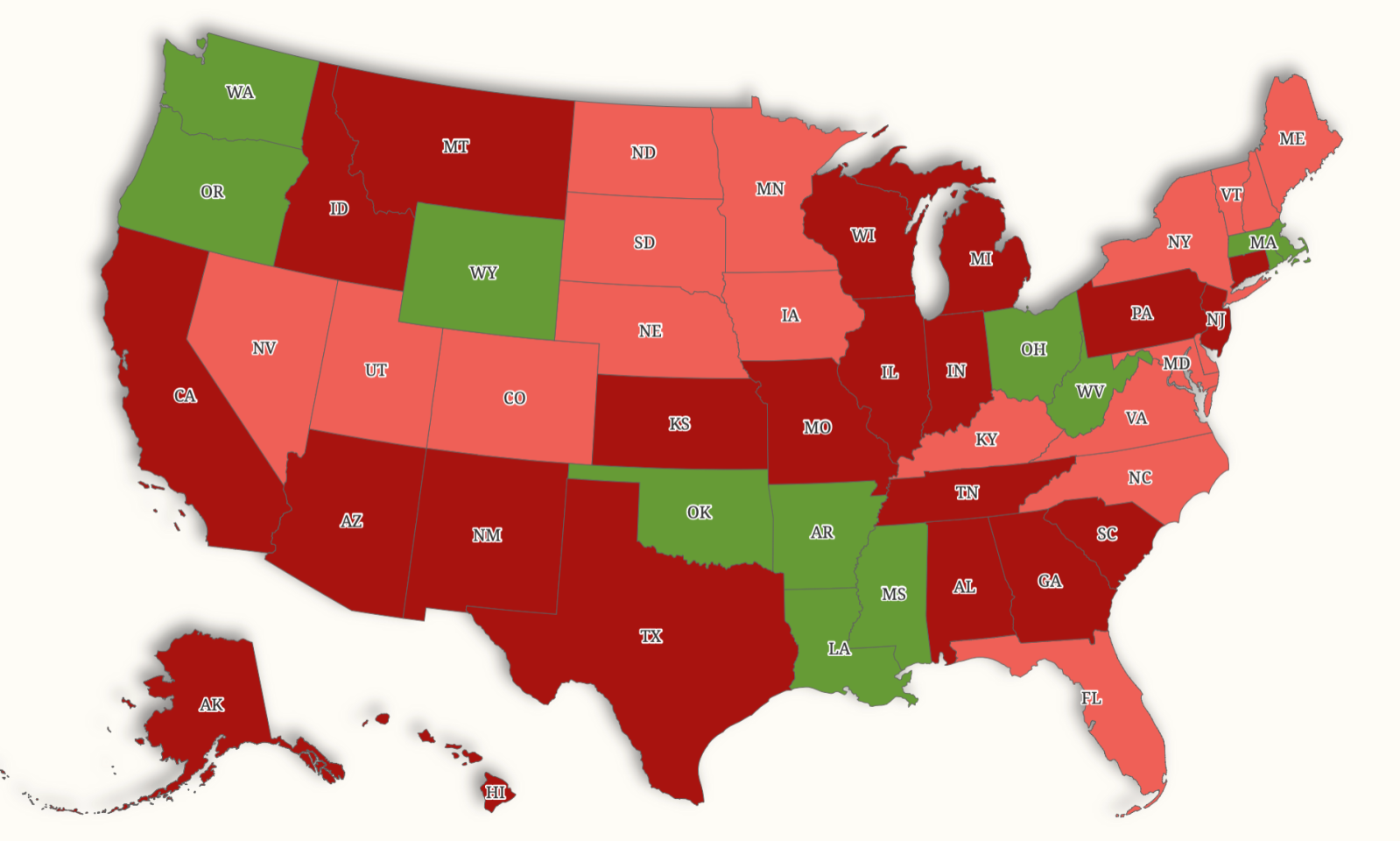
A report from the Prison Policy Initiative (PPI) found that 39 states have some form of probation-related barrier tied to the Supplemental Nutrition Assistance Program (SNAP), which helps low- and no-income households afford groceries.
In the United States, probation allows those convicted of a crime to serve their sentence in the community instead of behind bars. Courts impose conditions such as regular check-ins with an officer, payment of fines, or participation in treatment programs, and failing to meet such terms can result in revocation and incarceration.
Read More on News
According to the PPI, the consequences in many states can extend beyond the criminal justice system and into access to food.
“Making sure people have food to eat is one of the most important ways to support them when they’re on probation,” the Prison Policy Initiative said. “But there is a legislative patchwork across the U.S. that prevents and deters people on probation from receiving vital federal food assistance, known as SNAP benefits.
"This patchwork means that some people on probation in some states can’t afford to purchase basic foods, with serious consequences for their health, their family’s health, and their ability to comply with their conditions of probation.”
Where SNAP Access Is Restricted
The PPI divided states into two broad categories: those that create probation-related roadblocks to SNAP eligibility and those that do not.
Only 11 states have no probation-related disqualifications, the analysis found. The remaining 39 either impose restrictions directly or introduce policies that may discourage eligible applicants.
Of those 39 states, 21 have laws that explicitly disqualify certain people on probation. In some cases, these rules stem from partial opt-outs of federal drug conviction bans; in others, states have enacted their own separate restrictions tied to probation violations.
Another 18 states do not formally disqualify individuals based on probation violations, but still ask about such violations on their SNAP applications, even though the information is not relevant to determining eligibility. The PPI suggests these questions may deter people from applying.
High-Probation States
The analysis notes that several states with some of the country’s highest probation rates, including Georgia, Hawaii, Idaho, Indiana, Minnesota and New Jersey, either prohibit people with probation violations from receiving SNAP or include questions about violations in their applications.
The differences between states trace back to federal law. When Congress created SNAP, it included provisions that disqualified people with certain drug convictions from receiving benefits. States were given the option to opt out of those restrictions and extend eligibility using waivers, which allow states to modify rules.
As a result, eligibility rules vary widely depending on these state-level decisions.
In a polarized era, the center is dismissed as bland. At Newsweek, ours is different: The Courageous Center—it's not "both sides," it's sharp, challenging and alive with ideas. We follow facts, not factions. If that sounds like the kind of journalism you want to see thrive, we need you.
When you become a Newsweek Member, you support a mission to keep the center strong and vibrant. Members enjoy: Ad-free browsing, exclusive content and editor conversations. Help keep the center courageous. Join today.


View 0 Comments
Submit Correction
View Editorial & AI Guidelines